
Nativity Class #6 – The Cross Of Righteous Suffering – Victory Of The Cross By St. Dumitru Stăniloae

In our final Nativity class as we draw close to the birth of Christ, it is good for us to remember how even Christ’s birth reflects this cross of the righteous suffering. Perhaps you, like me, might be tempted to believe that if I’m trying to do the right thing with God … why is this so hard … why wasn’t there room at the inn … why did even finding a place to lay His head become a struggle? So often my life in Christ is complicated by the doubts of my expectations and desires. And, if I’m honest, placing myself on His throne … playing God by imposing my will … instead of accepting His and trusting that as I participate in His will I deepen an experience of God He desires that unites me to Him and reflects His Goodness. Perhaps in the final class, we need to be reminded of the question of the condition of my heart and St. Dumitru’s explanation of God’s purpose for us:

The fathers emphasized the goodness of God as the motive behind creation … God created all things in order that they might share in his Love, that is, full communion with God … the Good, as scripture testifies, produced everything and is the ultimately perfect Cause… God created the world for the sake of humanity, that the world be led towards the purpose of full communion with Him … only humans in a conscious way can rejoice more and more in the love of God and become God’s partners … The world serves this movement of raising ourselves to our ultimate meaning of achieving our fullness in communion with the personal God. All things impose on us a responsibility before God and before the world itself, and it is by the exercise of this responsibility that we increase in our communion with God and with our fellow human beings.

The Experience of God – Vol 2: The World: Creation & Deification (p.17-18) By Dumitru Staniloae

There is a transcendent mystery to our life in Christ .. one that forces us out of the comfort zone of our own understanding. And our life in Christ will reflect this cross if we live it with the daily willingness he is very clear will be presented to us:

If anyone desires to come after Me, let him deny himself, and take up his cross daily, and follow me 

Luke 9:23

Let’s have St. Dumitru use the life of Job to help us more deeply understand this cross of righteous suffering from his booklet ‘Victory of the Cross’ we’ve studied through Nativity.


In the end it is God alone who can explain the sufferings of the righteous, and he does it through the many questions which he asks Job, all of which draw Job’s attention to the Giver of gifts. God in effect says to Job, ‘All my gifts are wonderful, but the intention of their wonder is to reveal the infinite wisdom and greatness of the one who gives them all’.

Then Job answered the Lord and said: I know that thou canst do everything, and that no thought can be withheld from thee … I have uttered that I understood not; things too wonderful for me, which I knew not … I have heard of thee by the hearing of the ear; but now mine eye seeth thee. Wherefore I abhor myself, and repent in dust and ashes.

Job 42: 1-3; 5-6

This means to say that up until this moment Job had always thought of God in much the same terms in which others had spoken of him; now he begins to understand God himself, beyond all his gifts, the Giver of everything. In order to gain this supreme treasure he had for a while to lose all his possessions. He lost the respect of others, he lost his health, his wealth—all things—in order to see God in all his greatness and wisdom and marvellous nature. In losing all things he did not doubt God and thus he came to see the apophatic, inexpressible character of God who is beyond all human understanding. He saw God in a higher way than is possible merely through his gifts. He saw him immediately through his suffering.

The believer continually needs to make abstraction of the things of this world, needs to put the things of this world into brackets of forgetfulness, in order to think of God who is above all human understanding. But sometimes it is necessary that God himself should intervene in order to throw into relief the little value of the things of this world in comparison with God, their transitory, passing nature in contrast to the eternity of God, in order to show us more clearly God’s infinite transcendence of his gifts and his ineffable presence with us. In such cases it seems to us that God himself abandons us. This is because sometimes we become so attached to things that we can no longer see God. Sometimes we make so close a link between God and the things which he gives, that we identify God with these things and totally forget God in himself, and then if God no longer shows his interest in us by giving us gifts it seems to us that he has abandoned us. For this reason the cross often seems to us a sign of our being abandoned by God. But it can also happen that God does really withdraw himself from our vision in order to prove and strengthen the tenacity of our love for him. Even our Lord Jesus Christ on the cross had this feeling of complete abandonment by God. But even the Lord Jesus never weakened in his love for God.

In reality, God never abandons us in whatever situation we find ourselves. It is possible that he may disappear for a time, for a moment, from our horizon, from our understanding. But the God whom we habitually think of in terms of creation will then appear to us in the true greatness of his glory which is indefinable and inexpressible in human thoughts and words. This is why in the Song of Songs it is said that sometimes God hides himself, and then again reveals himself in a higher and more glorious way:

By night on my bed I sought him whom my soul loveth; I sought him, but I found him not. I will rise now, and go about the city in the streets, and in the broad ways I will seek him whom my soul loveth; I sought him, but I found him not. The watchmen that go about the city found me, to whom I said: Saw ye him whom my soul loveth? It was but a little that I passed from them, but I found him whom my soul loveth. I held him, and would not let him go, until I had brought him into my mother’s house and into the chamber of her who conceived me. (Song of Songs 3: 1- 4)

It is only then that we enter into a relationship with God which is truly personal, a relationship which is above all created things. This relationship with God is one no longer dominated by material images. Our ideas about things and about the gifts which God gives altogether disappear in the light of God himself. Thus purified we give ourselves wholly to God; and we are raised into the dialogue of love exclusively with him. Then we feel that God is infinitely greater than all his gifts and all his creatures, and that in this relationship with him we are raised to a different spiritual level at which we regain in him all that we had lost.

The Christian who has the love of God in him and who thus has love for every person—that love which is an imperishable and inexhaustible reality—feels a greater joy than all the joys which the things of this world can procure, a greater joy than his own existence lived as an isolated individual could ever give him. This is the fact which the righteous discover in their suffering. This cross is given to a man in order that he himself may come to discover God at another level, at an apophatic depth, but also in order to show to other men that there are those who can be attached to God in this way even when all their possessions are taken from them, and even when God himself seems to disappear from their view.

The Cross as the Mystery of Love

The mystery of the cross of the just is the mystery of love between men as eternal persons, the mystery of love for God, and also of the love which above all things must be affirmed amongst men. Truly to love a person means to love them for themselves even when they no longer give us anything, when they no longer seem to have goodwill towards us, even when they seem to show us an incomprehensible coldness or hostility which is altogether contrary to the goodness which they showed to us earlier, even when it seems that the other person has abandoned us even to death. For if we remain firm in our love towards others despite their incomprehensible hardness towards us, we make a true proof of love, of the love which we have for them. This is the love which God himself forms in us and which does indeed raise us from death. When love confronts even death, then it conquers death itself.

He who accepts the death which God gives, with the declaration of love on his lips, gives a supreme proof of a love which will never fail, a love which is given to the person himself and not to his gifts. It is in this supreme love for God that we find the mystery of the cross which is carried by the just, of whom God has given the perfect example in the person of Jesus Christ, and in the earthly suffering which he underwent for the love of God. The Son of God in becoming man accepted the cross first of all to show his love for men, despite their hatred and incomprehension of him which were to be the cause of his death in this world. But then by his death on the cross he has given us the example of a man in whom love for God has resisted to the end, even to being given up to death.

…The world has value only in so far as through it we see and receive the revelations and the energies of the person of God who in himself, in his essence, cannot be described, but whose energies are already at work in all creation and will be fully revealed in the transfigured world of the age to come. Until the last day God is at work in this world, leading it towards its resurrection, above all by means of the cross.

Thus the cross is the sign and the means of the salvation of the world. All the world is a gift of God, and by the cross all the world has to be transcended in God. Only in Christ is this meaning of the cross fully revealed. In the cross of Christ the salvation of the world is founded, and the salvation of the whole cosmos, because by the cross the tendency of the whole cosmos to transcend itself in God is accomplished. One cannot conceive of a world which is not saved, a world which would always remain in suffering, enclosed in itself, a world in which the cross would not fully fulfil the destiny of the world. Suffering would have no meaning at all unless it was leading the world towards its salvation in God. The hell of an eternal suffering is no longer ‘a world’, properly speaking, but simply fragments detached from the world without meaning and without solidarity amongst themselves, shadowy, phantasmagoric fragments of the world. In hell suffering is eternal and would finally swallow up the gift. In the kingdom of God the world has been transfigured by the cross through which God himself is finally revealed and glorified.
How Do We Face The Cross Of Suffering Of Our Neighbors & Ourselves

I believe this poem offers us a way to see our sufferings as both a way to unite us to God as well as those who suffer. There is a transcendence available in suffering with Christ who loves us and suffers with us … a cross that leads to resurrection …. but are we willing to accept it? Can there be a gift from God hidden in our suffering … a joy in all who sorrow?


You, Too, Must Weep

Let me not live a life that’s free
From the things that draw me close to You—
For how can I ever hope to heal
The wounds of others I do not feel—
If my eyes are dry and I never weep,
How do I know when the hurt is deep—
If my heart is cold and it never bleeds,
How can I tell what my brother needs—
For when ears are deaf to the beggar’s plea
And we close our eyes and refuse to see,
And we steel our hearts and harden our mind,
And we count it a weakness whenever we’re kind,
We are no longer following The Father’s Way
Or seeking His guidance from day to day…
For, without “crosses to carry” and “burdens to bear,”
We dance through a life that is frothy and fair,
And “chasing the rainbow” we have no desire
For “roads that are rough” and “realms that are higher”—
So spare me no heartache or sorrow, dear Lord,
For the heart that is hurt reaps the richest reward,
And God enters the heart that is broken with sorrow
As he opens the door to a Brighter Tomorrow,
For only through tears can we recognize 
The suffering that lies in another’s eyes.

– Author Unknown

Father Gabe’s Rich Young Ruler Homily December 1st 2024 Audio & Transcript

Father Gabe’s Rich Young Ruler Homily 12-1-2024

So, we all try really, really hard to avoid the uncomfortable truth of this story.

So, in the interest of time, let’s get right to it.

This story is not simply a diatribe against having wealth. We are all wealthy. Some of us with money, most of us not with money. But with something, we all have wealth. St. John Chrysostom, the Golden Mouth, tells us that giving away possessions is the least of Christ’s instructions in this passage. Indeed, for some people, giving up all their possessions is actually a great relief and would not actually be all that difficult for them.

The true message of this story cuts much deeper. So, that message is this.

Every single one of us, without exception, possesses something or some things that we value more highly than the kingdom of heaven. Things for which we would be willing to abandon God. And by abandoning God, I don’t mean that we become open enemies of God. But rather that we willingly choose something or someone else, something or someone other than God, with which or with whom to become unified.

If we were in the place of the rich young ruler and Jesus asked us to give away or give up X in order to draw closer to Him, we too would walk away sorrowfully, but willingly.

God does not want to see us make this horrible trade.

So, this story is begging us for our own sakes to figure out what X is in each of our lives. So, this thing or things, this could be people, places, goals, expectations, pursuits of respect, honor, glory. This certainly happens within the church as well.  This will be different for each one of us, and they may likely shift over time.

I remember myself, my earliest thing that I wouldn’t give up to follow God, was to be famous in a band. It was going to happen. I know it doesn’t happen to most people, but it was going to happen for me. My intentions were pure. I just wanted to make beautiful music. No, no; I wanted to be famous. I wanted to have glory. Riches would come along with that. And I wasn’t willing to give that up until it became very clear that this was not going to happen.

So, I then started a company and tried to make all of those same things happen through the company. And it did, sort of. And then God makes that seem hollow and fleeting.

And oftentimes we have to go through it. We have to learn the hard way. The things that we think we should unify ourselves with will actually destroy us. And usually it takes them destroying us in some way for us to realize that God asked us to trade up long ago.

And so at its core, this gospel is a good, true fatherly exhortation to wisely spend our limited time and energy in the pursuit of true freedom.

God is here leading us to become like He is, to become completely unbound by anything, completely free and completely happy. This prospect terrifies most of us because it means becoming an entirely different creature, which is not an easy process. It’s a really big deal.

And thus God is very, very patient with us.

But be that as it may be, out of true love, God always keeps this transformative task directly before us. We must find the courage which without His help is impossible. We must find the courage to let go of the things that we would trade for the Kingdom of Heaven. To let go of the corruptible things that we would choose to unify with instead of unifying with God.

We have to remember, if we choose to unify with that which corrupts and decays, then we also corrupt and decay. Simple math. If we choose to unify with that which is eternal and divine, then we too become eternal and divine.

This is the cross. And crosses really hurt. But they bring us into union with God. This is salvation.

In the name of the Father, Son, and the Holy Spirit.

The Cross and God’s Revelation of Its Meaning – Victory Of The Cross By Father Dumitru Stăniloae

This is a 2nd extract from a powerful booklet entitled ‘The Victory Of The Cross’ written by the well known 20th century Romanian Orthodox priest and scholar Father Dumitru Stăniloae. You can find the 1st extract from his booklet here.


In the end it is God alone who can explain the sufferings of the righteous, and he does it through the many questions which he asks Job, all of which draw Job’s attention to the Giver of gifts. God in effect says to Job, ‘All my gifts are wonderful, but the intention of their wonder is to reveal the infinite wisdom and greatness of the one who gives them all’.

Then Job answered the Lord and said: I know that thou canst do everything, and that no thought can be withheld from thee … I have uttered that I understood not; things too wonderful for me, which I knew not … I have heard of thee by the hearing of the ear; but now mine eye seeth thee. Wherefore I abhor myself, and repent in dust and ashes.

Job 42: 1-3; 5-6

This means to say that up until this moment Job had always thought of God in much the same terms in which others had spoken of him; now he begins to understand God himself, beyond all his gifts, the Giver of everything. In order to gain this supreme treasure he had for a while to lose all his possessions. He lost the respect of others, he lost his health, his wealth—all things—in order to see God in all his greatness and wisdom and marvellous nature. In losing all things he did not doubt God and thus he came to see the apophatic, inexpressible character of God who is beyond all human understanding. He saw God in a higher way than is possible merely through his gifts. He saw him immediately through his suffering.

The believer continually needs to make abstraction of the things of this world, needs to put the things of this world into brackets of forgetfulness, in order to think of God who is above all human understanding. But sometimes it is necessary that God himself should intervene in order to throw into relief the little value of the things of this world in comparison with God, their transitory, passing nature in contrast to the eternity of God, in order to show us more clearly God’s infinite transcendence of his gifts and his ineffable presence with us. In such cases it seems to us that God himself abandons us. This is because sometimes we become so attached to things that we can no longer see God. Sometimes we make so close a link between God and the things which he gives, that we identify God with these things and totally forget God in himself, and then if God no longer shows his interest in us by giving us gifts it seems to us that he has abandoned us. For this reason the cross often seems to us a sign of our being abandoned by God. But it can also happen that God does really withdraw himself from our vision in order to prove and strengthen the tenacity of our love for him. Even our Lord Jesus Christ on the cross had this feeling of complete abandonment by God. But even the Lord Jesus never weakened in his love for God.

In reality, God never abandons us in whatever situation we find ourselves. It is possible that he may disappear for a time, for a moment, from our horizon, from our understanding. But the God whom we habitually think of in terms of creation will then appear to us in the true greatness of his glory which is indefinable and inexpressible in human thoughts and words. This is why in the Song of Songs it is said that sometimes God hides himself, and then again reveals himself in a higher and more glorious way:

By night on my bed I sought him whom my soul loveth; I sought him, but I found him not. I will rise now, and go about the city in the streets, and in the broad ways I will seek him whom my soul loveth; I sought him, but I found him not. The watchmen that go about the city found me, to whom I said: Saw ye him whom my soul loveth? It was but a little that I passed from them, but I found him whom my soul loveth. I held him, and would not let him go, until I had brought him into my mother’s house and into the chamber of her who conceived me. (Song of Songs 3: 1- 4)

It is only then that we enter into a relationship with God which is truly personal, a relationship which is above all created things. This relationship with God is one no longer dominated by material images. Our ideas about things and about the gifts which God gives altogether disappear in the light of God himself. Thus purified we give ourselves wholly to God; and we are raised into the dialogue of love exclusively with him. Then we feel that God is infinitely greater than all his gifts and all his creatures, and that in this relationship with him we are raised to a different spiritual level at which we regain in him all that we had lost.

The Christian who has the love of God in him and who thus has love for every person—that love which is an imperishable and inexhaustible reality—feels a greater joy than all the joys which the things of this world can procure, a greater joy than his own existence lived as an isolated individual could ever give him. This is the fact which the righteous discover in their suffering. This cross is given to a man in order that he himself may come to discover God at another level, at an apophatic depth, but also in order to show to other men that there are those who can be attached to God in this way even when all their possessions are taken from them, and even when God himself seems to disappear from their view.

The Cross as the Mystery of Love

The mystery of the cross of the just is the mystery of love between men as eternal persons, the mystery of love for God, and also of the love which above all things must be affirmed amongst men. Truly to love a person means to love them for themselves even when they no longer give us anything, when they no longer seem to have goodwill towards us, even when they seem to show us an incomprehensible coldness or hostility which is altogether contrary to the goodness which they showed to us earlier, even when it seems that the other person has abandoned us even to death. For if we remain firm in our love towards others despite their incomprehensible hardness towards us, we make a true proof of love, of the love which we have for them. This is the love which God himself forms in us and which does indeed raise us from death. When love confronts even death, then it conquers death itself.

He who accepts the death which God gives, with the declaration of love on his lips, gives a supreme proof of a love which will never fail, a love which is given to the person himself and not to his gifts. It is in this supreme love for God that we find the mystery of the cross which is carried by the just, of whom God has given the perfect example in the person of Jesus Christ, and in the earthly suffering which he underwent for the love of God. The Son of God in becoming man accepted the cross first of all to show his love for men, despite their hatred and incomprehension of him which were to be the cause of his death in this world. But then by his death on the cross he has given us the example of a man in whom love for God has resisted to the end, even to being given up to death.

In the case of Job we do not have this picture of a love for God which continues even to death, but we feel that this love could have been there unalterable to the end in Job. All the same, in the beginning Job did not understand the reason for his sufferings which in the end were to be a proof of his love for God. It is Christ who first saw the supreme and absolute value of the cross as a proof of love both of God and of men, love of a worth beyond all else. None the less, Job is the type of Christ, and his second and greater fortune is a type or symbol of the resurrection which the just man who accepts death from God will receive in the end.

Love which does not go so far as the love of Job went or, more clearly, as far as the love of Jesus Christ, is not true love but only conditional, a love conditional on things, that is to say a love of oneself and not a true love of others. It does not reveal the true, infinitely greater worth of persons than of any other created things or the eternal basis of their worth in the personal reality of God. In true love a man should transcend himself, go beyond himself, and the supreme act of this transcendence is fulfilled in love for God, who is the Transcendent One.

It is is doubtless true and right that persons reveal their love for one another by their gifts, and this is also true in God’s relationship with men. In this sense we cannot think of the cross without the world as God’s gift. But on the other side we cannot think of the world without the cross. The cross makes this world transparent for God. The cross shows that the world is God’s gift, and as such is a lower and lesser reality than God himself. The cross is the sign of God as a person who is above all his gifts. But it is also the sign of a perfect relationship between God and man. In this sense the cross is specially the sign of the Son of Man in whom this relationship has been perfectly realised. The cross is the sign of the Son of God become man, the sign which he prints on the world by his solidarity with the world.

Without the cross man would be in danger of considering this world as the ultimate reality. Without the cross he would no longer see the world as God’s gift. Without the cross the Son of God incarnate would have simply confirmed the image of the world as it is now as the final reality, and strictly speaking he could have been neither God nor God incarnate. The cross completes the fragmentary meaning of this world which has meaning when it is seen as a gift which has its value, but only a relative and not an absolute value. The cross reveals the destiny of the world as it is drawn towards its transfiguration in God by Christ. For this reason at the end of this stage of the world this sign, ‘the sign of the Son of Man’, will be revealed in the heavens above all the world, as a light, as a meaning, as a destiny which illumines the whole history of man (Matt. 24: 30).

In this way the cross prophetically points to the eschatological, the final destiny of the world. For this reason we associate the sign of the cross with the Holy Trinity, with the Kingdom of God. This is the reason why in the Orthodox Liturgy the cross is printed on the loaf which is used in the Eucharist, bread being at once the sign of God’s gift and of man’s work, the existential expression of the whole of man’s life in this world offered to God. With this sign of the cross the Church blesses, and before all their actions Christians make the sign of the cross in order to dedicate them to God. With this sign the priest blesses the water of Baptism, and also the holy water with which he sprinkles the house, the fields and the whole world in which the Christian lives and works—all is covered with the sign of the cross.

The world has value only in so far as through it we see and receive the revelations and the energies of the person of God who in himself, in his essence, cannot be described, but whose energies are already at work in all creation and will be fully revealed in the transfigured world of the age to come. Until the last day God is at work in this world, leading it towards its resurrection, above all by means of the cross.

Thus the cross is the sign and the means of the salvation of the world. All the world is a gift of God, and by the cross all the world has to be transcended in God. Only in Christ is this meaning of the cross fully revealed. In the cross of Christ the salvation of the world is founded, and the salvation of the whole cosmos, because by the cross the tendency of the whole cosmos to transcend itself in God is accomplished. One cannot conceive of a world which is not saved, a world which would always remain in suffering, enclosed in itself, a world in which the cross would not fully fulfil the destiny of the world. Suffering would have no meaning at all unless it was leading the world towards its salvation in God. The hell of an eternal suffering is no longer ‘a world’, properly speaking, but simply fragments detached from the world without meaning and without solidarity amongst themselves, shadowy, phantasmagoric fragments of the world. In hell suffering is eternal and would finally swallow up the gift. In the kingdom of God the world has been transfigured by the cross through which God himself is finally revealed and glorified.

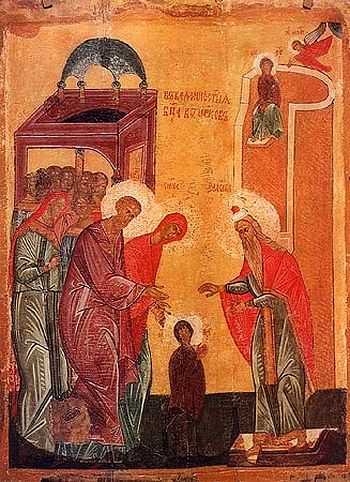
What Does The Entrance Into The Temple Of The Mother Of God Mean For Us & Our Salvation

By Father Panagiotes Carras

The oikonomia of our salvation began with the very creation of the world. It is not by chance that the fourth Gospel does not commence with a genealogy of our Lord but takes us back to the very beginning.  All things from the beginning to the end, from the alpha to the omega are part of God’soikonomia for our salvation, God’s providential ordering of our salvation. Man was created that he may participate in the Divinity of his Creator by first participat­ing in his own perfection.  We are taught by the Fathers that man was created for perfection. Adam was offered perfection but fell victim to the guile of the serpent.  God’s plan could not be frustrated and the Lord prepared the world for another Adam who would rescue the offspring of the first Adam.

St. Paul tells us that Adam is a type of the future Adam (Romans 5: 14). All Christians are des­cendants of both the first Adam and the last Adam. From the first we inherited death, from the last we inherited life. (1 Corinthians 15: 45-50). It is this Apostolic teaching of the two Adams which was developed by the Fathers and formed the nucleus of the Church’s teaching on the salvation of mankind.

Mankind, which had its beginning in the first Adam, had to be given a new beginning. A new Adam was needed to become the Head of the New Humanity, the Head of the body, the Church, which is His body (Ephesians 1:22-23). However, just as in the creation of the Old Humanity, mankind was given the freedom to choose sonship; similarly in the creation of the New Humanity, mankind was granted the opportunity to choose. The first Adam was from the earth, a man of dust, the second is from Heaven (1 Corinthians 15: 47). The first could choose sin because he was not yet perfect, the second Adam, our Lord Jesus Christ, being God by nature, was totally alien to sin. It is because God’s oikonomia required a member of the human race who was able to prove himself free from every sin that the time had fully come (Galatians 4:4) for God to send forth His Son, since mankind was able to bring forth the All-Holy Virgin.

This is precisely why Theotokos is the key-word of the Christological teaching of the fourth Ecumen­ical Council or as St. John of Damascus says, This name contains the whole mystery of the Oikonomia(On the Orthodox Faith, 3, 12). It is for this reason that the traditional Orthodox icon of the Mother of God is an icon of the Incarnation, the Virgin is always with the Child.

The Church’s teaching of the Theotokos is an ex­tension of what is believed concerning the person of Christ. The Son of God was born of a woman and in this case the Mother is not just a mere physical instrument but an active participant who has found favour with God (Luke 1, 30). The faith of the Church is aptly expressed in the words of Nicholas Cabasilas in his Homily on the Annunciation: The incarnation was not only the work of the Father and of His Power and His Spirit, it was also the work of the will and the faith of the Virgin (On the Annunciation, 4).

It is the teaching of the Church, attested to from the earliest date, that the Virgin Mother of the In­carnate Lord had found favour with God (Luke 1:30) and that she was chosen and ordained to particip­ate in the Mystery of the Incarnation, in the Oikonomia of Salvation. The ancient Church understood the typo­logical relationship between the first Adam and the last Adam, and by extension it was able to see that the first Eve prefigured the second Eve. We find that as early as the Second Century St. Justin and St. Irenaeus had a developed teaching of the Theotokos as the second Eve who through her obedience re­medied the disobedience of the first Eve. And so the knot of Eve’s disobedience received its unloosing through the obedience of Mary; for what Eve, a virgin, bound by unbelief, that, Mary, a Virgin, unloosed by faith (Against Heresies, III, 22, 4.) Mary… by yield­ing obedience, became the cause of salvation, both to herself and the whole human race. (Against Heresies, III, 22, 4). Mary alone cooperating with the economy (Against Heresies, III, 21, 7).

The Church has proclaimed this great Mystery of our salvation not only through the teaching of the Fathers but also through the festal celebration of the acts which worked our salvation, chief of which is the Holy Resurrection of our Lord. On the 21st of Novem­ber the Church celebrates the Feast of the Entry of the Theotokos into the Temple. It is at this time that the faithful chant Today is the prelude of God’s Good-Will and the heralding of the salvation of mankind. (Dismissal Hymn).

Throughout the whole service the hymns proclaim the exalted place which the Entry has in the history of Salvation. The Entry marks the closing of the Old Covenant, whereas the Annunciation marks the beginn­ing of the New. With the Entry the most Holy Virgin is passing from the Old Covenant to the New, and this transition in the person of the Mother of God shows us how the New Covenant is the fulfillment of the Old.

Like other human beings the Holy Virgin was born under the law of original sin but the sinful heritage of the fall had no mastery over her. She was without sin under the universal sovereignty of sin, pure from every seduction and yet part of a humanity enslaved by the devil. This is the victory which the Feast of the Entry joyfully celebrates. St. Photius praises the Holy Virgin as the great and God-carved ornament of human kind” who ” made her whole soul a holy shrine of meekness… never allowing any of her wares as much as to touch for a moment the brine of evil. (On the Annunciation, 4). This theme con­stantly appears in the hymns of the Feast of the EntryThy Miracle, 0 Pure Theotokos, transcends the power of words; for I comprehend that thine is a body transcending description, not receptive to the flow of sin. (Third Magnification of the ninth Ode). Ni­cholas Cabasilas expanded this teaching and dealt with it extensively in his Homily on the Birth of the Theo­tokos where we read: The Virgin remained from the beginning to the end free from every evil because of her vigilant attention, firm will, and magnitude of wisdom. (Chapter 15).

The sinlessness and purity of the Theotokos along with the fact that the Lord was preparing Her to be­come His chamber overshadowed the sanctity of the Old Testament temple. The All-Pure Virgin is allowed to enter the Holy of Holies precisely because she is to become the living temple of God. St. Tarasios in his Homily of the Entry has Saint Anne exclaiming:Re­ceive Zacharias, the pure tabernacle; receive 0 priest, the immaculate chamber of the Word … have her dwell in the temple made by hands, she who has be­come a living temple of the Word (Migne, 98:1489). Zacharias in turn speaks to the Virgin, You are the loosing of the curse of Adam, you are the payment of the debt of Eveand he continues to recall all the types and prophecies of the Old Testament which refer to the Theotokos. (Migne, 98:1492-93).

In the Minea of St. Dimitry of Rostov we read, Thus with the honor and glory not only of men, but also of angels, the most Immaculate Maiden was led into the temple of the Lord. And it was meet: for if the ark of the Old Testament, bearing manna in itself, which served only as a prototype of the Most Holy Virgin, was carried into the temple with great honor, with the assembling of all Israel, then with how much greater honor, with the assembling of angels and men, had to take place the entry into the temple of that same living ark, which had manna — Christ — in it, the Most Blessed Virgin, fore-ordained to be the Mother of God.

The Feast of the Entry celebrates the sanctity of the All-Holy Virgin and glorifies the Lord who placed her in the inaccessible Holies like some treasure of God’s, to be used in due time (even as came to pass) for the enrichment of, and as an ornament transcend­ing, as well as common to, all the world.(St. Gregory Palamas, Homily on the Entry, IX).

Teachings From the Service of the Feast

In the Orthodox Church services we participate in the saving events of the Oikonomia of Salvation. This is why, during these services we hear the word Today quite often. This is why in the first Sticheron of the  Lord I have Cried  begins, Come let us faithful dance for joy on this day. The second Sticheron begins with In the temple of the Law today is the living temple.  During Vespers, Matins and the Divine Liturgy we enter into the Mystery of the Entry of the Theotokos. When we enter into the Mystery we are not simple witnesses as the maidens who accompanied theTheotokos but rather participants in the eternal mystery.  

The first two Old Testament readings of Vespers speak of the Divine establishment of the Tabernacle and the Temple (Exodus 40:1-5, 9-10, 34-35 and IIIKings 8:1, 3-4, 6-7, 9, 10-11). The third reading, taken from the Prophecy to Prophet Ezekiel ( Ezekiel 43:27-44:4) speaks of the Theotokos as the living Temple of God.  

During the Divine Liturgy, in the reading of the Epistle of Saint Paul to the Hebrews (9:1-7), we are taught that all things which were done in the Temple of the Old Testament were a Prophecy of what would be fulfilled by our Saviour. In the Gospel of Saint Luke (10:38-42, 11:27-28), which is read at every Feast of the Mother of God, we hear: Blessed is the womb that bare thee, and the paps which thou hast sucked. We are reminded to glorify our Lord and bless His mother, who brought us our salvation.

Icon of the Feast

The Orthodox teaching on the The Entry of the Theotokos into the Temple as the heralding of the salvation of mankind is seen in the Icon of the Feast. The central theme of the icon is the Holy of Holies (1) in the Temple which is about to receive a blessing far superior to any of its former blessings. The priest Zacharias, the father of St. John the Baptist, receives Panagia at the gates of the Temple (3) and in this way prophesies that the Virgin Mary is the New Ark of the Covenant. Saints Joachim and Anna (4), accompanied by virgins of Jerusalem, carrying torches in procession, bring Panagia as a well-pleasing sacrifice. The Theotokos is brought to the gates and ascends to the Holy of Holies where she is cared for by angels (2). Notice that the young virgins do not have their heads covered but that the Theotokos has her head covered. Also the garments of the Mother of God resemble those of Saint Anna and not of the young virgins. The Theotokos, although a child, is already a perfected woman that has reached full spiritual maturity.  She who in body is but three years old, and yet in the spirit is full of years (Ode three of the Second Canon).

Temple Of The Foolish Rich Man – Homily by Father Phillip LeMasters

Have you ever thought about the similarities and differences between barns and temples? Usually when we think of barns, we think simply of places to house farm animals or to store crops.  We normally do not think of them as having much spiritual significance. The rich man in today’s gospel lesson thought of his barns only in terms of his business, which was so successful that he looked forward simply to relaxing, eating, drinking, and enjoying himself.  Unfortunately, he did so to the point of making his possessions an idol.  He was rich in things of the world, but poor towards God.  He was ultimately a fool, for he based his life on what was temporary and lost his own soul.  His barn became a temple only to himself. 

We live in a culture that constantly tempts us to follow this man’s bad example. More so than any previous generation, we are bombarded with advertising and other messages telling us that the good life is found in what we can buy. Whether it is cell phones, clothing, cars, houses, entertainment, food, or medicines, the message is the same: Happiness comes from buying the latest new product. During the weeks leading up to Christmas, this message is particularly strong. We do not have to become Scrooges, however. It is one thing to give reasonable gifts to our loved ones in celebration of the Savior’s birth, but it is quite another to turn this holy time of year into an idolatrous orgy of materialism that obscures the very reason for the season.

We are not really near Christmas yet, as Advent just began on November 15. Today, as we continue to celebrate the ForeFeast of the Entrance of the Theotokos into the Temple, we are reminded of the importance of preparing to receive Christ at His birth. Instead of looking for fulfillment in barns and the money they produce, we should follow her into the temple. Sts. Joachim and Anna took their young daughter to the temple in Jerusalem, where she grew up in prayer and purity in preparation to become the living temple of God when she consented to the message of the Archangel Gabriel to become the mother of the God-Man Jesus Christ. The Theotokos was not prepared for her uniquely glorious role by a life focused on making as much money as possible, acquiring the most fashionable and expensive products, or simply pleasing herself. No, she became unbelievably rich toward God by focusing on the one thing needful, by a life focused on hearing the word of God and keeping it.

In ways appropriate to our own life circumstances, God calls each of us to do the same thing. And before we start making excuses, we need to recognize that what St. Paul wrote to the Ephesians applies to us also: “[Y]ou are no longer strangers and sojourners, but…fellow citizens with the saints and members of the household of God, built upon the foundation of the apostles and prophets, Christ Jesus Himself being the cornerstone, in Whom the whole structure is joined together and grows into a holy temple in the Lord; in Whom you also are built into it for a dwelling place of God in the Spirit.” In other words, to be a Christian is to be a temple, for the Holy Spirit dwells in us both personally and collectively. The only way to become a better temple is to follow the example of the Theotokos in deliberate, intentional practices that make us rich toward God, that open ourselves to the healing and transformation of our souls that Christ has brought to the world. We must participate personally in His holiness if we want to welcome Him anew into our lives at Christmas.

The rich fool became wealthy by investing himself entirely in his business to the neglect of everything else. In contrast, the Theotokos invested herself so fully in the Lord that she was able to fulfill the most exalted, blessed, and difficult calling of all time as the Virgin Mother of the Savior. In order for us to follow her example by becoming better temples of Christ, we also have to invest ourselves in holiness. The hard truth is that holiness does not happen by accident, especially in a culture that worships at the altar of pleasure, power, and possessions. So much in our world shapes us every day a bit more like the rich fool in our gospel lesson, regardless of how much or how little money we have. Many of us are addicted to electronic screens on phones, computers, and televisions. What we see and hear through virtually all forms of entertainment encourages us to think and act as though our horizons extend no further than a barn. In other words, the measure of our lives becomes what we possess, what we can buy, and whatever pleasure or distraction we can find on our own terms with food, drink, sex, or anything else. We think of ourselves as isolated individuals free to seek happiness however it suits us. No wonder that there is so much divorce, abortion, sexual immorality, and disregard for the poor, sick, and aged in our society. Investing our lives in these ways is a form of idolatry, of offering ourselves to false gods that can neither save nor satisfy us. The barn of the rich fool was also a temple, a pagan temple in which he basically worshiped himself. If we are not careful, we will become just like him by laying up treasures for ourselves according to the dominant standards of our culture and shut ourselves out of the new life that Christ has brought to the world.

We cannot control the larger trends of our society, but we can control what we do each day. During this Nativity Fast, no matter the circumstances of our lives, we can all take steps to live more faithfully as members of God’s household, built on the foundation of the apostles and prophets, with Jesus Christ as the cornerstone. In other words, we can intentionally reject corrupting influences and live in ways that serve our calling to become better living temples of the Lord. Yes, we can stop obsessing about our barns and enter into the temple of the one true God.

The first step is to set aside time for prayer. If we do not pray every day, we should not be surprised that it is hard to pray in Church or that we find only frustration in trying to resist temptation or to know God’s peace in our lives.  We also need to read the Bible.  If we fill our minds with everything but the Holy Scriptures and the lives of the Saints, we should not be surprised that worry, fear, and unholy thoughts dominate us.  Fasting is also crucial.  If we do not fast or otherwise practice self-denial, we should not be surprised when self-centered desires for pleasure routinely get the better of us and make us their slaves.  We should also share with the poor.  If we do not give generously of our time and resources to others in need, we should not be surprised when selfishness alienates us from God, our neighbors, and even our loved ones. This is also a time for humble confession and repentance.   If we refuse to acknowledge and turn from our  sins, we should not be surprised when we are overcome by guilt and fall into despair about leading a faithful life.  No, the Theotokos did not wander into the temple by accident and we will not follow her into a life of holiness unless we intentionally reorient ourselves toward Him.

None of us will do that perfectly, but we must all take the steps we are capable of taking in order to turn our barns into temples. Remember that the infant Christ was born in a barn, which by virtue of His presence became a temple. The same will be true of our distracted, broken lives when—with the fear of God and faith and love—we open ourselves to the One Who comes to save us at Christmas. The Theotokos prepared to receive the Savior by attending to the one thing needful, to hearing and keeping His word. In the world as we know it, that takes deliberate effort, but it remains the only way to be rich toward God. And that is why Christ is born at Christmas, to bring us into His blessed, holy, and divine life which is more marvelous than anything we can possibly imagine. As the Lord said, “He who has ears to hear, let him hear.”

The Foolish Rich Man – Homily by Father Anthony Hughes November 2005

Planted in our hearts are possibilities, good and bad. It is possible for us to become unwholesome people filled with greed, pride, hatred, selfishness, insensitivity, intolerance, judgment, and cruelty. Or we can become people filled with love, peace, tolerance, compassion, joy. It is our decision which seeds take root and grow in us. What shall I nurture in my life? What shall I do with the time and talents that have been given me? The rich man in today’s Gospel, though evidently gifted, talented and intelligent chose unwisely.

The rich man transgressed in a number of different ways. Let’s examine three of them.

First, he ignored one of life’s greatest teachers: death. He seems to have forgotten death entirely. He was so busy worrying about accumulating more wealth that he did not envision an end to his life. He may not have thought of death, but he sure did fear it! The parable ends with God saying to him, “Fool! This night your soul will be required of you, then whose will those things be which you have provided?”

The saints of the Church often teach that we should keep death in our minds daily. People often call us crazy when we say that, but think about it for a moment. If we remember that we are going to die, it helps us to prioritize what we do with the time we have left. Thinking on our own mortality need not be morbid or depressing; instead it can help us appreciate life even more and live fuller and richer lives. It certainly causes us to think of God and the after-life. The remembrance of death encourages us to nurture good things in ourselves.

Here is a pithy saying, “All of us will surely die, but will any of us ever really live?” In order to really live we must not run from the remembrance of death.

Secondly, the rich man did not care for the poor. He had more than he needed and kept collecting even more, so much that he needed to build bigger barns. He forgot three important truths: every treasure in this life withers and fades, God gives in abundance so that we can share in abundance and, since all human beings are interconnected, the suffering of one equals the suffering of all.

Jesus tells us to “lay up treasures in heaven” that do not fade and can’t be stolen away. This we do by nurturing goodness in ourselves and sharing it with others. The truly rich are people who are rich in compassion even though they may have nothing in the bank. If we are well-off it is not for our benefit alone that God has blessed us. It is so that we can share even more with others and lay up treasure in heaven. Attachment to wealth, selfish hoarding during our short lives on this earth will impoverish us during our eternal life in the age to come.

Humanity is unity in diversity, one in essence just as we say about the Holy Trinity. Funny! We are indeed made in the image of God are we not? In fact, the truth of the essential unity of humanity is one reason why we Orthodox should be extremely concerned about social justice. Every hungry child is my child, every tortured prisoner is my brother, every mother dying of HIV/Aids in Africa is my mother, every wounded solider is my father, everyone suffering from injustice is my neighbor. Yes, it is our job to see to the needs of our neighbors and to do all we can to alleviate suffering. Like their Savior all true Christian disciples have “bleeding hearts”. After Cain killed his brother he asked God, “Am I my brother’s keeper.” The answer is yes.

St. Basil the Great has a famous quote for this foolish rich man and for us, “The bread which you do not use is the bread of the hungry, the garment hanging in your wardrobe is the garment of him who is naked, the shoes that you do not wear are the shoes of the one who is barefoot, the money that you keep locked away is the money of the poor, the acts of charity that you do not perform are so many injustices that you commit.” Sisters and brothers, we do not own anything. What we have belongs to God and to those who are in need. If we do not share, then we are no better than thieves.

God gives abundantly so that we can share abundantly. To those who give, God gives even more so that they can share even more. That is the truth of it.

Remember this wise saying, “All the happiness there is in the world comes from thinking about others, and all the suffering in the world comes from preoccupation with yourself.”

Lastly, the foolish rich man, by not remembering death and by hoarding his wealth and robbing the poor, failed to “lay up riches in heaven where neither rust nor moth destroys, where man cannot break in and steal.” Thus, he ignored God whose treasures are eternal. “Seek first the kingdom of God,” Jesus taught, but to do that we must stop trying to establish our own kingdoms here. Far from trying to ignore and escape death, Jesus teaches that we must embrace it, “Take up your cross and follow me.”

To save our lives we must lose them. To preserve our lives we must give them up. To become great we must become small. All that God teaches is contrary to conventional wisdom. As Christians we are therefore called to be compassionate revolutionaries, to subvert the normal order of things with the radical leaven of the kingdom of heaven.

The foolish rich man ran away from death and discovered himself racing into its arms. He stole from the poor by hoarding his wealth and found himself impoverished in eternity. He ignored God who alone had the power to give him what his heart truly desired – peace, security, eternal life – and ended up empty handed.

While we are able, while the light of day remains, let us learn from the foolish rich man, turn away from our own foolish ways and begin laying up treasures in heaven.

The Mystery of Holy Week – Father Stephen Freeman

Among the more pernicious ideas that inhabit our contemporary world is the notion that we are all isolated, independent, and alone. Even when we gather, we think of ourselves as but one among many. Among the most glaring exceptions to this form of thought, however, are sporting events. People attend a football game and declare when it is finished, “We won!” or “We lost!” We feel genuine joy at the first and sadness at the second. We do not say, “They won” (unless we mean the opposing side). This is not actually strange. Sport has, from its earliest beginnings, been a religious experience. That said, it is an experience that we fail to consider or understand. It is also a shallow, meaningless, religion.

The mystery of sport is that we have some sense not only watching, but participating in what takes place. The team’s victory is my victory. The emptiness of this mystery is that what is being “participated” in has no substance or true being. We feel robbed when a referee blows a call and the game ends with the wrong winner. At such a moment the emptiness of the game is revealed. It had no more meaning than a mistake.

This meditation on sport is a very vacuous way to get at the notion of true participation (of which it is but the least shadow). True participation lies at the heart of all worship and much else in our lives. A marriage, at its best, is a participation, a literal sharing in the life of the other. The language of Scripture describes a spouse as “bone of my bone and flesh of my flesh.” What each does affects the other, both for good and for ill. The same is true for other relationships to lesser extents. St. Silouan said, “My brother is my life.” This participation is the very nature of love itself. We are commanded to “love your neighbor as yourself.” There can be no other form of love.

Scripture describes the knowledge of God as a participation – it is a sharing in His life. God can never be the “object” of our love for He is not an object. Because knowledge of God is by participation, Christ can say, “This is eternal life, that they might know Thee… and Jesus Christ whom Thou hast sent.” (Jn. 17:3) This, of course, is a great frustration to atheists who claim that God does not exist because they cannot perceive Him as object. The emptiness of modern life presumes that there is no participation anywhere, only life as an object among objects. Little wonder that modernity thrives on violence (if people are objects, then we can do violence without damage to ourselves).

Participation in the Holy

Our modern mind-set has difficulties with the long, exhausting services of Orthodox Holy Week. Each of the services is something of a liturgical presentation of the significant events of that day that led up to the death and resurrection of Christ. They are also a “deep-dive” into the rich meanings, both in the events themselves, but also in hearts of all involved. But more than this, the services constitute a participation in the events themselves. Just as the Holy Eucharist is a “participation” in the Body and Blood of Christ (1Cor. 10:16), so the various services of the Church are a participation in that which they represent.

St. Paul writes, “I am crucified with Christ, nevertheless I live.” (Gal. 2:20) The death and resurrection of Christ are not simply events that we think about, things that happened long ago that we think of as significant. The crucifixion of Christ (to use but one example) is an event of eternal reality (as an extension of its historical character), as well. It is not just eternal, but reaches out and includes all things. It is a misunderstanding when Christians say that “Christ died for me,” without also saying, “Christ died in me, and I have died with Him.” St. Paul describes this as the very nature of Holy Baptism (Rom. 6:3).

The same mystical link that unites the sacrament of Holy Baptism and the death of Christ, is also found in the sacrament of the Holy Eucharist, and is the mystery that unites us to Him in all of the services. Worship has a sacramental character at all times.

In Holy Week, we do not make an extra effort merely to engage in liturgical excess. We extend that which is contained in the Liturgy of every Sunday morning across the days of an entire week that we might concentrate our souls on every detail of that most holy sacrifice, and in that concentration, allow ourselves to become aware of the grace given to us in that holy union. The services are long because the days of that week were long. We exhaust ourselves because He was exhausted. At its deepest moment, Christ Himself asked if it were possible for all of this to happen some other way. Our own doubts and hesitations are thus sanctified, and participate in the agony of the Garden. St. Paul gives voice to our hearts in our longing for participation in Christ:

“…that I may know Him and the power of His resurrection, and the fellowship [lit. “communion”]of His sufferings, being conformed to His death, if, by any means, I may attain to the resurrection from the dead.” (Phil 3:10-11)

Christ gives Himself for us that He might give Himself in us. We give ourselves to Him, that we might be with Him: crucified, buried, risen. It is our inheritance in the Kingdom.

Good strength in the events of this week!

The Victory of the Cross – By Father Dumitru Staniloae

This is Part I of an extract from a short booklet of the same title. As we prepare ourselves for Holy Week, I suspect you will agree with me that his presentation of the Cross is both clear and compelling. It helps us to understand our suffering and His suffering in the Light of the Cross. This Light can focus us on our love of the Giver not on his gift. 

In this way, the Cross is constant in elevating us to what is eternal and transcendent in the Triune God where our true faith, hope and love lie.

Our Lord and Savior’s words become so much clearer in the light of this powerful presentation of the Cross by this 20th century Romanian Theologian so highly regarded:

If anyone desires to come after Me, let him deny himself, and take up his cross daily, and follow me

Luke 9:23

The Cross Imprinted on the Gift of the World

The world is a gift of God, but the destiny of this gift is to unite us with God, who has given it. The intention of the gift is that in itself it should be continually transcended. When we receive a gift from somebody we should look primarily towards the person who has given it and not keep our eyes fixed on the gift. But often those who receive a gift become so attached to the gift that they forget who has given it to them. But God demands an unconditional love from us, for God is infinitely greater than any gifts given to us; just as at the human level the person who gives us something is incomparably more important than what is given, and should be loved for himself or herself, not only on account of the gift. In this way every gift requires a certain cross, and this cross is meant to show us that they are not the last and final reality. This cross consists in an alteration in the gift, and sometimes even in its entire loss.

We can see many meanings in this cross imprinted on the gift of the world which God gives to us. St Maximus the Confessor said that ‘all the realities which we perceive with the senses demand the cross’; and ‘all the realities which we understand with our mind have need of the tomb’. To these words of St Maximus we can add this: that in our fallen condition we feel the dissolution of the present world and of our own existence as a pain, a suffering; feel it as a sorrow because we have bound the affections which form part of our very being to the image of this world which is passing away. This attachment to the things of this world is felt particularly strongly by those who do not believe that there is any further transformation of this world after the life which we now know. 

The Christian, however, carries this cross of the world and of his own existence not only more easily but with a certain joy, for he knows that after this cross there follows an imperishable life. With this faith he sees the world as crucified and dead to him, and he and all his tendencies as crucified and dead to the present world. This does not mean that he is not active in this world, and that he does not exercise his responsibility towards it; but he works in order to develop in the present state of the world, destined as it is to dissolution and death, the germs, the seeds of its future resurrection. He longs that this world, and his own existence in it, may be crucified as Christ was crucified; that is to say he wishes voluntarily to undergo the suffering of the cross with the hope of resurrection into a higher world, an imperishable world, a resurrection which is truly with and in Christ. 

The Christian does not see the transitory nature of the structures of this world and of his own existence as leading towards a crucifixion without hope, or as moving towards a definitive, final death. He see this situation and he lives it, anticipating the crucifixion at its end with hope, the hope of a higher and unchanging life. 

However, it is not only the Christian who lives his own life and that of the world in anticipation of their crucifixion, lives them as nailed to the cross of the passing away of their present form; everyone inevitably does so. For everyone knows that those we love will die, and this certainty introduces a sorrow into the joy of our communion with them. Everyone knows that the material goods which one accumulates are transitory, and this knowledge casts a shadow on the pleasure one has in them. In this sense, the world and our own existence in it are a cross which we shall carry until the end of our earthly life. Never can man rejoice wholly in the gifts, the good things, and in the persons of this world. We feel the transitory nature of this world as a continual cross. But Christians can live this cross with the hope of the resurrection, and thus with joy, while those who have no faith must live this experience with increasing sadness, with the feeling that existence is without meaning, and with a certain despair which they cannot altogether alleviate.

The Cross in Relationships

Our responsibility towards those who are near to us forms the weight of a particularly heavy and painful cross on account of the fragility of their life which is exposed to a multitude of ills, a multitude of difficulties which arise from the conditions of this world in its present state. Parents suffer intensely and very frequently because of the ills and difficulties of their children; they fear for their life, for their failure, for their sufferings. Therefore the life of parents becomes a life of continual concern, and the cross of the children is their cross. Our cross becomes heavier with the weight of the cross of those with whom we come in contact, for we share responsibility for the life of our children, our relatives, our friends, and even of all men with whom, in one way and another, we are in touch. We bear responsibility for all that can threaten the life of those for whom we have care, and we have the obligation, so far as we can, of smoothing their difficulties and helping their lives. Thus we can reveal and strengthen our love for them and their love for us; thus we can develop the seeds of a future life in strengthening our and their spiritual existence. In this responsibility towards our neighbour we live more intensely our responsibility towards God. Christ has shown this meaning of his cross, he who had pity on those who were suffering, and wept for those who were dead. 

A second sense of the cross in relationships is this: the fallen world is often lived and felt as a cross to be carried until death through the fact that people sometimes act towards us in a hostile way, even though we have done them no wrong. They suspect us of having evil intentions towards them. They think of us as obstacles in the path of their life. Often they become our enemies even on account of the noble and high convictions to which we remain faithful. Our attachment to these convictions brings their evil designs into the light and their bad intentions to view even though we do not intend this. And this happens all the more because by the beliefs which we hold, and which we cannot renounce, we show our responsibility towards them, since we seek the security of their physical and material life and the true development of their spiritual being. This is a responsibility which we reveal in our words, our writings and our actions which become, as it were, an exhortation to them. 

We also feel as a heavy cross the erring ways of our children, of our brethren, and of many of our neighbours and contemporaries. We carry their incomprehension of our good intentions and of our good works as a cross. Almost every one of our efforts to spread goodness is accompanied by suffering and by a cross which we carry on account of the incomprehension of others. To wish to avoid this suffering, this cross, would mean in general to renounce the struggle and the effort to do what is good.

Thus without the cross there can be no true growth and no true strengthening of the spiritual life. To avoid the weight of this cross is to avoid our responsibility towards our brethren and our neighbours before God. Only by the cross can we remain in submission to God and in true love towards our neighbours. We cannot purify or develop our own spiritual life nor that of others, nor that of the world in general, by seeking to avoid the cross. Consequently, we do not discover either the depth or the greatness of the potential forces and powers of this world as a gift of God if we try to live without the cross. The way of the cross is the only way which leads us upwards, the only way which carries creation towards the true heights for which it was made. This is the signification which we understand of the cross of Christ.

Humble Repentance or Paralyzing Guilt – Homily Fifth Sunday of Lent

By Father Philip LeMasters

            Whenever we experience guilt and shame because of something we have done wrong, we need to ask ourselves a question.  Do we feel that way because we are sorrowful that we have disobeyed God or because we cannot stand being less than perfect in our own eyes or those of others?  The first kind of humiliation is spiritually beneficial and may lead to repentance, but the second kind is simply a form of pride that easily paralyzes us in obsessive despair. At this point in our lives, most of us probably experience some mixture of these two types of shame.  As we grow closer to Christ, the first must increase and the second must decrease.

When we wonder if there is hope for the healing of our souls in this way, we should remember St. Mary of Egypt. She stands as a brilliant icon of how to repent from even the most shameful sins. Mary experienced a healthy form of guilt when her eyes were opened to how depraved she had become through her life of addiction to perverse sexual pleasure.  Through the intercessions and guidance of the Theotokos, she venerated the Holy Cross at the Church of the Holy Sepulcher and received Communion on her way to decades of ascetical struggle in the desert. When the monk Zosima stumbled upon her almost 50 years later, he was amazed at her holiness.  He saw this holy woman walk on water and rise up off the ground in prayer, but like all the saints she knew only her own sins and perpetual need for the Lord’s mercy.

Perhaps what makes St. Mary of Egypt’s story such a beautiful icon of true repentance is that she was genuinely humble before God.  She was not sorrowful for her sin out of a sense of wounded pride, obsessive self-centered guilt, or fear of what others thought of her.  Instead, she said earnestly to the Theotokos “Be my faithful witness before your Son that I will never again defile my body by the impurity of fornication, but as soon as I have seen the Tree of the Cross I will renounce the world and its temptations and will go wherever you will lead me.”  And she did precisely that, abandoning all that she had known for the long and difficult journey that led to the healing of her soul.  Her focus was completely on doing whatever it took to reorient her life toward God, to purify her desires so that she would find true fulfillment in Him.

Today the Orthodox Church calls us all to follow her example of repentance, regardless of the details of how we have sinned in thought, word, and deed. By commemorating a notorious sex addict who became a great saint, we proclaim that no sin is so shameful that we cannot repent of it.  An honest look at our lives, as we should all take during Lent, dredges up shame and regret in various forms.  St. Mary of Egypt reminds us to accept humbly the truth about our failings as we confess our sins, call for the Lord’s mercy, and do what is necessary to find healing.  Her example reminds us not to be paralyzed by prideful obsessions that block us from being freed from slavery to our passions.  Even her depraved way of life did not exclude St. Mary of Egypt from acquiring remarkable holiness.  If she did not let a perverse form of pride deter her from finding salvation, then no one should be ashamed to kneel before Christ in humility. The Savior did not reject her and He will not reject us when we come to Him as she did.

In today’s gospel text, James and John related to Christ in a very different way, for they wanted the best positions of power when He came into His Kingdom.  The Lord challenged their prideful delusions by reminding the disciples that humility, not self-exalation, is the way to life eternal.  He said “For even the Son of Man did not come to be served, but to serve, and to give His life a ransom for many.”  How shocking that today we celebrate honest, humble repentance from a woman with a truly scandalous past while some of the men closest to Christ in His earthly ministry think only of getting worldly power for themselves.

Perhaps the key difference is that St. Mary of Egypt got over obsession with herself.  Instead of assuming that she was “damaged goods” for whom there was no hope, she humbly died to self by taking up her cross.  Indeed, her repentance began in the context of venerating the Holy Cross at the Church of the Holy Sepulcher.  The rest of her journey required profound faith, sacrifice, and courage. To undo with God’s help the harm that she had done to herself through years of debauchery must have been incredibly difficult.  But sustained by the Lord’s mercy and the intercessions of the Theotokos, that is precisely what she did over the remaining decades of her life.

Today, so near the end of Lent and only a week from Palm Sunday, we see that this is the path we must take also.  In order to follow it, we must not be paralyzed in prideful shame about anything we have said, thought, done, or otherwise experienced or participated in at any point in our lives.  Instead, we must have the brutal honesty and deep humility of St. Mary of Egypt, a woman with a revolting past who became a shining beacon of holiness.  That is how she found healing for her soul and it is how we will find healing for ours also. The good news of this season is that the Lord makes such blessedness possible for us all through His Cross, His descent into Hades, and His glorious resurrection on the third day.  But in order to participate in the great mystery of His salvation, we too must get over our pride, accept His mercy, and actually repent.  If St. Mary of Egypt could do that with her personal history, we can too.