
Adam’s Lament – Saint Silouan of Mt Athos

St. Silouan is important Orthodox Saint of the 20th century canonized in 1987. His life was chronicled by his disciple Sophrony who himself was also recently canonized on November 27th 2019. Saint’s Sophrony’s book, “Wisdom From Mt. Athos; The Writings of St. Silouan 1866-1938’ contains a very powerful poem entitled ’Adam’s Lament’. This poem mystically captures the heart of both of this Sunday’s themes of the clarity and realism of ’Adam’s Exile from Paradise’ as well as the essential of reconciliation for repentance in ’Forgiveness Sunday’. It also poignantly relates Adam’s plight to our own. The hymns we’ve been singing in Pre-Lent of our exile in a foreign land (Psalm 137) and our desperate need for the “open doors of repentance’ really come alive in the context of this poem. The poem is further amplified by the fact that St. Silouan was barely literate and yet empowered by the Holy Spirit became such a prolific and inspiring writer.

Arvo Pärt is a world renown composer from Estonia who has found ways to incorporate his deep spiritual journey in Orthodoxy into his incredibly creative accomplishments in choral and symphonic composition. He was so impacted by St. Silouan’s poem ’Adam’s Lament’ that he made it into a composition that has been well received critically in the 21st century. You can hear it performed by the Canadian performing artists Soundstream below.

Here is what Avro said about this poem in the liner notes of the recording of ‘Adam’s Lament’. You can read a review of this here.

For the holy man Silouan of Mount Athos, the name Adam is like a collective term which comprises humankind in its entirety and each individual person alike, irrespective of time, epochs, social strata and confession. But who is this banished Adam? We could say that he is all of us who bear his legacy. And this “Total Adam” has been suffering and lamenting for thousands of years on earth. Adam himself, our primal father, foresaw the human tragedy and experienced it as his personal guilt. He has suffered all human cataclysms, unto the depths of despair.

Holy Silouan’s writings have great poetic, expressive power; their central message is Love – Love and Humility. All of his texts, everything he wanted to accomplish with his life was concerned with the issue of humility. Yet the true meaning of the term is difficult to apprehend – like marble, its beauty radiates from its depths.

Avro Pärt – ECM Recording Liner Notes
Adam’s Lament composed by Avro Pärt performed by Soundstreams in 2009

Adam’s Lament By St. Silouan the Athonite

Adam, father of all mankind, in paradise knew the sweetness of the love of God; and so when for his sin he was driven forth from the garden of Eden, and was widowed of the love of God, he suffered grievously and lamented with a great moan. And the whole desert rang with his lamentations, for his soul was racked as he thought, ‘I have distressed my beloved God’. He sorrowed less after paradise and the beauty thereof; for he sorrowed that he was bereft of the love of God, which insatiably, at every instant, draws the soul to Him.

In the same way the soul which has known God through the Holy Spirit, but has afterwards lost grace experiences the torment that Adam suffered. There is an aching and a deep regret in the soul that has grieved the beloved Lord.

Adam pined on earth, and wept bitterly, and the earth was not pleasing to him. He was heartsick for God, and this was his cry:

My soul wearies for the Lord, 
and I seek Him in tears.

How should I not seek Him?

When I was with Him my soul was glad and at rest, 
and the enemy could not come nigh me;

But now the spirit of evil has gained power over me, 
harassing and oppressing my soul,

So that I weary for the Lord even unto death,

And my spirit strains to God, 
and there is naught on earth can make me glad,

Nor can my soul take comfort in any thing, 
but longs once more to see the Lord, 
that her hunger may be appeased.

I cannot forget Him for a single moment, 
and my soul languishes after Him,

and from the multitude of my afflictions I lift up my voice and cry:

‘Have mercy upon me, O God. Have mercy on Thy fallen creature.’

Thus did Adam lament, and the tears steamed down his face on to his beard, on to the ground beneath his feet, and the whole desert heard the sound of his moaning. The beasts and the birds were hushed in grief; while Adam wept because peace and love were lost to all men on account of his sin.

Adam knew great grief when he was banished from paradise, but when he saw his son Abel slain by Cain his brother, Adam’s grief was even heavier. His soul was heavy, and he lamented and thought: 

Peoples and nations will descend from me, and multiply, and suffering will be their lot, and they will live in enmity and seek to slay one another.

And his sorrow stretched wide as the sea, and only the soul that has come to know the Lord and the magnitude of His love for us can understand.

I, too, have lost grace and call with Adam:

Be merciful unto me, O Lord! Bestow on me the spirit of humility and love.

O love of the Lord! He who has known Thee seeks Thee, tireless, day and night, crying with a loud voice: 

“I pine for Thee, O Lord, and seek Thee in tears. 

How should I not seek Thee?

Thou didst give me to know Thee by the Holy Spirit,

And in her knowing of God my soul is drawn to seek Thee in tears.”

Adam wept:

The desert cannot pleasure me; nor the high mountains, nor meadow nor forest, nor the singing of birds.

I have no pleasure in any thing.

My soul sorrows with a great sorrow:

I have grieved God.

And were the Lord to set me down in paradise again,

There, too, would I sorrow and weep – ‘O why did I grieve my beloved God?’

The soul of Adam fell sick when he was exiled from paradise, and many were the tears he shed in his distress. Likewise every soul that has known the Lord yearns for Him, and cries:

Where art Thou, O Lord? Where art Thou, my Light?

Why hast Thou hidden Thy face from me?

Long is it since my soul beheld Thee,

And she wearies after Thee and seeks Thee in tears.

Where is my Lord?

Why is it that my soul sees Him not?

What hinders Him from dwelling in me?

This hinders Him: Christ-like humility and love for my enemies art not in me.

God is love insaturable, love impossible to describe.

Adam walked the earth, weeping from his heart’s manifold ills, while the thoughts of his mind were on God; and when his body grew faint, and he could no longer shed tears, still his spirit burned with longing for God, for he could not forget paradise and the beauty thereof; but even more was it the power of His love which caused the soul of Adam to reach out towards God.

I write of thee, O Adam:

But thou art witness,
my feeble understanding cannot fathom thy longing after God, 

Nor how thou didst carry the burden of repentance.

O Adam, thou dost see how I, thy child, suffer here on earth.

Small is the fire within me, and the flame of my love flickers low.

O Adam, sing unto us the song of the Lord,

That my soul may rejoice in the Lord

And be moved to praise and glorify Him
as the Cherubim and Seraphim praise Him in the heavens

And all the hosts of heavenly angels
sing to Him the thrice-holy hymn.

O Adam, our father, sing unto us the Lord’s song,

That the whole earth may hear

And all thy sons may lift their minds to God
and delight in the strains of the heavenly anthem,

And forget their sorrows on earth.

The Holy Spirit is love and sweetness for the soul, mind and body. And those who have come to know God by the Holy Spirit stretch upward day and night, insatiable, to the living God, for the love of God is very sweet. But when the soul loses grace her tears flow as she seeks the Holy Spirit anew.

But the man who has not known God through the Holy Spirit cannot seek Him with tears, and his soul is ever harrowed by the passions; his mind is on earthly things. Contemplation is not for him, and he cannot come to know Jesus Christ. Jesus Christ is made known through the Holy Spirit.

Adam knew God in paradise, and after his fall sought Him in tears.

O Adam, our father, tell us, thy sons, of the Lord.

Thy soul didst know God on earth,

Knew paradise too, and the sweetness and gladness thereof,

And now thou livest in heaven and dost behold the glory of the Lord.

Tell of how our Lord is glorified for His sufferings.

Speak to us of the songs that are sung in heaven, how sweet they are,

For they are sung in the Holy Spirit.

Tell us of the glory of the Lord,
of His great mercy and how He loveth His creature.

Tell us of the Most Holy Mother of God,
how she is magnified in the heavens,

And the hymns that call her blessed.

Tell us how the Saints rejoice there, radiant with grace.

Tell us how they love the Lord,
and in what humility they stand before God.

O Adam, comfort and cheer our troubled souls.

Speak to us of the things thou dost behold in heaven.

Why art thou silent?

Lo, the whole earth is in travail.

Art thou so filled with the love of God that thou canst not think of us?

Or thou beholdest the Mother of God in glory,
and canst not tear thyself from the sight,

And wouldst not bestow a word of tenderness on us who sorrow,

That we might forget the affliction there on earth?

O Adam, our father,
thou dost see the wretchedness of thy sons on earth.
Why then art thou silent?

And Adam speaks:

My children, leave me in peace.

I cannot wrench myself from the love of God to speak with you.

My soul is wounded with love of the Lord and rejoices in His beauty.

How should I remember the earth?

Those who live before the Face of the Most High 
cannot think on earthly things.

O Adam, our father, thou hast forsaken us, thine orphans,
though misery is our portion here on earth.

Tell us what we may do to be pleasing to God?

Look upon thy children scattered over the face of the earth,
our minds scattered too.

Many have forgotten God.

They live in darkness and journey to the abysses of hell.

Trouble me not. I see the Mother of God in glory – 

How can I tear myself away to speak with you?

I see the holy Prophets and Apostles, 
and all they are in the likeness of our Lord Jesus Christ, Son of God.

I walk in the gardens of paradise, 
and everywhere behold the glory of the Lord.

For the Lord is in me and hath made me like unto Himself.

O Adam, yet we are they children!

Tell us in our tribulation how we may inherit paradise,

That we too, like thee, may behold the glory of the Lord.

Our souls long for the Lord,
while thou dost live in heaven and rejoice in the glory of the Lord.

We beseech thee – comfort us.

Why cry ye out to me, my children?

The Lord loveth you and hath given you commandments.

Be faithful to them, love one another, and ye shall find rest in God.

Let not an hour pass without ye repent of your transgressions, 

That ye may be ready to meet the Lord.

The Lord said: ‘I love them that love me, 
and glorify them that glorify me.’

O Adam, pray for us, thy children.
Our souls are sad from many sorrows.

O Adam, our father, thou dwellest in heaven
and dost behold the Lord seated in glory

On the right hand of God the Father.

Thou dost see the Cherubim and Seraphim and all the Saints

And thou dost hear celestial songs
whose sweetness maketh thy soul forgetful of the earth.

But we here on earth are sad, and e weary greatly after God.

There is little fire within us with which to love the Lord ardently.

Inspire us, what must we do to gain paradise?

Adam makes answer:

Leave me in peace, my children, for from sweetness of the love of God I cannot think about the earth.

O Adam, our souls are weary, and we are heavy-laden with sorrow.

Speak a word of comfort to us.

Sing to us from the songs thou hearest in heaven,

That the whole earth may hear and men forget their afflictions.

O Adam, we are very sad.

Leave me in peace. 
The time of my tribulation is past.

From the beauty of paradise and the sweetness of the Holy Spirit 
I can no longer be mindful of the earth.

But this I tell you:

The Lord loveth you, and do you live in love 
and be obedient to those in authority over you.

Humble your hearts, and the Spirit of God will live in you.

He cometh softly into the soul and giveth her peace,

And bearth wordless witness to salvation.

Sing to God in love and lowliness of Spirit, 
for the Lord rejoiceth therein.

O Adam, our father, what are we to do?

We sing but love and humility are not in us.

Repent before the Lord, and entreat of Him.

He loveth man and will give all things.

I too repented deeply and sorrowed much that I had grieved God,

And that peace and love were lost on earth because of my sin.

My tears ran down my face. 
My breast was wet with my tears, and the earth under my feet;

And the desert heard the sound of my moaning.

You cannot apprehend my sorrow, 
nor how I lamented for God and for paradise.

In paradise was I joyful and glad: 
the Spirit of God rejoiced me, and suffering was a strange to me.

But when I was driven forth from paradise 
cold and hunger began to torment me;

The beasts and the birds that were gentle and had loved me 
turned into wild things

And were afraid and ran from me.

Evil thoughts goaded me.

The sun and the wind scorched me.

The rain fell on me.

I was plagued by sickness and all the afflictions of the earth.

But I endured all things, trusting steadfastly in God.

Do ye, then, bear the travail of repentance.

Greet tribulation. Wear down your bodies. Humble yourselves

And love your enemies,

That the Holy Spirit may take up His abode in you,

And then shall ye know and attain the kingdom of heaven.

But come not nigh me:

Now from love of God 
have I forgotten the earth and all that therein is.

Forgotten even is the paradise I lost, 
for I behold the glory of the Lord

And the glory of the Saints 
whom the light of God’s countenance maketh radiant 
as the Lord Himself.

O Adam, sing unto us a heavenly song,

That the whole earth may hearken
and delight in the peace of love towards God.

We would hear those songs:

Sweet are they for they are sung in the Holy Spirit.

Adam lost the earthly paradise and sought it weeping. But the Lord through His love on the Cross gave Adam another paradise, fairer than the old – a paradise in heave where shines the Light of the Holy Trinity.

What shall we render unto the Lord for His love to us?
What does Adam have to teach us about spiritual rebirth?

Below is powerful excerpt from Chapter 8 of Archimandrite Aimilianos’s book ’The Way of the Spirit’. As we prepare ourselves for Lent on the upcoming Sunday of Expulsion of Adam from Paradise, we have the essential of our need to become more conscious of our dependance on God’s Mercy.

On Spiritual Rebirth – Excerpts from Chapter 8 – The Way of the Spirit

“The Lord died for the sake of all, and now He calls all to life. And this life is a heavenly, spiritual rebirth, without which no soul can live, as the Lord Himself said: Unless a man is born from above, he cannot see the kingdom of God (Jn 3.3)”

St. Makarios the Egyptian , Homily 30.3

We have been reading from the Spiritual Homilies of St. Makarios the Egyptian, and reflecting on his doctrine of spiritual rebirth. 1 In one place, we read that Christ is like a painter, who “depicts the image of the heavenly man in the hearts of those who look to him in faith.” In another place, we saw how this heavenly image is illumined by the divine energies, and we spoke about how the ineffable light of the Holy Spirit dwells within us, making God a tangible reality in our souls. We heard how “the body receives life from the soul, and the soul receives life from the Spirit, so that the body lives through the soul, and the soul lives in God through the Spirit. “A person who is complete in this way is a “bearer” of the divine image, indeed a bearer of God Himself.

Thus a person “acting under the influence of the heavenly fire”—by which he means the Holy Spirit (cf. Mt 3.11; Lk 3.16; Acts 2.3)—“ ceases to be led about by his passions and the demons.” In the same way that “iron takes on all the qualities of fire, once it’s been placed in a furnace, so too does man, under the power of the Holy Spirit, take on the qualities of God.” 2 Whenever the Holy Spirit takes “man upon his wings, and elevates him above all things, nothing evil can lay hold of him; no demon, or evil thought, or temptation, or anything else at all, can draw near to him or touch him.”

In this way, the “new Israel,” consisting of these God-bearing souls, is “far above the old Israel, whose footsteps were confined to the bottom of the sea and the river (cf. Ex 14.22; Josh 3.14-17). But being freed from the brine and brackishness of life, the true children of God walk above the sea of bitterness, through which glide evil powers. “And they are able to do this because “both their souls and their bodies have become the dwelling place of the Holy Spirit,” and these three together make a complete human being.

Let us now continue with our reading of the text:

“On the day that Adam fell, God appeared, walking in paradise (Gen 3.8), and when He saw Adam, He wept, and said: ‘What is this that I see? I created you in My image, placed you in paradise, and gave you every blessing; what, then, is this evil thing you have chosen?’” The fall of Adam, the first human being, causes God to weep. Of course we know that God does not weep: this is a human, anthropomorphic way of expressing God’s concern for fallen man, the creation of His hands. The same is true concerning God’s initial surprise and subsequent question: “What is this strange thing I see? What is this evil thing you have chosen?” As if to say: “Where on earth did you find such a thing, and why did you choose to make it your own? I placed you in paradise (Gen 2.8), where evil did not exist. Everything was exceedingly good (Gen 1.31). How then, could this have happened? It seems impossible, absurd. It’s as if I said to you: ‘Here are pure, angelic souls: choose one for a companion,’ and you stretch forth your hand and select a foul demon’.” And so God weeps. He is at a loss to understand what happened. With tears in His eyes, He looks upon Adam and wonders aloud: “From what glory have you fallen, and with what shame have you clothed yourself? The leaves that cover you now, and the coats of skin you’ll put on later (cf. Gen 3.7, 21), are these not the symbols of your shame?” Indeed, they represent the fall itself, and the garment of sin in which Adam clothed himself. 3

“I raised you up to great glory, I made you a son of God, I made you the king of creation, I made you a perfect creature in order for you to become a perfect god. How was it, then, that you were able to turn away from the gift of glory, choosing instead to purchase disgrace? How were you able to clothe yourself in the vile garments of shame? I created you as a being of pure light, and now you are all darkness! I, God, your creator, am Light; My essence is light, My energy is light, and in My light I bathed and clothed you, what, then, is this darkness that now enshrouds you?”

What a terrible thing sin is! How unspeakably tragic is the fall of man! And the same thing happens to us when we quench the fire of the Holy Spirit (cf. 1 Thess 5.19); when we cease being bearers of the Spirit and are overtaken by the darkness of our passions, stumbling into the mud of corruption, and much else besides.

“When Adam fell into sin, he fell away from God and died spiritually. “Do you understand what he’s saying? The life of God is the life of the Holy Spirit within us. When Adam fell, he separated himself from the Spirit, and thereby lost God, and died a spiritual death. 4 The light drained from his body, and he was filled with darkness. He was suddenly deformed, disfigured, ugly, and vile. And thus God said to him: Adam, where are you? (Gen 3.9).

We can say that God’s lament, His tears, and His anxiety over the fate of His missing son, are all things which, in a sense, happened before he put this question to Adam. They are events in the life of God that occur during God’s search for fallen man. With the glorious light of His countenance, God searches the house of paradise for the lost coin, which bears His sovereign image (cf. Lk 15.8), and as He does so He cries out in hope: Adam, where are you? The response God was longing to hear was this: “Here I am, Father, waiting for You, because I have sinned; but I know that You are still my Maker and my God.” But what did Adam say? I heard the sound of You in the garden, and I was afraid, and so I hid myself. The woman whom You gave to be with me, she deceived me (Gen 3.10, 12).

Do you understand what Adam is saying? “I am no longer looking for God, but only to justify myself.” Instead of hearkening to God, Who had called out to him, Adam has turned inward, so that God becomes a frightening, external force: I heard the sound of You, and I was afraid. And what is he afraid of? He is afraid of the truth about himself, afraid that God will not accept his self-justifying explanation of what happened. And what explanation was this? That God Himself was to blame for what happened! Because that is what Adam meant when he said, “the woman whom You gave me, she deceived me, and thus this is all Your fault, God.” 5

And this is the appalling sin that we commit every day: we seek to justify ourselves before God and those around us. We are ready to blame God in order to save our own life, to preserve ourselves in our state of sin (Mt 16.25). But when David sinned, he said: Against You only have I sinned, and done this evil before You, so that You may be justified in Your words, and prevail when You are judged (Ps 50.6). But we do not care to see God, or anyone else, justified: only ourselves. Indeed nearly all that we say, think, and do, including our seemingly selfless “good deeds,” are essentially attempts to justify ourselves, and thereby sustain our egos in their fallen condition. That’s what Adam did, and that’s what we do, as true children of our fallen father.

But once Adam had spoken in this way, there was no longer any possibility for communion between him and God. And that is also what has happened to us. Cut off from God, severed from the light, we are but miserable little creatures, crawling around on the earth like ants, stealing into the dark holes of our passions and petty self-interest, which are more suffocating than any ant-hole, which for the ants are palaces. And all of this has happened because, like Adam, we are infatuated with our selves and have no interest in looking to God.

And this happens every day. Suppose you have words with another nun, and after a few minutes, you learn that the elder wants to see you. Right away you think: “Hmm. She’s told him we’ve had words. But I’ll tell him what really happened!” At that moment, you fall away from God. You’re thinking only about your self; you’re concerned only to justify your actions, to preserve yourself in your state of sin. For you, God becomes whatever it is you’re thinking about at that moment.

Suppose a farmer sees hail falling on his fields. Where will his thoughts be? On his fields. Or suppose a man who loves his wife sees a beautiful dress. Where will his thoughts go? To his wife, to give her a present. Every one thinks about that which is dear to him. In such moments, your true love is revealed, your treasure, your God (cf. Mt 6.21).

And so it was with Adam: “I’m over here, hiding, because I was afraid to see you, because I’ve sinned. I’m afraid that you wouldn’t accept my excuses; that You’d say it was all my fault. I was afraid that you would no longer acknowledge me as Your child.” To be sure, Adam’s desire to justify himself, the various excuses he contemplated, were the signs of certain death. And this is why St. Makarios says: “When Adam fell away from God, he died spiritually.” Seeking to justify himself, Adam condemned himself to life without God.

Until then, the damage wasn’t fully done; the blow could have been blunted, the tragedy averted. This was the critical moment, which we all must face, when it becomes clear whether we’ll choose God or our self. As a general rule, we choose our self. Every day we repeat the sin of Adam. He fell when he opened his soul to the poison of the serpent, but there was still hope that he might turn and embrace God. He could have raised his arms to God and cried: “God, I am your voice, your self-expression; I am your creation, your child, and I have sinned. Bend down and hold me; save me before I perish completely!” Instead, he said, in effect: “What do You want, God? Have you come here to judge me?”

St. Makarios says that “Adam fell away from God” to indicate that Adam himself chose sin; of his own volition he departed from God, the source of life. And when he did, death covered him like a shroud. At this, “God wept, the angels wept, all the heavenly powers wept, and the earth and all its creatures lamented the death of Adam. “And as they wept, they said to him: “Adam, why were you thinking only of yourself, and not your Father? Why did you try to justify yourself? Why did you answer in the way that you did, instead of turning to God?”

After this, St. Makarios tells us that “all creatures saw the king who had been given to them.” The sky, the earth, the animals, and all the angels and heavenly powers, had been placed under a king. Who? Man. Yes, man was made king even of the angelic powers, because whereas they are ministering spirits, sent forth to serve (Heb 1.14), man was created a king, according to the image of God (Gen 1.26).

“They saw the king who had been given to them become a slave of evil powers.” He who had been given authority over all the angels, and was exalted over all heaven and earth, became the slave of a fallen angel. “Then his soul was cloaked in darkness, bitter and evil, for he was now the slave of darkness. He was the man who ‘fell among robbers’ and was ‘left for dead’ on the road ‘from Jerusalem to Jericho’ (Lk 10.30-37).” The man in the parable was Adam, although all of us, in our own way, retrace his steps, and fall victim to the same spiritual robbers. 6

“And Lazarus, whom the Lord raised from the dead, is also a symbol of Adam, for he was so rank with stench that no one could approach his tomb (cf. Jn 11.39). So when you hear of Lazarus, and of the man who fell among thieves, don’t let your mind wander off to the mountains. “That is, don’t let your mind wander off to the hill country of Bethany, where Lazarus lived, or to the hills of Judea, or to paradise with Adam, for that would be a mistake. Instead, “enter into your soul”—enter into your true self—“ because you too bear these same wounds, and this stench, and this darkness. That which befell Adam has befallen all of us, for we are all his children.”

The sin of Adam has affected all mankind, and is beyond any human cure. This is why St. Makarios at this point quotes from the prophet Isaiah: There is no soundness in them; but bruises and festering sores, which cannot be healed; it is not possible to apply a plaster, nor oil, nor bandages (Is 1.6). And this is why David says: There is no healing in my flesh (Ps 37.4). “I look at my flesh,” he says, “at my hands, my feet, my entire body, and all of it is sick; not a single part of me is healthy. And when I look at my soul, I see that it, too, is sick; black and blue with the bruises of sin. Then I look even deeper, to try and see the Holy Spirit, but my soul is empty, isolated, and dead.”

Isaiah says: There is no soundness in them, but bruises. Not just a bruise here and there; not just a little black and blue; not merely one festering sore, but an endless sore, because the whole of me is a bruise, the whole of me is festering: I am a massive, bleeding wound. It is not possible to apply plaster. Of course not: if I were to apply something soothing, such as a bit of plaster, or some ointment, or a strip of bandage, where would I put it? Here? There? But I’m inflamed all over, festering through and through. In any case, no amount of oil would be sufficient, nor could I obtain the necessary number of bandages, for we have been stricken with an incurable wound. 7

And let us ask ourselves this: how often do we realize that we’re in such a wretched state? Do we understand that our wound is fatal, and that there is no remedy for it, no cure? Do we realize this? Do we think about this? How often? When? And even if we don’t realize that there is no healing in our flesh, no soundness, at least we should know that, somewhere in our soul, there is a tiny wound, an imperfection. But we don’t even believe that. And even if, from time to time, we shed a little tear, and say “forgive me, Lord, I’m a sinner,” it’s a lie, an out and out lie. Why? Because when we say such things, it’s usually out of self-regard, or because our pride has been hurt, or our self-will frustrated, or because of some memory we’re clinging to, or something we’re after, or because of some failure we’ve experienced, or because of someone else’s success. That’s why we say we’re sinners and shed a tear or two, and not because we’re really thinking of God.

That’s the kind of liars and hypocrites we are when we supposedly repent. And when we set out to mourn over our sins, or commit ourselves to some other such practice, it’s nothing more than an effort to show God—as if He didn’t know!—that we are mighty, spiritual warriors. “See, God, I even shed tears.” And then a bit of squeezing around the eyes to get the tears rolling, just to be sure that God can see them.

For we have been stricken with an incurable wound of such proportions that only the Lord is able to heal it. With these words, St. Makarios is telling us that we, on our own, can do nothing (cf. Jn 15.5). God does everything. Your father, your mother, the abbess, they’ll all give you a little money, tell you to go shopping, and prepare dinner. But God doesn’t even ask you to do that much. He brings you the food, perfectly prepared, and says: “Keep the money.” And not only that, but He’ll even place it in your stomach, so you won’t tire from chewing! That’s how good God is!

Why, then, are you lacking in virtue? Why are you in the darkness, and not in the light? Why do you worry, and get sad and despair? Why do you care so much about your sin, your failure? What does it matter if you’ve got your health or not? What does it matter how people treat you? What does it matter if you’re rich or poor? What significance do those things have? Why should you worry about any of them, when, right now, at this very moment, God Himself is standing before you?

“And this is why He Himself came: because none of the ancients, not the Law itself nor any of the prophets, were able to bring healing. He alone, in virtue of becoming man, cured this incurable wound of the soul.” If you think you can do anything about this wound, you’re wrong. If you want to see what frauds we are, what hypocrites we are before God, examine yourself carefully when you fast, pray, keep vigil, and read your books; or when you perform some act of kindness, especially when you say “yes” to something which you really wanted to say “no” to. You feel as if you’ve achieved something, haven’t you? And you expect something in return for it, don’t you?

That’s the way we are. Our aim is always to prove that we’re somebody, or that we’ve achieved something which makes us better than everybody else. Do you see how sick we are? How deep the wound goes? “None of the ancients, not the Law itself, nor any of the prophets” could do a thing about it: but you, in your pride, are going to triumph, all by yourself. The truth, however, is that your heart, your mind, your wisdom, and all your virtue don’t amount to the husks that a pig eats (cf. Lk 15.16). But if you could be free of all that—free from your self!—and allow God into your life just once, that would be something! “

Let us then welcome God the Lord, the true healer, Who alone is able to heal our souls, having labored greatly for us.” He did all that was necessary in order to heal us, tiring Himself out (cf. Jn 4.6) as he descended into the grave, so that we might be freed from death and corruption. He suffered in order to free us from suffering; He died so that we might live; He redeemed us from our slavery so that He Himself could enter into our soul, and make it His dwelling.

Triodion – CheeseFare Week – Themes Preparing Us For Great Lent

Up to this point, the Triodion has only had messages for us on Sundays. This week it begins to expand itself into daily Matins and Vespers services. These Triodion daily services continue throughout Lent and Holy Week.

So, what are the key messages for this first day of daily Triodion services?

Monday’s Triodion messages fit into themes that look backwards at our Pre-Lenten preparation as well as forward to the upcoming Sunday of the Expulsion of Adam from Paradise and of course the Lenten Fast itself which begins a week from today on March 7th. Below are the key themes along with some quotes from Monday’s Daily Matins and Vespers Services.

1. Desire/Eagerness (Zacchaus)

The entranceway to divine repentance * hath been opened: * let us eagerly enter therein, * purified in body and observing abstinence * from food and the passions, * as obedient servants of Christ * who hath called the world into the heavenly Kingdom. * Let us offer unto the King of all * a tenth part of the whole year, ** that with love we may behold His Resurrection.

The bright forefeast of the time of abstinence, the bright threshold of the Fast hath appeared today, wherefore brethren, let us run the race with hope and great eagerness.

2. Humility/ God’s Mercy (Publican)

My way of life is shameful and bitter, but Thy mercy and compassion are immeasurable O Lover of mankind, wherefore I beseech Thee O Savior, grant unto me who doth sing Thy praises with love, time for repentance.

3. Repentance (Prodigal)

Having wasted my whole life living prodigally, I have been hired by bitter and wicked citizens; but O Christ who desireth that I turn back to Thy compassion, reject me not.

The beginning of compunction and repentance is to make a stranger of sin and abstain from passions. Therefore, let us hasten to cut off our wicked deeds.

Behold, the door of repentance hath already opened, O friends of God: come, let us make haste to enter therein, that Christ not close it and we be shut out as unworthy

4. Being Merciful & God’s Judgement (Last Judgement)

Behold, now is the season of repentance, the forefeast that prepareth us to enter the Fast. Awake, O my soul, and with a fervent heart be reconciled to thy God and Benefactor, and thus escape His just and truly fearful judgment

The time for repentance hath begun; be not heedless, O my soul. Give bread to the hungry, and pray unto the Lord every day and night and each hour, that He may save thee.

5. Expulsion of Adam from Paradise (Coming This Sunday)

By transgressing I have emulated our forefather Adam, and wretched as I am, I have been cast out from sweet joy. Therefore I fall down before Thee in repentance weeping: O Lord save me.

6. Lenten Fast & Fasting ( Our fast begins slowly this week and in high gear next)

At all times the Fast is profitable for those * who choose to observe it, * for the temptations of devils are rendered ineffective * against those who fast, * rather the protectors of our lives, the angels, * abide with us who with fortitude, ** cleanse ourselves by fasting.

With fasting let us hasten to wash away * the filth of our transgressions, * and by means of mercy and compassion to the poor, * let us enter the bridal chamber of the Bridegroom Christ, ** who hath bestowed upon us great mercy.

7. Preparation and Purifying Ourselves ( General throughout Pre-Lent and Lent)

Announcing that spring is upon us, the week of cleansing which prepareth us for the holy Fast, let us all now illumine our souls and bodies thereby

Standing before the entrance and gateway of the Fast, let us not begin it with reckless abandon and drunkenness, rather, let us eagerly enter with purity of thought, that we may worthily receive crowns of immortality and the fruit of our labors.

A Sensitive & Loving Heart

As we prepare for the Sunday of Last Judgment, we are presented with another opportunity to more fully commit to the ’change of heart’ (i.e metanoia) of repentance. The reflection below can be a powerful reminder that our real goal is to deepen our reliance on God’s mercy for the ’renewal’ (Romans 12:2) of abandoning false paths and returning to our true home in Him. There we find His mercy is sufficient. 

If we’re wondering where to start, perhaps the simplicity and undercurrent of the Jesus Prayer throughout the day is a way to soften our hearts to His healing presence

Lord Jesus Christ, Son of God, have mercy on me , a sinner

What is the criteria for God’s judgement – Excerpt from homily for Sunday of Last Judgement by Abbot Seraphim Holy Cross Monastery

This is the real criterion of judgment, that we be merciful, as our heavenly Father is merciful (cf. Lk. 6:36). Then Christ will come, and He will recognize us as truly His own. All the Apostles make this clear: as St. Paul says, though I give my body to be burned and have not love, I am nothing (Cf. 1 Cor. 13:2-3); or St. John when he says, If a man say, I love God, and hateth his brother, he is a liar (1 Jn. 4:20); or again in St. James, If a brother or sister be naked, and destitute of daily food, and one of you say unto them, Depart in peace, be ye warmed and filled; notwithstanding, ye give them not those things which are needful to the body; what doth it profit? (Jam. 2:15-16).

In God’s great condescension and compassion, He identifies Himself with these poor brethren, saying, inasmuch as ye have done it unto one of the least of these my brethren, ye have done it unto me (Mt. 25:40); just as it says in another place, he is not ashamed to call them brethren (Heb. 2:11), having made Himself like unto them, partaking of flesh and blood, living a life on earth in poverty and obscurity, personally undergoing all the vagaries of our mortal existence. Thus, He accepts a good deed done to any person at all as done unto Him; and even a deed as small as providing a cup of cold water He promises will not go unrewarded (cf. Mt. 10:42).

Seeing then that we have such a plentiful field for performing God-pleasing deeds, and that they do not require anything exceptional or impossible from us, but only a sensitive and loving heart, how will we not justly be condemned at the appearing of the God Who is love, if we ourselves are found bereft of that love? If we are thus found, the shame of being near Him, and beholding His face, full of the terrible beauty of holiness, will be more unbearable for us than outer darkness and gnashing of teeth; His presence will burn us hotter than any lake of fire. He does not drive us away out of petty anger, but merely gives us what we ourselves have been preparing our whole life long: for he shall have judgment without mercy that hath shown no mercy (Jam. 2:13).

But what about those who themselves are poor, naked or sick; or those of us who have chosen the monastic life, and no longer have the material things needed to help alleviate our brother’s suffering? Listen to St. Mark the Monk, who says, “you don’t have money, but you do have free will and the will to act.” So let us give of what we do have. Is your brother sick and ailing from some infirmity? Visit him at least with your prayers. Is he imprisoned in the dungeon of despondency? Come to him with a kind, encouraging word. Are his faults naked and exposed to your sight? Clothe him with your good thoughts. Is he a stranger because he offended you in some way? Take him in with your forgiveness. In these ways, anyone can perform the deeds necessary for salvation; and truly, these things are better than material alms, just as the soul is better than the body.

So, let us be sobered by reflection on God’s judgment, but let us not despair of God’s mercy: for mercy rejoiceth against judgment (Jam. 2:13). And it is precisely a heart that is merciful like His that He seeks of us at His judgment. Let us make this our aim in the coming season of fasting; because food does not commend us to God (1 Cor. 8:8), as we hear in today’s epistle. The impending struggle of the Fast is only a means to a higher end, a powerful tool that the Church places in our hand, so that we can harrow the stony ground of our hearts, covered with the tares of self-love, and thus acquire a heart of mercy which in the sight of God is of great price (1 Pet. 3:4). Having achieved this end with God’s help, may we also be found worthy to stand on His right hand at the Last Day, and behold unashamed the face of Jesus Christ when He returns in glory.

The Danger of Judging Others – Father Luke Veronis

How many of us think we’re better than some others? Honestly, how many of us have judged someone else, thinking that we’re not like them because we’re better? We condemn others, while we praise ourselves before God!

Let’s take a moment and really think about why and how we judge others?

  • Is it because we think others have done something morally wrong that we judge them? Socially wrong? Or maybe because we question their competence in something?
  • Is it because when we highlight someone else’s weaknesses or failures, we hope that this will make us feel better about ourselves? Or by seeing how others fail, it justifies our own actions and makes us feel OK that we do the same thing?
  • Or is it simply because we don’t like them! We are much more inclined to judge and condemn someone we don’t like than someone who is a friend, or someone like ourselves

Think about how often we make a mistake, make a poor decision, or consciously sin and turn away from what we know is right, and then justify our behavior – maybe because we’re tired, or maybe because something happened that put us in a bad mood and that’s why we made a poor decision, or simply maybe because we think “we’re human” and everyone does this once in a while. We may act rudely or hurt someone or do something that is clearly against what we believe as Christians, and yet we justify our own actions, while at the same time judging others in a harsh manner for doing exactly the same thing.

Christ is so clear in his famous Sermon on the Mount: “Do not judge others so that you yourself will not be judged. For with the judgment you judge, you will be judged, and with the measure you use, it will be measured back to you.” (Mt 7:1-2)

Think about all the times we judge others, and then apply a different standard of judgment on ourselves.

Our Lord Jesus goes on to say, “Why do you look at the speck in your brother’s eye, but do not see the plank in your own eye… You hypocrite. First remove the plank from your own eye!” (Mt 7:3,5) We all have planks we need to focus on, in our own hearts and in our minds.

In the Gospel of John, Christ stated, “Do not judge according to appearances, but judge with righteous judgment” (John 7:24). Yet, who among us dares to believe that we are righteous enough in the eyes of God to judge another?

Of course, maybe some of us, deep down, do think we are good enough or righteous enough to judge others. This is precisely where the Pharisee, in today’s Gospel story, failed before God! Think about how the Gospel described this “righteous” religious leader. He dedicated his life to following God’s law in a very strict manner. He prayed every day. He fasted twice a week. He gave 10% of his wealth to the Temple. He was careful not to fall into the temptation of greed, of adultery, and of injustice. He surely sounds like a very good man. In fact, his life was probably a lot more righteous and religious, in the best sense of the word, than most of us!!!

Imagine if we had such a person in our church today – one who we knew prayed daily, gave generously, fasted each Wednesday and Friday, and avoided the sins of greed, lust and injustice. Wouldn’t we hold this person up as a model Christian?!? I think we would!!!

Yet it’s precisely here that our “model” Christian fails. And it’s a dangerous precipice we all can fall into! This “righteous and religious” man became judgmental. He looks at someone else – someone who many would consider a scoundrel – and he judges him. The other man is a tax-collector, and we know that tax-collectors worked for the enemy collecting taxes, profited by collecting extra money so that they themselves could become rich. They were often greedy and selfish.

Contrast these two people for a moment – a faithful, generous, prayerful, devout, religious man versus a greedy, rich, and selfish scoundrel. How many of us would honestly think it’s OK for the religious man to judge, and basically reject the scoundrel?!?

This is what happens in the Gospel of today. Yet, Jesus rejects the religious man, and welcomes the scoundrel! Imagine that!!! God rejects the religious man because he allowed his good and faithful actions to get to his head. He became proud. He knew all the good he did, and he came to believe that he was good! And from this proud attitude, he began to judge and despise the other. He undermined all his good intentions and deeds by allowing his pride to lead him astray.

Meanwhile, the scoundrel falls on his face and humbly cries out, “God, have mercy on me a sinner.” A simple, yet sincere prayer saves the scoundrel, while the good deeds of the religious man are ruined by his pride.

I’m not sure if it can get any clearer for all of us, how we should never put ourselves in a position to judge and condemn another.

If we want to walk with another, and repent together, challenging our friends to see their own faults and turn from their stray ways as we also acknowledge our own wayward actions, confess our own sins, and repent from them, then this is not an arrogant judgment of the other, but a humble path walking together on a path of healing. Not judging the other but journeying with the other.

Humility and love are the wings that lead to paradise, St. Kosmas Aitolos proclaimed. We must have love for the other, even for those who have made bad choices and fallen away from God. A humble spirit reminds us that we are the ones who need to repent and turn back towards God. We never judge others, but we judge ourselves. No matter how many good things we have done, we realize we are only fulfilling the potential that God has given us. All good is from God, not us. And all glory goes to His Name! This is what keeps us humble.

This Gospel story of the Pharisee and the Tax-Collector marks the beginning of the Triodion Period, the three-week preparation leading up to Clean Monday, the beginning of Great Lent. The Church consciously chose this Gospel story to highlight the spirit with which we should begin Great Lent on March 2nd. In fact, this Gospel shows us the only spirit that will allow us to journey closer towards God – only with a spirit of humility and love can we go forward. We must cast aside any arrogant spirit within us, reject any temptation to judge and despise others, and not deceive ourselves into trusting our own goodness. “God, have mercy on me a sinner.” This is the spiritual battle we embark on as we begin Great Lent.

And Jesus concluded this story by saying, “For everyone who exalts himself will be humbled, and everyone who humbles himself will be exalted.” (Luke 18:14)

Last Judgment – Father Alexander Schmemann from his book ’Great Lent’

Our Pre-Lenten journey now brings us face to face with something that many of may find uncomfortable: Christ’s parable of the Last Judgment. Our temptation may be to elevate our own judgment(s) above the starkness and clarity that Christ presents to us in this powerful parable.

Certainly, one possibility of why the Church Fathers have placed this in our path at this point is to wake us up to the seriousness and sobriety we need for the journey ahead. It may also be true that this sobriety, this wakefulness, needs to apply itself to our tendencies to dismiss those judgments from our Lord and Savior that we may find difficult to understand or accept.

We are not alone. I think of the Apostle Peter’s response to what he perceived as the unacceptable truth of what would happen to Christ.

From that time forth began Jesus to shew unto his disciples, how that he must go unto Jerusalem, and suffer many things of the elders and chief priests and scribes, and be killed, and be raised again the third day.  Then Peter took him, and began to rebuke him, saying, Be it far from thee, Lord: this shall not be unto thee.  But he turned, and said unto Peter, Get thee behind me, Satan: thou art an offence unto me: for thou savourest not the things that be of God, but those that be of men.

Matthew 16: 21 – 23

When we think about the first two weeks of our Pre-Lenten preparation, it is clear what the examples of the Publican and Prodigal have to teach us about repentance. But what do the examples of the Pharisee and the elder son have to teach us about what prevents us from repenting? Are there some common barriers to repentance that these examples illumine and illustrate?

Certainly, most of us would point to the pride of the Pharisee as a barrier that prevented him from the experience of ongoing repentance so essential to our spiritual journeys.

Isn’t an important aspect of this pride the inflation we place on our own judgements of ourselves and of our knowledge of what ’God’s will’ should be in our circumstances? The Pharisee’s judgement that I am not like these others men … these sinners? The elder son’s belief that his judgement of what is just and fair about what should happen to his brother should be the way his Father sees this?

And isn’t it clear that these judgements of the Pharisee and elder son are completely lacking in a fidelity to what Christ has given us as our Great Commandment?

Jesus said unto him, Thou shalt love the Lord thy God with all thy heart, and with all thy soul, and with all thy mind. This is the first and great commandment. And the second is like unto it, Thou shalt love thy neighbour as thyself. On these two commandments hang all the law and the prophets.

Matthew 22: 36 – 40

Isn’t a way of thinking about the sin and separation between the elder son and his Father, this allegiance we have to our distorted judgements that are devoid of an experience and expression of love? The possibility that our judgements are separating us from the most basic and foundational experience of a communion of Love with our Father and the expression of that Love to our neighbor.

I find this quote very compelling:

“Repentance is the beginning, middle and end of the Christian way of life.”

St. Gregory Palamas

Perhaps, our Church Fathers have prepared us for the Sunday of the Last Judgement by reminding us of how far our own judgements are from those that are inspired by Him. With this in mind, let’s look now at what Father Schemman has to say.

Father Alexander Schemman on the Last Judgement

Christianity is the religion of love. Christ left with his disciples not a doctrine of individual salvation but a new commandment “that you love one another”, and He added: ”By this shall all know that you are my disciples, if you love one another.” Love is thus the foundation, the very life of the Church which is, in the words of St. Ignatius of Antioch, the ”unity of faith and love.” Sin is always absence of love, and therefore separation, isolation, war of all against all. The new life given by Christ and conveyed to us by the Church is, first of all, a life of reconciliation, of ”gathering into oneness of those who were dispersed,” the restoration of love broken by sin. But how can we even begin our return to God and our reconciliation with Him if in ourselves we do not return to the unique new commandment of love?

When Christ comes to judge us, what will be the criterion of His judgment? The parable answers: love – not a mere humanitarian concern for abstract justice and the anonymous ”poor,” but concrete and personal love for the human person, any human person, that God makes me encounter in my life.

Christian love is the ”possible impossibility” to see Christ in another man, whoever he is, and who God, in his eternal and mysterious plan, has decided to introduce into my life. .. For indeed, what is love if not the mysterious power which transcends the accidental and the external in the ”other” – his physical appearance, social rank, ethnic origin, intellectual capacity – and reaches the soul, the unique and uniquely personal ”root” of a human being, truly the part of God in him? If God loves every man it is because He alone knows the priceless and absolutely unique treasure, the “soul” or ”person” He gave every man. Christian love then is the participation in that divine knowledge and the gift of that divine love. There is no ”impersonal” love because love is the wonderful discovery of the ”person” in ”man,” of the personal and unique in the common and general. It is the discovery in each man of that which is ”lovable” in him, of that which is from God.

In this respect, Christian love is sometimes the opposite of ”social activism” with which one so often identifies Christianity today. To a “social activist” the object of love is not ”person” but man, an abstract unit of a not less abstract ”humanity.” But for Christianity, man is ”lovable” because he is person. There person is reduce to man; here man is seen only as person. The ”social activist” has no interest for the personal, and easily sacrifices it to the ”common interest.” Christianity may seem to be, and in some way actually is, rather skeptical about that abstract ”humanity,” but it commits a mortal sin against itself each time it gives up its concern and love for the person. Social activism is always ”futuristic” in its approach, it always acts in the name of justice, order, happiness to come, to be achieved. Christianity cares little about that problematic future but puts the whole emphasis on the now – the only decisive time for love. The two attitudes are not mutually exclusive, but they must not be confused. Christian love aims beyond “this world”. It is itself a ray, a manifestation of the Kingdom of God; it transcends and overcomes limitations, all “conditions” of this world because its motivation as well as its goals and consummation is in God.

The parable of the Last Judgment is about Christian love. Not all of us are called to work for ”humanity,” yet each one of us has received the gift and grace of Christ’s love. We know that all men ultimately need this personal love – the recognition in them of their unique soul in which the beauty of the whole creation is reflected in a unique way. We also know that men are in prison and are sick and thirsty and hungry because that personal love has been denied them. And, finally, we know that however narrow and limited the framework of our personal existence, each one of us has been made responsible for a tiny part of the Kingdom of God, made responsible by the very gift of Christ’s love. Thus, on whether or not we have accepted this responsibility , on whether we have loved or refused to love, shall we be judged. For ”inasmuch as you have done it unto one of the least of these My brethren, you have done it unto Me … ”

Sunday of the Last Judgment – Homily by Archpriest Symeon Lev

We know that Christians should avoid vainglory, conceit, and the tacit expectation of rewards of grace during Lent. However, even the most careful and unceasing self-control does not always lead to the desired results. Protecting oneself from hidden vainglory during Lent is by no means easy. This is where Christian good deeds – when one really takes on human grief – can be of help. After all, when we move away from ourselves by coming into contact with concrete human trouble and misfortune, by sharing in someone’s oppressive grief, our own concerns fade into the background, silent and diminished. One person grieves because of frequent colds, while another dreams of learning to walk without crutches. When we see real grief right in front of us we begin to experience a burning shame not only for our own petty vainglory, but also for our prosperity: just recently we thought it defective and dared complain about our lot. 

The Holy Church of Christ insists that we perform good deeds during the time of Great Lent, inasmuch as our acts of mercy not only relieve other people’s plights, making their lives easier and brighter, but they turn the struggler’s attention from himself to others, thereby quietly freeing him from his egotistical self. The wave of love that arises in us when we share in the misfortunes of others fills us with Divine life, animating and inspiring us while driving the passions far away, thereby cleansing us from their harmful and troublesome effects. 

Why is the subject of good deeds so tightly interwoven in the Gospel with that of the end of the world and the Second Coming of Christ? After all, it would seem that the call to mercy is not especially inspiring when we are simultaneously being reminded that the earth and all deeds therein shall be consumed.

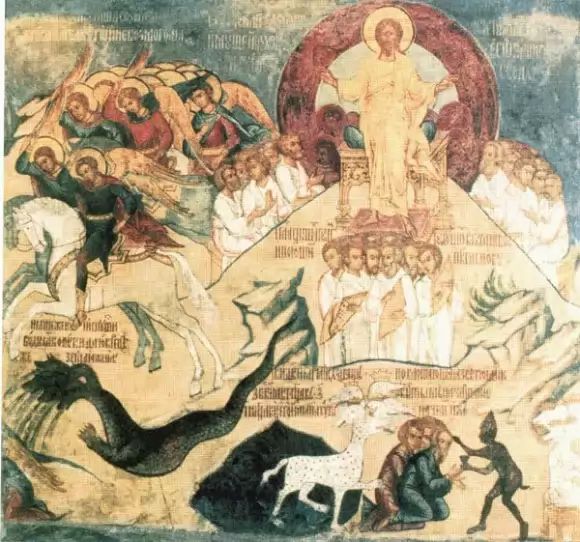
Icon of the Last Judgment. Seventeenth century. 

The fact is that even good deeds, as with all other Christian actions, have their dangers. From the example of the Pharisee and the elder son in the parable of the Prodigal Son we have already seen how religious effort can take on an ungodly character that alienates man from God’s love. The same thing can happen with good deeds. If a Christian immerses himself in them to the point of completely forgetting the primary goal of human existence, then it is unlikely he will do himself any good. Good deeds themselves, if one forgets the memory of death, can acquire the character of an activity that is excited, chaotic, and scattered. 

When the Jewish woman poured precious myrrh onto the head of Jesus, certain of the disciples said among themselves: Why was this waste of ointment made? For it might have been sold… and have been given to the poor (Mark 14:4-5). The indignant disciples probably expected the Savior to endorse their feelings. Christ, however, comes to the defense of this “squanderer”: why trouble ye her? she hath wrought a good work on Me. For ye have the poor with you always, and whensoever ye will ye may do them good: but Me ye have not always (Mark 14:6-7). 

With these words the Savior warns His followers that the work of keeping oneself in the truth of the Gospel is of utmost importance and, moreover, that this does not yield in importance to Christian good deeds; in some cases it even surpasses them. Indeed, Christ tells us that our eternal fate depends entirely and wholly on deeds of mercy. By including this call to mercy in the general discourse on the Second Coming, however, the Gospel establishes the proportionality and consistency of every part of the Christian activity that makes up our salvation. As such, if we will always have in mind the Second Coming and the Dread Judgment, but all the while become so absorbed in the expectation of the end that we lose sight of concrete deeds of mercy, we will most likely not acquire that love without which no one can see God. Yet if we give ourselves over enthusiastically to deeds of love while forgetting about the fleeting and vain nature of all that takes place on earth and the memory of death, then our good deeds will take on an emotional rather than spiritual character and not bring us any closer to God.

In Ecclesiastes we read: To every thing there is a season, and a time to every purpose under the heaven… a time to keep silence… A time to love (3:1-8). A time of silence – a time of solitude and standing noetically before God’s Judgment – is no less essential to Christianity than the active and continuous performance of good deeds. This silence not only returns us from the superficial life around us back to our own depths, but also reminds us of the finite nature of everything that takes place on earth, thereby purifying our love from emotional exaltation.

Therefore, from the publican’s repentance to deeds of love and mercy; from good deeds to the memory of death; and from the memory of death back to repentance and prayer, we must make our journey toward the joyful and bright days of Christ’s Resurrection. The Gospel readings during these preparatory weeks show us the direction we are to follow in our Lenten journey: they are like road signs showing us the way to the Heavenly Jerusalem, to the Lord’s eternal and unceasing Pascha.

Orthodox Saints on Repentance

“Repentance is the beginning, middle and end of the Christian way of life.”

Saint Gregory Palamas

“Always do a metanoia (repentance) when you are wrong. Don’t delay, otherwise the evil one can spread his roots within you.”

Saint Joseph the Hesychast

“To repent is not to look downwards at my own shortcomings, but upwards at God’s Love. It is not to look backwards with self-reproach but forward with trustfulness. It is to see not what I have failed to be, but what by the Grace of Christ I might yet become.”

Saint John Climacus

“Do not be ashamed to turn back and say boldly: I will arise and go to my Father. Arise and go!”

Saint Ephrem the Syrian

“The Lord greatly loves the repenting sinner and mercifully presses him to His bosom: “Where were you, My child? I was waiting a long time for you.” The Lord calls all to Himself with the Voice of the Gospel, and His Voice is heard in all the world: “Come to Me, My sheep. I created you, and I love you. My Love for you brought Me to Earth, and I suffered all things for the sake of your Salvation, and I want you all to know My Love, and to say, like the Apostles on Tabor: Lord, it is good for us to be with You.””

Saint Silouan the Athonite

“There is more mercy in God than there are sins in us. Confess your sins at once, whatever they may be.”

Saint Tikhon of Zadonsk

“Are you wounded? Despair not. Have you fallen? Get up and say bravely: now I have begun. Fall down before your Merciful Master and confess your sins. But before you say anything He will already know what you intend to say. Before you open your lips, He will see what is in your heart. You will not be able to say, “I have sinned” before you see Him stretch forth His hands to receive and embrace you. Approach with faith and He will cleanse you straightaway as He cleansed the leper, lift you from your bed as He lifted the paralytic, and raise you from the dead as He raised Lazarus.”

Saint Ephrem the Syrian

“As every sickness has its treatment, so every sin has repentance.”

Saint Seraphim of Sarov

“We must always remember that we are not condemned for the multitude of our evils, but because we do not want to repent.”

Saint Mark the Ascetic

“Repent, for the Kingdom of Heaven is at hand.”

Saint John the Baptist

“Be ashamed when you sin, don’t be ashamed when you repent. Sin is the wound, repentance is the medicine. Sin is followed by shame; repentance is followed by boldness. Satan has overturned this order and given boldness to sin and shame to repentance.”

Saint John Chrysostom

“Repentance will bring you humility. Humility will bring you the Grace of God. And God will uphold you in His Grace, and will give you whatever you need for your Salvation.”

Saint Paisios the Athonite

“The heart clears with tears and sighs. A sigh with pain of the Soul is equivalent to two buckets of tears…”

Saint Paisios the Athonite

“The Lord calls to Him all sinners; He opens His arms wide, even to the worst among them. Gladly He takes them in His arms, if only they will come to Him.”

Saint Macarius of Optina

“Repentance is a medicine which destroys sin. It is a Heavenly gift.”

Saint John Chrysostom

“The path leading to perfection is long. Pray to God so that He will strengthen you. Patiently accept your falls and, having stood up, immediately run to God, not remaining in that place where you have fallen. Do not despair if you keep falling into your old sins. Many of them are strong because they have received the force of habit. Only with the passage of time and with fervour will they be conquered. Don’t let anything deprive you of hope.”

Saint Nektarios of Aegina

“Confession is a way for man to come to God. It is the offering of the Love of God to man. Nothing and no one is able to deprive us of this Love.”

Saint Porphyrios of Kavsokalyvia

“You must then wash away, by a life of virtue, the dirt which has clung to your heart like plaster, and then your Divine beauty will once again shine forth.”

Saint Gregory of Nyssa

“Every genuine confession humbles the Soul. When it takes the form of thanksgiving, it teaches the Soul that it has been delivered by the Grace of God.”

Saint Maximos the Confessor

“However many and however great and burdensome your sins may be, with God there is greater mercy. Just as His Majesty is, so likewise is His Mercy.”

Saint Tikhon Patriarch of Moscow

“Repentance is the gate of mercy which is opened to all who seek it.”

Saint Isaac the Syrian

“As every sickness has its treatment, so every sin has repentance.”

Saint Seraphim of Sarov

“Repentance is the abandoning of all false paths that have been trodden by men’s feet, and men’s thoughts and desires, and a return to the new path: Christ’s path. But how can a sinful man repent unless he, in his heart, meets with the Lord and knows his own shame? Before little Zacchaeus saw the Lord with his eyes, he met Him in his heart and was ashamed of all his ways.”

Saint Nikolai Velimirovich

“When the air is cleared of clouds, the sun shines brightly; and a Soul freed from its former habits and granted forgiveness has certainly seen the Divine Light.”

Saint John Climacus

Orthodox Saints On Repentance

Key Triodion Quotes / Messages from Sunday of Prodigal Son

In the Matins service for the Sunday of the Prodigal Son, we see how our actions and attitudes have exiled us far from the Love of our Father. We also see how the repentance of the prodigal is received by our merciful Father. The connections between the Prodigal Son, Publican and wise thief are powerful reminders of how crucial it is that we see ourselves with clarity not with a pride that rejects the glory of the Lover of mankind. The pride of how we apply human justice to reject the grace of God seems to be a crucial lesson the elder son has to teach. Our inclination to elevate our judgement above God’s is a common manifestation of pride we see illustrated with the Pharisee last week and now the elder son this week. Perhaps, like me, you can see how my judgements of ‘how it should be’ can separate me from the reality that ’He is everyone present and fillest all things’ … if I have eyes of faith to see.

I have been enslaved to foreign strangers, exiled in the land of corruption, and I am filled with shame. But returning now, O merciful One, I cry to Thee: “I have sinned”.

Utterly beside myself, I have clung insanely to the sins suggested to me by the passions. But do Thou accept me, O Christ, as the Prodigal.

I have wasted in riotous living the riches which the Father hath given me, and am now filled with shame and enslaved to fruitless thoughts. Wherefore I cry unto Thee: “O Lover of mankind be compassionate unto me and save me”.

In hunger I find myself deprived of every blessing, and exiled from Thee O all-good one, be compassionate to me who now return unto Thee,  and save me O Christ, who doth praise Thy love for mankind.

Foolishly have I fled from Thy glory, O Father, * in wickedness wasting the wealth that Thou hast given me. * Wherefore with the voice of the Prodigal I cry unto Thee: * “I have sinned before Thee, O compassionate Father. ** Accept me who repent, and make me as one of Thy hired servants”.

Ikos: Every day our Savior doth teach us with His own voice: let us therefore hearken to the Scriptures concerning the Prodigal who once again became wise, and with faith let us emulate the good example of his repentance. With humbleness of heart let us cry out to Him Who knoweth the hidden things of all: “We have sinned against Thee, O compassionate Father, and can never be worthy to be called Thy children as we were before. But since Thou art by nature the Lover of mankind, accept me and make me as one of Thy hired servants”.

Behold, O Christ, the affliction of my heart; behold my turning back; behold my tears, O Savior, and despise me not. But for the sake of Thy compassion embrace me also once again, that, with the multitude of the saved, I may with thanksgiving sing the praises of Thy mercy.

Like the thief I cry to Thee, “Remember me.” and like the Publican, with eyes cast down to earth, I beat my breast saying, “Be merciful.” Like the Prodigal O compassionate One, deliver me from every evil, O King of all, that I may sing the praises of Thy boundless compassion.

O Good One, I have departed far from Thee, * but forsake me not, neither reject me from Thy Kingdom. * The evil enemy hath stripped me and taken all of my wealth; * I have squandered, like the Prodigal, the good gifts given to my soul. * But now I have arisen and returned, and to Thee I cry aloud: * “Make me as one of Thy hired servants. * For, for my sake on the Cross Thou didst stretch out Thy sinless hands, * to snatch me from the evil beast * and to clothe me once again in my first raiment ** for Thou alone art plenteous in mercy.

Ruled by corrupting thoughts, I am full of darkness and separated far from Thee, and have lost all care for myself, O compassionate One. Therefore save me as I fall down before Thee in repentance

Matins Service Sunday of the Prodigal Son

What does the elder son in the Prodigal Son parable have to teach us?

The theme of exile and how it relates to both sons is crucial and often overlooked. Archimandrite Zacharias (Zacharou) in his book ’At the Doors of Holy Lent’ does a powerful deep dive into how much the elder son has to teach us about the condition of our hearts, how distant our hearts may be from God, and our need for repentance. I think this article is a very good compliment to the article entitled ’Exile of Both Sons’ by Father Robert Aida.

At The Doors of Holy Lent – Archimandrite Zacharias

The elder son may have been a child of the Father, but his heart was not with Him. He lived in his Father’s house enjoying His wealth, but he had not given his heart to Him. He had put his confidence in external works and he never worked on his heart. Therefore, he could not enter the house and join the feast for the return of his brother. He speaks about his brother with no compassion as if he were a stranger. In his dialogue with the Father, without even naming him, he resentfully refers to him with the words, ‘this your son’. 

The firstborn son had wasted his life, turning it into the formal fulfilment of his duty, instead of increasing it and enriching it as an offering of love. If he had nurtured tender love for the Father, he would not have condemned any of His acts, but would have followed His slightest desire as something holy and sacred. 

The elder son represents first the Pharisees, who justified themselves in all things and would have preferred to see a sinner be destroyed rather than forgiven. They put their confidence in their rights and considered themselves to be the elect of God. They thought they knew His law and that they were not transgressing His commandments. On the other hand, blinded as they were by pride, they were not only unable to recognise the Son of God in the Person of the meek and lowly Jesus, but they also confronted Him as a criminal. They condemned Him and in the end they even killed Him. 

This son also represents a number of Christians, who live a comfortable life, performing external pious works and taking for granted their own salvation. Yet, for created and sinful man to enter the heavenly banquet, it is not enough to pay a visit to the church, light a candle, listen to the beautiful chanting and then leave. An ontological transformation must occur in his heart and man must develop an inner relationship of love with his Father ‘which is in heaven’. And since through His incarnation, Christ has become the most known among the three Persons of the Holy Trinity, He is our Father, brother and Saviour, He is all things. Through the invocation of His Name, the heart is changed and cultivated. 

‘Therefore came his father out, and intreated him.’ God humbles Himself before man and condescends to his weaknesses, so as to sustain and care for every soul in His goodness, and receive them in His Kingdom. The Father not only hastened to comfort the prodigal son, but also came out to console his other son who protested at being treated unjustly. 

‘And he answering said to his father, Lo, these many years do I serve thee, neither transgressed I at any time thy commandment: and yet thou never gavest me a kid, that I might make merry with my friends. But as soon as this thy son was come, which hath devoured thy living with harlots, thou hast killed for him the fatted calf. And he said unto him, Son, thou art ever with me, and all that I have is thine. It was meet that we should make merry, and be glad: for this thy brother was dead, and is alive again; and was lost, and is found.’ 

The elder son had fallen prey to the illusion that he had never broken any commandment, his heart was far from his Father. The eyes of his soul were not open to discern the repentance of his brother and the change in his soul. Instead, he only judged his external actions, and though he lacked accurate knowledge of them, he enumerated them. His words contained wilfulness, envy and harshness. The elder son is the personification of human justice, who considers that God is obliged to him and resists His will. If he had given his heart to the Father without reserve, he would have found the trust to take part in the feast with no need to ask for details. He would have rejoiced with the joy of his Father. The man who repents and returns to God is not concerned about anything except His justice and wisdom, which he unquestioningly accepts in times of both sorrow and joy. 

When the Lord appeared after the Resurrection to the disciples at the lake of Gennesaret, He restored Peter as the chief of the apostles with His threefold question: ‘Dost thou love me?’, and then foretold him his martyrdom. Peter turned to John and asked Christ puzzled: ‘What shall this man do?’ The Lord then gave him another great lesson through the words: ‘If I will that he tarry till I come, what is that to thee? follow thou me.’ 37 Our eyes must not wander around to see what the others do, how they react, what they say. Our gaze must remain fixed on the Lord, Who will lead us to the haven of salvation, if we follow Him. 

‘Son, thou art ever with me, and all that I have is thine.’ When we convince God that we love Him as our Father, He gives us all His life. He gives to all the same commandments and the same promises. The knowledge of His love and of His thirst to impart to us by grace all that belongs to Him by nature, floods the soul with gratitude and leaves no room in the heart for the hideous passion of envy. 

The word of the Father, ‘All that I have is thine,’ is fearful. If God Himself is mindful of all things and makes us partakers of His eternal treasure, then we cannot lack anything. His Light shines for all and is not diminished when it illumines not only us but also our brethren. It is like the flame of the candle, which remains the same, even if it ignites millions of other candles. In every portion of His Body and Blood, He gives us the entire wealth of His gifts. The Lord gives us all things, but we also have a great debt: to follow Him and consider the salvation of our brother and of the whole world as our own concern and joy. Then, all the abundance of gifts that sprang from the coming of the Paraclete, the Holy Spirit, will become our own. 

The Light proceeding from the Father gives us the ‘light of the knowledge of the glory of God in the face of Jesus Christ’ 38… The image of the only begotten Son of one substance with the Father, the Logos, kindles a strong desire in us to become like Him in all things… We suffer but in a hitherto-unknown way… We shrink into ourselves, knowing ourselves for what we are, while at the same time God comes forward to embrace us like the father of the prodigal son. Fear and trembling depart from us, giving place to wonder at God. He clothes us in rich garments. He adorns us with great gifts, the noblest of which is all-embracing love. Our initial suffering of repentance is transformed into the joy and sweetness of love which now takes a new form–compassion for every creature deprived of divine Light. 39 

The Lord Jesus Christ Who overcame the world, is a Living God, always present among us. He reigns unto all ages. If we surrender our whole heart to Him with trust and cultivate a relationship of love, humility and thanksgiving with Him, nothing will be able to make us waver. Through the continual and painful struggle of our repentance, we will leave behind our old sins. We will make a new beginning to return to the house of the Father and our life will be blessed and renewed. When the end of time will come, this relationship with the Lord will continue, but on another level, stronger, more perfect, indescribable.