Become a Living Icon: Homily for Sunday of Orthodoxy

By Father Phillip LeMaster

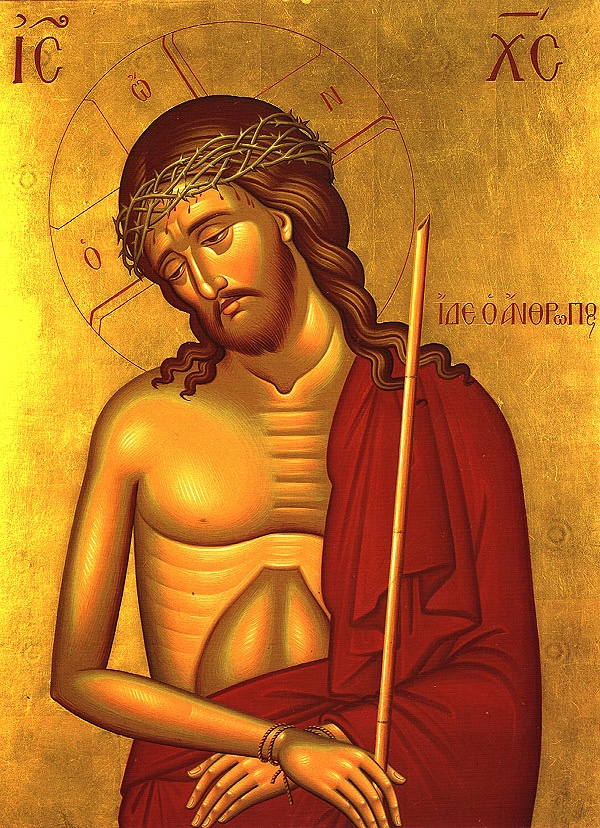
At the end of Liturgy today, we will parade around the church carrying our icons in celebration of the Sunday of Orthodoxy, which commemorates the restoration of icons to the church after the period of iconoclasm many centuries ago.  We do so because Icons are not mere works of decorative art to us; they are windows to heaven which remind us that the Son of God really has become one of us, with a visible human body, and that we are called to become like the saints whose images are portrayed in them.   For we are all icons of God, created in His image and likeness.  Jesus Christ is the new Adam  Who has restored and healed every dimension of our fallen humanity, and brought us into the very life of the Holy Trinity.  It may help us to think of Lent as a time to make ourselves better icons of the Lord.

 When we recall the great saints of the Old Testament mentioned in today’s reading from the Epistle to the Hebrews, we are humbled by their faithfulness, obedience, and humility.  But even they “did not receive the promise, God provided something better for us that they should not be made perfect apart from us.”  As hard as it is to believe, we have been blessed beyond them, for God’s promises in Jesus Christ were not fulfilled in their lifetimes; they hoped for what they did not receive, but their lives were still icons of faithful anticipation of the Messiah.  

We live many generations after the New Testament saints Peter, Andrew, and Nathanael encountered Jesus Christ.  And the Lord’s promise to Nathanael, “you shall see the heaven open, and the angels of God ascending and descending upon the Son of Man,” is the fulfillment of all the hopes and dreams of the Old Testament.  In Jesus Christ, humanity and God are united; no longer shut out of paradise, we are raised to the life of the Heavenly Kingdom by our Lord.  Our destiny is not for the dust and decay of the tomb, but for life everlasting because of His glorious third-day resurrection.

In Lent, we take small, humble, imperfect steps to open ourselves to this new life in Christ, to become better living icons—living images—of what it means for human beings to share in God’s salvation.  The point of Lent is not to punish ourselves or simply to make us feel guilty, miserable, or deprived.  Instead, the purpose of our spiritual exercises is to help us share more fully in the promise fulfilled in Jesus Christ.  We want His holiness, love, mercy, and blessing to reshape every dimension of our lives, to be evident in how we go through the day, in how we treat others, in what we say, think, and feel.  

And the more we grow in His image and likeness, the more we will become our true selves.  Icons portray particular human beings whose lives have shown brightly with the holiness of God.  The unbelievable truth is that, in Christ Jesus, we may do the same.  No matter our age, health, occupation, family circumstances, personality quirks, or anything else, we too may become living, breathing manifestations of our Lord’s salvation when we open ourselves to His healing mercy through prayer, fasting, forgiveness, generosity to the needy, and all the various forms of spiritual nourishment given through the life of the Church.  

There could be no greater optimism about us than what we proclaim on the Sunday of Orthodoxy.  We not only carry icons, we are icons.  We not only venerate icons, we are called to become living proof of what happens to a human being who enters into the eternal blessedness of God, even as we walk around our parish.  Let this sink in:  What the Old Testament saints hoped for, we possess.  This Lent, let’s take Jesus Christ as His word, and prepare—with humility, persistence, and mindfulness- to “see the heaven open and angels of God ascending and descending upon the Son of Man.”  For that is the good news of our salvation.       

Come To The Great Canon And Wake Up

Olivier Clément’s book ’The Song of Tears’ begins with this short, powerful chapter that compellingly illustrates how the Great Canon (like the Orthodox Funeral Service) helps awaken us to the reality of our lives. We so often suppress this reality in the busyness of our daily distractions. Awakening to ‘see the reality of our lives in God’ can help us identify these distortions. We are encouraged to embrace the ’mother of virtues’, humility in the Light of this reality. This chapter is full of references to the Great Canon that are italicized and referenced with a parenthesis noting which ode and the specific troparia/verse within that ode. So, the first reference (4:32) is the 4th ode verse 32 of the full version of the Great Canon done in the 5th week of Lent.

Awakening and the Fear of God – Chapter 1 ’The Song of Tears’ by Olivier Clément

Spiritual death, expressed as biological death, secretly eats away at our existence. Yet, by the very intensity of the anguish it provokes, it can set us on the path of awakening. The fickleness of time and the precariousness of an existence in which everything eludes us is something that is repeatedly emphasized by St Andrew of Crete in his Great Canon: The time of my life is short, filled with trouble and evil (4.32); The end draws near, my soul, the end draws near for the days of our life pass swiftly, as a dream, as a flower (4.11); My life is dead, it is petering out and my mind is wounded, my body has grown feeble, my spirit is sick, my speech has lost its power (9.10).

Thus we become aware of a fundamental emptiness and a sense of failure. St Andrew alludes several times to this background of anguish. Feelings of revulsion and yet a melancholic nostalgia take hold of us when we come to realize the hollowness of our preoccupations, the emptiness of the hustle and bustle and the many concerns and preoccupations in which we seek refuge so as to forget our finiteness. My days have vanished as the dream of one awaking (7.20); I speak boastfully, with boldness of heart, yet all to no purpose and in vain (4.33). That is to say, out of a laughable self-importance or, even more tritely, out of the dreary despondency that is so characteristic of our thoroughly nihilistic age. This is argia, the “sloth” or “idleness” spoken of in the prayer that is recited so frequently in Lent, the Prayer of St Ephraim: “O Lord and Master of my life, give me not a spirit of sloth . . .” Argia, say the ascetics of old, begets forgetfulness, one of the “giants” of sin: forgetfulness of God and thus of oneself and of the other in his mystery; forgetfulness of the truth about beings and things—a sort of sleepwalking filled with fantasies in which the soul, as it were, splinters, breaks up, splits into two. It is precisely this dipsychia, this double-mindedness that the Epistle of St James (1.8) describes as the major sin. In fragmenting, the soul falls prey to the demon whose name is Legion (Mk 5.9). The same night that falls perceptibly with the approach of death had long since begun to enshroud our life, rising from the cracks and the chaos: In night have I passed all my life; for the night of sin has covered me with darkness and thick mist (5.1). A layer of filth encrusts the soul, hardening the heart and rendering it heavy and insensitive: I have defiled my body, I have stained my spirit (392). We have a sense of foreboding that maleficent powers are on the look-out, and that in the shadows the Enemy lurks with his perverted intelligence. The Enemy—that deceiver, that beguiler, that separator: 1 Let me not become the possession and food of the enemy, we pray four times in Ode Four (4.32, 34, 35, 36).

Then, a first blessing is given: the “remembrance of death.” St John Climacus advises us — to make the constant thought of death our “spouse.” 2 In the sobering light of this “remembrance,” our conscience begins to awaken, regardless of our conditioning or our instinct for self-preservation. Solzhenitsyn3 has shown how the experience of the camps—where the remembrance of death was inescapable—can indeed awaken the conscience. I am convicted by the verdict of my own conscience, which is more compelling than all else in the world (4.14). For several of the Fathers—Dorotheus of Gaza, for example4—the conscience is like a divine spark. Thus man is judged from within, and with no possibility of appeal, by his own conscience. He then becomes aware not only that he “sits in darkness and the shadow of death” (Lk 1.79), but that in a certain sense he is in hell; for hell, as Origen said, is precisely the burning sensation caused by one’s own conscience. 5

There remains a certain persistent hunger. I am barren of the virtues of holiness; in my hunger I cry out (1.21). There remains a certain desire, though it has been disappointed for so long by the fantasies we have projected onto the wall of our finiteness. And so, the understanding and the heart begin to undergo change. This is the real meaning of metanoia, which is too often translated as “repentance” but which in fact signifies the transformation of our entire grasp of reality. We begin to shake off our torpor, our self-sufficiency, and that habit of perpetually justifying ourselves by condemning others. It is a return to one’s true self, which becomes a return to God and which manifests itself in confession: With boldness tell Christ of thy deeds and thoughts (4.12); Turn back, repent, uncover all that thou hast hidden. Say unto God, to whom all things are known: Thou alone knowest my secrets, O Savior; “have mercy on me,” as David sings, “according to thy mercy” (7.19).

As this awakening becomes more clearly defined, it brings with it a second blessing: the “fear of God.” This is an attitude that has become alien to many Christians today, probably because it happens to have been linked to a terrorist conception of God. Yet it is important to rediscover its deeper meaning, otherwise we risk remaining insensitive to the fundamental tone of the Great Canon. “The holy fathers place fear of God after faith in the order of virtue,” write Kallistos and Ignatius Xanthopoulos. 6 It is not fear that incites faith, as a terrorist approach to the mystery might well imply. Rather, it is faith that elicits fear—fear in the sense of a feeling of metaphysical dread or awe that wrests us from this world. One might mention here Heidegger’s analysis of angst in Being and Time. Angst, he argues, is caused by the awareness of our absorption into this world of futility, banality, and death. A world of “vanity,” says St Paul (Rom 8.20), in a sense that might be described not as ontological but as “non-ontological”: I have wasted the substance of my soul in riotous living (1.21). Angst causes man to distance himself from this world, sensing that “la vraie vie est ailleurs,” as Rimbaud puts it. 7 Yet such anxiety, when provoked simply by an intuition of nothingness, is insupportable; so man attempts to rid himself of it by exchanging it for various cares and fears. Always, adds Heidegger, a fear of something in the world, whereas angst proper is nothing other than our very awareness of being-in-the-world. It is noteworthy, he continues, that once such a feeling has passed, we are only too ready to say, “It was nothing”; for it was precisely this nothing that was causing us anxiety in the first place.

The “fear of God” takes up again this theme of fundamental angst, but now from within the perspective of our spiritual destiny. Thus the fear of identifying ourselves with the mortal way of the world, with the thirst for security whilst all escapes us, with the thirst for happiness whilst death stalks us—this fear now calls into question our spiritual responsibility. It is no longer a matter of simply discovering our closed finiteness, but an awareness of our sin as being a voluntary separation from God and neighbor, as a spiritual torpor, as entailing the risk that we might miss out on our eternal destiny: I have killed my conscience . . . making war upon the soul by my wicked actions (1.7).

It is a fear that implies the existence of a spiritual authority that transcends this world and before which man will be accountable for his destiny, or rather in the light of which his destiny will be judged and which can, from this point on, begin to judge itself. If men were orphans, alone in the world, if they did not have to render an account to anyone for their absorption into the world, their angst would be inexplicable. This outpouring of anguish—Give ear to the groaning of my soul (2.28)—only has meaning if said to Someone. It has no meaning unless it becomes “fear of God.” And whereas a fear of the world debilitates us and causes us to lose our footing more and more, the “fear of God,” born of a spiritual awakening and of faith, fortifies us, enables us to tear ourselves away from being captivated by “idols,” whether they be fears, passions, or cares. We begin to understand that letting ourselves be absorbed into the world results in our overlooking God. We begin to realize that we have stoned [our] body to death with [our] evil deeds, and killed [our] mind with [our] disordered longings (2.31) and that to care only for the outward adornment is to neglect that which is within—the tabernacle fashioned by God (2.19). Thus, between ourselves and the world, a certain distance is introduced. We can no longer bury ourselves in it because we now make sense of our destiny in a light that is not of this world. We understand that our being absorbed by the world risks compromising our eternal destiny, turning us away from God for ever. This fundamental angst that worries us points to a risk with everlasting consequences—the absence of God, hell. That the incarnate God has nevertheless come to seek us out, even in hell—that is something we shall discover later. We must first of all have a sense of what we have been saved from; or simply of the fact that we need to be saved!

I lie as an outcast before thy gate, O Savior. In my old age cast me not down empty into hell (1.13).

I have found myself stripped naked of God, of the eternal Kingdom and its joy, because of my sins (1.3).

Fear of God is the acceptance here and now of that krisis, that judgment by which, says St Symeon the New Theologian, we anticipate the Last Judgment and which enables us to pass beyond it: “In this present life when, through repentance, we enter freely into . . . the divine light, we find ourselves accused and under judgement; but, owing to the divine love and compassion the accusation and judgement is made in secret, in the depths of our soul, to purify us, that we may receive the pardon of our sins. . . . Those who in this life undergo such a judgement will have nothing to fear from another tribunal.” 8

In this way, say the Fathers—and the Great Canon as a whole progresses in this same direction—man passes little by little from impure fear to a fear that is pure. Impure fear is vanquished by humility, trust, and openness to the vastness of divine love. More exactly, it becomes this openness. On the other hand, as St Maximos the Confessor writes, “Fear that is pure . . . is always present even without remembrance of offences committed. Such fear will never cease to exist, because it is somehow rooted by God in creation and makes clear to everyone his awe-inspiring nature, which transcends all kingship and power.” 9

Notes

1Clément is alluding here to the etymology of the New Testament Greek term for the devil: dia-bolos.

2St John Climacus, The Ladder of Divine Ascent 3.15. Translation: Ladder of Divine Ascent, C. Luibheid and N. Russell, trans. (Mahwah, NJ: Paulist Press, 1982), 87. (Section numbers within the steps appear in the English translation published by Holy Transfiguration Monastery in Brookline, MA; these are found in many Greek and Russian texts, and are provided to allow readers to navigate other versions of the work more easily.—Ed.)

3See Olivier Clément’s 1974 book on Solzhenitsyn: The Spirit of Solzhenitsyn, S. Fawcett and P. Burns, trans. (London & New York: Search Press/ Barnes & Noble, 1976).

4See Dorotheos of Gaza, Discourses and Sayings, E. Wheeler, trans., Cistercian Studies 33 (Collegeville, MN: The Liturgical Press, 2008).

5See Origen, On First Principles 2.10.4.

6Callistus and Ignatius of Xanthopoulos, Directions to Hesychasts 1

7. Translation in Writings from the Philokalia on the Prayer of the Heart, E. Kadloubovsky and G. E. H. Palmer, trans. (London: Faber & Faber, 1951), 190. 7Though Clément must have been aware that what Rimbaud actually wrote in Une saison en enfer (1873) was “La vraie vie est absente,” the misquotation is so well known and so often used that he naturally preferred not to amend it. Moreover, it is admirably suited to the present context.

8Quoted in Vladimir Lossky, The Mystical Theology of the Eastern Church (Crestwood, NY: St Vladimir’s Seminary Press, 1997), 233–34.

9St Maximos the Confessor, Quaestiones ad Thalassium 10.5. Translation in On Difficulties in Sacred Scripture: The Responses to Thalassios, Maximos Constas, trans. (Washington DC: Catholic University of America Press, 2018), 118.

How Is The Humility of the Wise Thief and Harlot highlighted in the Great Canon

Olivier Clement has written a wonderful book entitled ’The Song of Tears’ entirely on the Great Canon. In Chapter 6 , he explores how the Great Canon promotes humility that he describes as ’the basis and crown of all virtues’. In the extract below from this chapter , you will find references to the Great Canon denoted with a parenthesis. The first number will indicate the ode or canticle that is involved and the second the specific troparia verse. This book is another reminder of the depth and majesty of this great work.

By Olivier Clement extracted from Chapter 6 Trust & Humility in ‘The Song of Tears’

It is with the good thief and the harlot that those Orthodox preparing to receive communion identify themselves, as the Prayers before Communion emphasize.

By becoming wholly a being of faith, existing only by his relationship with Christ, man frees himself from his various masks and his pride. He learns humility, which is the basis and crown of all virtue: I have passed my life in arrogance: make me humble and save me (4.4). The soul that is humble lives only by God’s mercy. The ladder of virtues is in fact a descent—a descent into humility, but then “he who humbles himself will be exalted” (Lk 18.14). A saint is simply a sinner who has become fully conscious of the fact, and who is thereby open to God’s grace. In the heroic days of desert asceticism, even the monks with the most abrupt of manners ended by recognizing that all that was needed was humility—in a way that heralds the “little way” of St Thérèse or St Silouan. Do not demand from me worthy fruits of repentance, for my strength has failed within me. Give me an ever-contrite heart and poverty of spirit, that I may offer these to thee as an acceptable sacrifice, O only Savior (9.33). In Step 5 of St John Climacus’ Ladder of Divine Ascent, there is the harrowing description of his visit to the separate monastery of serious penitents called “The Prison”—a voluntary gulag, as it were, for God. Yet it is noteworthy and significant that much later in his book (Step 25), he writes as follows: “In Scripture are the words, ‘I humbled myself, and the Lord hastened to rescue me’ (Ps 114.6); and these words are there instead of ‘I have fasted,’ ‘I have kept vigil,’ ‘I lay down on the bare earth.’”

The fact is that humility assimilates us to that of God himself, to his voluntary humiliation, his great kenosis of love: “Learn from me, for I am meek and lowly in heart” (Mt 11.29). The revelation of God’s own humility touches the proud heart of man, breaks it, and transforms it into a “heart of flesh” (Ezek 36.26). “Let us eagerly follow the ways of Jesus the Savior and his humility, if we desire to attain the everlasting tabernacle of joy and to dwell in the land of the living.” For trust and humility help us become poor in spirit, and it is those who possess nothing whom God can pervade with his joy. Take pity on me, as David sings, and restore to me thy joy (7.18).

The Great Canon’s Call For Us To Return To Our True Home

By Father Lawrence Farley

Every year during Lent we invite into our churches a great pastor, St. Andrew of Crete, and listen while he leads us in a meditation on sin and repentance. That is, we listen while his Great Canon is chanted, and in response we reply over and over again, “Have mercy on me, O God, have mercy on me!” Some things in this long poetic work might strike some moderns as a bit jarring, if not downright pathological—all this self-flagellation over our sins, this torrent of anguish and self-abhorrence. Is all this really necessary? Is it even healthy?

A quick and superficial perusal of the text might leave us wondering. “There has never been a sin or act or vice in life that I have not committed, O Saviour. I have sinned in mind, word, and choice, in purpose, will and action, as no one else has ever done.” “I have sinned, O Lord, I have sinned against You. Be merciful to me. For there is no one who has sinned among men whom I have not surpassed by my sins.” “From my youth, O Christ I have rejected Your commandments. I have passed my whole life without caring or thinking, a slave of my passions. Therefore, O Saviour, I cry to You: at least in the end save me!” Isn’t all this self-condemnation a bit much? And how accurate is it? Are all those people standing about in church for hours on end in Lent really as bad as all that?

Such questions miss the point of the Great Canon. The long meditation from the pen of St. Andrew is not offered as an individual’s personal confession of sin. It is not intended to be the sort of thing one shares with a psychiatrist while lying on his couch, or with one’s confessor while standing before the Cross. It is not intended as autobiography, but as medicine. Like some medicines, it might seem a little severe, and even taste bitter. But it is exactly the medicine that we need, however it might taste.

The disease the medicine is intended to cure is the one now afflicting large segments of our modern secular population—that of careless and serene self-righteousness. We far too easily fall into the assumption that we are pretty sensational spiritually, and that we have racked up an impressive score. We soon enough become blind to our true spiritual state. We can see others’ sins clearly enough, especially when they sin against us, but our own failings often seem to elude us.

I remember this kind of delusional approach being expressed on the radio one afternoon. A lady was being interviewed about her life and her life choices, and she said that she really couldn’t bring herself to regret anything she had ever done, because all her actions combined to make her the person she was today. Quite the confession! Really—she couldn’t bring herself to regret anything? Ever in all her life? Speaking personally, I can find plenty of things I regret doing, saying, and thinking in the last twenty-four hours, never mind all my life. The interviewed lady seems to reflect a culture in the last stages of the “I’m Okay; You’re Okay” disease. We are just fine spiritually, and we can’t bring ourselves to regret anything we have done.

Into this den of insanity and illness comes St. Andrew of Crete, bearing just the right medicine. We need to hear him, to listen to our conscience afresh, and to submissively receive its inner rebuke. Something inside of us is indeed broken and dark, diseased and dying. By confessing the brokenness, by admitting to the darkness, we can begin to separate ourselves from them, and to find healing and soundness of mind and peace. The World with its lies shouts at us every day, all day long, without ceasing. We need a rival voice, the voice of sanity, a voice calling us home. We need St. Andrew and his Great Canon. Maybe that is why he is so welcome in our churches every Lent.

Full Article

Can reflecting on an individual ode (of the Great Canon) be useful?

Last night we had our first encounter of Lent with the Great Canon of St. Andrew. Let’s examine just one of the nine odes we heard in more depth. Specifically, let’s add the Biblical verses (both Old and New Testament) that support the troparia written by St. Andrew. We’ll just examine and reflect on the 2nd ode.

My hope is that this may strengthen the connection between what we’ve heard and its scriptural support in a way that deepens our acceptance and response to his continual call for repentance while also reminding us of God’s acceptance of us … when we approach Him with the truth of how dependent we are upon His mercy and Grace.

Clean Monday Night 2nd Canon – Great Canon of St. Andrew

He is my Helper and Protector, and has become my salvation. This is my God and I will glorify Him. My father’s God and I will exalt Him. For gloriously has He been glorified. (Exodus 15:2,1; Psalm 117:14)

The Lord is my strength and song, and he is become my salvation: he is my God, and I will prepare him an habitation; my father’s God, and I will exalt him

Exodus 15:2 , 1

The Lord is my strength and my song , and He is become my salvation

Psalm 117:14

Attend, O heaven, and I will speak; O earth, give ear to a voice repenting to God and singing praises to Him.


Attend to me, O God my Savior, with Thy merciful eye, and accept my fervent confession. (Proverbs 15:3; Psalm 33:15)

The eyes of the Lord are in every place, beholding the evil and the good.

Proverbs 15:3

The eyes of the Lord are upon the righteous, and His ears are opened unto their supplication.

Psalm 33:15


I have sinned above all men, I alone have sinned against Thee. But as God have compassion, O Savior, on Thy creature. (1 Tim. 1:15)

This is a faithful saying, and worthy of all acceptation, that Christ Jesus came into the world to save sinners; of whom I am chief.

1 Timothy 1:15


Having formed by my pleasure-loving desires the deformity of my passions, I have marred the beauty of my mind.


A storm of passions besets me, O compassionate Lord. But stretch out Thy hand to me too, as to Peter. (Matthew 14:31)

And immediately Jesus stretched forth his hand, and caught him, and said unto him, O thou of little faith, wherefore didst thou doubt?

Matthew 14:31


I have stained the coat of my flesh, and soiled what is in Thy image and likeness, O Savior.


I have darkened the beauty of my soul with passionate pleasures, and my whole mind I have reduced wholly to mud.


I have torn my first garment which the Creator wove for me in the beginning, and therefore I am lying naked. (Genesis 3:21)

Unto Adam also and to his wife did the LordGod make coats of skins, and clothed them

Genesis 3:21

I have put on a torn coat, which the serpent wove for me by argument, and I am ashamed. (Genesis 3:4-5)

And the serpent said unto the woman, Ye shall not surely die. For God doth know that in the day ye eat thereof, then your eyes shall be opened, and ye shall be as gods, knowing good and evil.

Genesis 3:4 – 5


The tears of the harlot, O merciful Lord, I too offer to Thee. Be merciful to me, O Savior, in Thy compassion. (Luke 7:38; 18:13)

She stood at his feet behind him weeping, and began to wash his feet with tears, and did wipe them with the hairs of her head, and kissed his feet, and anointed them with the ointment.

And the publican, standing afar off, would not lift up so much as his eyes unto heaven, but smote upon his breast, saying, God be merciful to me a sinner.

Luke 7:38 and Luke 18:13


I looked at the beauty of the tree, and my mind was seduced; and now I lie naked, and I am ashamed. (Genesis 3:7)

And the eyes of them both were opened, and they knew that they were naked; and they sewed fig leaves together, and made themselves aprons.

Genesis 3:7


All the demon-chiefs of the passions have plowed on my back, and long has their tyranny over me lasted. (Psalm 128:3)

The sinners wrought upon my back, they lengthened out their iniquity

Psalm 128:3


Beginning of Great Lent 2022

Archpastoral Message of
His Beatitude Metropolitan Tikhon

March 7, 2022

To the Clergy, Monastics, and Faithful of the Orthodox Church in America,

Dear Beloved Children in the Lord,

As we stand at this moment, the threshold of Great Lent, with all turmoil and violence unfolding in the world, the Lenten fast comes like a spring breeze to refresh our souls. It is a time during which we take stock of our hearts, discard the unnecessary things of this world, refocus our spiritual vision, and bring our pains and griefs before God’s healing presence.

Even in the midst of everything we endure; a pandemic, social unrest, economic uncertainty, and now war in Ukraine, we must remember to always attend to doing good and becoming ever-brighter beacons of Christ’s light in this darkening world.

We hear this through the Prophet Isaiah, where the Lord tells us what distinguishes our true fast: 

“Is not this the fast that I choose:
to loose the bonds of wickedness,
to undo the cords of the yoke,
to let the oppressed go free,
and to break every yoke?” (Is 58:6)

In this turbulent moment, the Fast is a call to freedom as children of God through our spiritual discipline. In our time, there are many “bonds of wickedness” and “cords of the yoke” which Lent urges us to loose—but above all, the sins which bind our souls.

We also remember that Lent calls us to control not just our stomachs but our eyes, hands, feet, and mind. We avoid gluttony of food, but likewise we ought to avoid gluttony of all sorts: in recreation, media, or conversation with others. As the Scriptures tell us, “Every athlete exercises self-control in all things” (1 Cor 9:25).

This Lent, be especially on guard with social media, which too easily inflames our passions, devours our time, and devolves into the “foolish controversies” which Saint Paul warns us to avoid, “for they are unprofitable and futile” and only disturb our brothers and sisters in Christ (cf. Titus 3:9). 

We are assured in the Letter to the Galatians that “For freedom Christ has set us free; stand fast therefore, and do not submit again to a yoke of slavery” (Gal 5:1). With these words we fast with cheerful hearts, because it is in our self-denial that we find freedom in the Resurrection.

So as we take up the spiritual disciplines given to us by our Lord, I pray that it is with a spirit of renewed commitment and not with a spirit of gloominess. Nor should we, as Christ warns, “look dismal, like the hypocrites, for they disfigure their faces that their fasting may be seen by men” (Mt 6:16). Great Lent is our much needed time of refreshment of the heart and cleansing of the soul, so that we may more clearly perceive the light of Christ on Great and Holy Pascha.

When we each ask God to “open to me the gates of repentance” this Lent, remember that we do not fast to earn God’s love or to impress others around us. Over the next forty days we break the chains of sin and evil by controlling the things which control us—and so become free people. Let us run towards this freedom in the coming weeks.

Beloved children in the Lord, I conclude by directing you to keep in prayer those suffering in the calamity of war: the wounded, the grieving, and the displaced. Please also be of service to them in your charity and almsgiving this Lent. Remember also those who have been killed in this war. May God keep their memory eternal.

I humbly ask your forgiveness. May you have all the blessings of our Lord, God, and Savior Jesus Christ in your Lenten journey.

I remain sincerely yours in Christ,

+TIKHON
Archbishop of Washington
Metropolitan of All America and Canada

Adam’s Expulsion From Paradise & Forgiveness Sunday Adult Education Class

This week we face the challenge in the mirror of who Adam is for us and to us. The homilies and reflections I’ve chosen are ones that remind us of a theme we’ve been exploring before … that the judgments of ourselves, our neighbors and God get in the way of His mercy. And is there anything needed more today than His mercy?

Adam’s sin was certainly disobedience but these reflections suggest that his response to his disobedience … his dishonesty in not accepting the reality of his disobedience, his fear that he would be punished and his encounter with shame, his judgement that he should blame Eve and even blame God for giving him Eve , his decision to hide from God instead of to seek God out … that his response to protect what was false and hide from what was true is the ’condition of heart’ that lead Adam away from God. And so it is with us … with the prodigal in us, with the elder son in us, with the Pharisee in us … all real and undeniable in us … truly a mirror of who we are. Our Lenten preparation hopefully now leaves us in the place of humility that Father Thomas Hopko so beautifully describes as ’seeing reality as it is in God’ and with this humility as the ’mother of virtues’ we need as we begin our journey in Lent.

However, this Sunday also moves us from this mirror of our exile to a communal and very tangible expression of reconciliation and forgiveness. Father Alexander Schmemann once again provides us some very useful and practical guidance for why forgiveness is so essential to what we are about to begin in Lent on this Forgiveness Sunday.

This week , I’d also like us to discuss the Lenten ’Prayer of St. Ephraim’ and the wisdom of Archbishop’s Kailistos’s Ware guidance on fasting.

So our class readings this Sunday will include:

  1. How can the lesson of Adam help me accept my sinfulness before God; not justify it?
  2. What is the meaning of Forgiveness Sunday?
  3. Why is the ’Prayer of St. Ephraim’ our Lenten Prayer?
  4. Why do we fast? (Excerpted from Triodion)

Although we won’t have time to go further than these readings, this week a lot of supplemental information was shared that may be useful and relevant to where we find ourselves. These additional articles include:

Adam’s Lament – Saint Silouan of Mt Athos

St. Silouan is important Orthodox Saint of the 20th century canonized in 1987. His life was chronicled by his disciple Sophrony who himself was also recently canonized on November 27th 2019. Saint’s Sophrony’s book, “Wisdom From Mt. Athos; The Writings of St. Silouan 1866-1938’ contains a very powerful poem entitled ’Adam’s Lament’. This poem mystically captures the heart of both of this Sunday’s themes of the clarity and realism of ’Adam’s Exile from Paradise’ as well as the essential of reconciliation for repentance in ’Forgiveness Sunday’. It also poignantly relates Adam’s plight to our own. The hymns we’ve been singing in Pre-Lent of our exile in a foreign land (Psalm 137) and our desperate need for the “open doors of repentance’ really come alive in the context of this poem. The poem is further amplified by the fact that St. Silouan was barely literate and yet empowered by the Holy Spirit became such a prolific and inspiring writer.

Arvo Pärt is a world renown composer from Estonia who has found ways to incorporate his deep spiritual journey in Orthodoxy into his incredibly creative accomplishments in choral and symphonic composition. He was so impacted by St. Silouan’s poem ’Adam’s Lament’ that he made it into a composition that has been well received critically in the 21st century. You can hear it performed by the Canadian performing artists Soundstream below.

Here is what Avro said about this poem in the liner notes of the recording of ‘Adam’s Lament’. You can read a review of this here.

For the holy man Silouan of Mount Athos, the name Adam is like a collective term which comprises humankind in its entirety and each individual person alike, irrespective of time, epochs, social strata and confession. But who is this banished Adam? We could say that he is all of us who bear his legacy. And this “Total Adam” has been suffering and lamenting for thousands of years on earth. Adam himself, our primal father, foresaw the human tragedy and experienced it as his personal guilt. He has suffered all human cataclysms, unto the depths of despair.

Holy Silouan’s writings have great poetic, expressive power; their central message is Love – Love and Humility. All of his texts, everything he wanted to accomplish with his life was concerned with the issue of humility. Yet the true meaning of the term is difficult to apprehend – like marble, its beauty radiates from its depths.

Avro Pärt – ECM Recording Liner Notes
Adam’s Lament composed by Avro Pärt performed by Soundstreams in 2009

Adam’s Lament By St. Silouan the Athonite

Adam, father of all mankind, in paradise knew the sweetness of the love of God; and so when for his sin he was driven forth from the garden of Eden, and was widowed of the love of God, he suffered grievously and lamented with a great moan. And the whole desert rang with his lamentations, for his soul was racked as he thought, ‘I have distressed my beloved God’. He sorrowed less after paradise and the beauty thereof; for he sorrowed that he was bereft of the love of God, which insatiably, at every instant, draws the soul to Him.

In the same way the soul which has known God through the Holy Spirit, but has afterwards lost grace experiences the torment that Adam suffered. There is an aching and a deep regret in the soul that has grieved the beloved Lord.

Adam pined on earth, and wept bitterly, and the earth was not pleasing to him. He was heartsick for God, and this was his cry:

My soul wearies for the Lord, 
and I seek Him in tears.

How should I not seek Him?

When I was with Him my soul was glad and at rest, 
and the enemy could not come nigh me;

But now the spirit of evil has gained power over me, 
harassing and oppressing my soul,

So that I weary for the Lord even unto death,

And my spirit strains to God, 
and there is naught on earth can make me glad,

Nor can my soul take comfort in any thing, 
but longs once more to see the Lord, 
that her hunger may be appeased.

I cannot forget Him for a single moment, 
and my soul languishes after Him,

and from the multitude of my afflictions I lift up my voice and cry:

‘Have mercy upon me, O God. Have mercy on Thy fallen creature.’

Thus did Adam lament, and the tears steamed down his face on to his beard, on to the ground beneath his feet, and the whole desert heard the sound of his moaning. The beasts and the birds were hushed in grief; while Adam wept because peace and love were lost to all men on account of his sin.

Adam knew great grief when he was banished from paradise, but when he saw his son Abel slain by Cain his brother, Adam’s grief was even heavier. His soul was heavy, and he lamented and thought: 

Peoples and nations will descend from me, and multiply, and suffering will be their lot, and they will live in enmity and seek to slay one another.

And his sorrow stretched wide as the sea, and only the soul that has come to know the Lord and the magnitude of His love for us can understand.

I, too, have lost grace and call with Adam:

Be merciful unto me, O Lord! Bestow on me the spirit of humility and love.

O love of the Lord! He who has known Thee seeks Thee, tireless, day and night, crying with a loud voice: 

“I pine for Thee, O Lord, and seek Thee in tears. 

How should I not seek Thee?

Thou didst give me to know Thee by the Holy Spirit,

And in her knowing of God my soul is drawn to seek Thee in tears.”

Adam wept:

The desert cannot pleasure me; nor the high mountains, nor meadow nor forest, nor the singing of birds.

I have no pleasure in any thing.

My soul sorrows with a great sorrow:

I have grieved God.

And were the Lord to set me down in paradise again,

There, too, would I sorrow and weep – ‘O why did I grieve my beloved God?’

The soul of Adam fell sick when he was exiled from paradise, and many were the tears he shed in his distress. Likewise every soul that has known the Lord yearns for Him, and cries:

Where art Thou, O Lord? Where art Thou, my Light?

Why hast Thou hidden Thy face from me?

Long is it since my soul beheld Thee,

And she wearies after Thee and seeks Thee in tears.

Where is my Lord?

Why is it that my soul sees Him not?

What hinders Him from dwelling in me?

This hinders Him: Christ-like humility and love for my enemies art not in me.

God is love insaturable, love impossible to describe.

Adam walked the earth, weeping from his heart’s manifold ills, while the thoughts of his mind were on God; and when his body grew faint, and he could no longer shed tears, still his spirit burned with longing for God, for he could not forget paradise and the beauty thereof; but even more was it the power of His love which caused the soul of Adam to reach out towards God.

I write of thee, O Adam:

But thou art witness,
my feeble understanding cannot fathom thy longing after God, 

Nor how thou didst carry the burden of repentance.

O Adam, thou dost see how I, thy child, suffer here on earth.

Small is the fire within me, and the flame of my love flickers low.

O Adam, sing unto us the song of the Lord,

That my soul may rejoice in the Lord

And be moved to praise and glorify Him
as the Cherubim and Seraphim praise Him in the heavens

And all the hosts of heavenly angels
sing to Him the thrice-holy hymn.

O Adam, our father, sing unto us the Lord’s song,

That the whole earth may hear

And all thy sons may lift their minds to God
and delight in the strains of the heavenly anthem,

And forget their sorrows on earth.

The Holy Spirit is love and sweetness for the soul, mind and body. And those who have come to know God by the Holy Spirit stretch upward day and night, insatiable, to the living God, for the love of God is very sweet. But when the soul loses grace her tears flow as she seeks the Holy Spirit anew.

But the man who has not known God through the Holy Spirit cannot seek Him with tears, and his soul is ever harrowed by the passions; his mind is on earthly things. Contemplation is not for him, and he cannot come to know Jesus Christ. Jesus Christ is made known through the Holy Spirit.

Adam knew God in paradise, and after his fall sought Him in tears.

O Adam, our father, tell us, thy sons, of the Lord.

Thy soul didst know God on earth,

Knew paradise too, and the sweetness and gladness thereof,

And now thou livest in heaven and dost behold the glory of the Lord.

Tell of how our Lord is glorified for His sufferings.

Speak to us of the songs that are sung in heaven, how sweet they are,

For they are sung in the Holy Spirit.

Tell us of the glory of the Lord,
of His great mercy and how He loveth His creature.

Tell us of the Most Holy Mother of God,
how she is magnified in the heavens,

And the hymns that call her blessed.

Tell us how the Saints rejoice there, radiant with grace.

Tell us how they love the Lord,
and in what humility they stand before God.

O Adam, comfort and cheer our troubled souls.

Speak to us of the things thou dost behold in heaven.

Why art thou silent?

Lo, the whole earth is in travail.

Art thou so filled with the love of God that thou canst not think of us?

Or thou beholdest the Mother of God in glory,
and canst not tear thyself from the sight,

And wouldst not bestow a word of tenderness on us who sorrow,

That we might forget the affliction there on earth?

O Adam, our father,
thou dost see the wretchedness of thy sons on earth.
Why then art thou silent?

And Adam speaks:

My children, leave me in peace.

I cannot wrench myself from the love of God to speak with you.

My soul is wounded with love of the Lord and rejoices in His beauty.

How should I remember the earth?

Those who live before the Face of the Most High 
cannot think on earthly things.

O Adam, our father, thou hast forsaken us, thine orphans,
though misery is our portion here on earth.

Tell us what we may do to be pleasing to God?

Look upon thy children scattered over the face of the earth,
our minds scattered too.

Many have forgotten God.

They live in darkness and journey to the abysses of hell.

Trouble me not. I see the Mother of God in glory – 

How can I tear myself away to speak with you?

I see the holy Prophets and Apostles, 
and all they are in the likeness of our Lord Jesus Christ, Son of God.

I walk in the gardens of paradise, 
and everywhere behold the glory of the Lord.

For the Lord is in me and hath made me like unto Himself.

O Adam, yet we are they children!

Tell us in our tribulation how we may inherit paradise,

That we too, like thee, may behold the glory of the Lord.

Our souls long for the Lord,
while thou dost live in heaven and rejoice in the glory of the Lord.

We beseech thee – comfort us.

Why cry ye out to me, my children?

The Lord loveth you and hath given you commandments.

Be faithful to them, love one another, and ye shall find rest in God.

Let not an hour pass without ye repent of your transgressions, 

That ye may be ready to meet the Lord.

The Lord said: ‘I love them that love me, 
and glorify them that glorify me.’

O Adam, pray for us, thy children.
Our souls are sad from many sorrows.

O Adam, our father, thou dwellest in heaven
and dost behold the Lord seated in glory

On the right hand of God the Father.

Thou dost see the Cherubim and Seraphim and all the Saints

And thou dost hear celestial songs
whose sweetness maketh thy soul forgetful of the earth.

But we here on earth are sad, and e weary greatly after God.

There is little fire within us with which to love the Lord ardently.

Inspire us, what must we do to gain paradise?

Adam makes answer:

Leave me in peace, my children, for from sweetness of the love of God I cannot think about the earth.

O Adam, our souls are weary, and we are heavy-laden with sorrow.

Speak a word of comfort to us.

Sing to us from the songs thou hearest in heaven,

That the whole earth may hear and men forget their afflictions.

O Adam, we are very sad.

Leave me in peace. 
The time of my tribulation is past.

From the beauty of paradise and the sweetness of the Holy Spirit 
I can no longer be mindful of the earth.

But this I tell you:

The Lord loveth you, and do you live in love 
and be obedient to those in authority over you.

Humble your hearts, and the Spirit of God will live in you.

He cometh softly into the soul and giveth her peace,

And bearth wordless witness to salvation.

Sing to God in love and lowliness of Spirit, 
for the Lord rejoiceth therein.

O Adam, our father, what are we to do?

We sing but love and humility are not in us.

Repent before the Lord, and entreat of Him.

He loveth man and will give all things.

I too repented deeply and sorrowed much that I had grieved God,

And that peace and love were lost on earth because of my sin.

My tears ran down my face. 
My breast was wet with my tears, and the earth under my feet;

And the desert heard the sound of my moaning.

You cannot apprehend my sorrow, 
nor how I lamented for God and for paradise.

In paradise was I joyful and glad: 
the Spirit of God rejoiced me, and suffering was a strange to me.

But when I was driven forth from paradise 
cold and hunger began to torment me;

The beasts and the birds that were gentle and had loved me 
turned into wild things

And were afraid and ran from me.

Evil thoughts goaded me.

The sun and the wind scorched me.

The rain fell on me.

I was plagued by sickness and all the afflictions of the earth.

But I endured all things, trusting steadfastly in God.

Do ye, then, bear the travail of repentance.

Greet tribulation. Wear down your bodies. Humble yourselves

And love your enemies,

That the Holy Spirit may take up His abode in you,

And then shall ye know and attain the kingdom of heaven.

But come not nigh me:

Now from love of God 
have I forgotten the earth and all that therein is.

Forgotten even is the paradise I lost, 
for I behold the glory of the Lord

And the glory of the Saints 
whom the light of God’s countenance maketh radiant 
as the Lord Himself.

O Adam, sing unto us a heavenly song,

That the whole earth may hearken
and delight in the peace of love towards God.

We would hear those songs:

Sweet are they for they are sung in the Holy Spirit.

Adam lost the earthly paradise and sought it weeping. But the Lord through His love on the Cross gave Adam another paradise, fairer than the old – a paradise in heave where shines the Light of the Holy Trinity.

What shall we render unto the Lord for His love to us?

What is the meaning of Forgiveness Sunday?

By Father Alexander Schmemann

In the Orthodox Church, the last Sunday before Great Lent – the day on which, at Vespers, Lent is liturgically announced and inaugurated – is called Forgiveness Sunday.

On the morning of that Sunday, at the Divine Liturgy, we hear the words of Christ: 

“If you forgive men their trespasses, your heavenly Father will also forgive you, but if you forgive not men their trespasses, neither will your Father forgive your trespasses…”

Mark 6: 14-15

Then, after Vespers – after hearing the announcement of Lent in the Great Prokeimenon: “Turn not away Thy face from Thy child for I am afflicted! Hear me speedily! Draw near unto my soul and deliver it!” [and] after making our entrance into Lenten worship, with its special memories, with the prayer of St. Ephraim the Syrian, with its prostrations – we ask forgiveness from each other, we perform the rite of forgiveness and reconciliation. And as we approach each other with words of reconciliation, the choir intones the Paschal hymns, filling the church with the anticipation of Paschal joy.

What is the meaning of this rite? Why is it that the Church wants us to begin Lenten season with forgiveness and reconciliation? These questions are in order because for too many people, Lent means primarily, and almost exclusively, a change of diet, the compliance with ecclesiastical regulations concerning fasting. They understand fasting as an end in itself, as a “good deed” required by God and carrying in itself its merit and its reward. But, the Church spares no effort in revealing to us that fasting is but a means, one among many, towards a higher goal: the spiritual renewal of man, his return to God, true repentance and, therefore, true reconciliation. The Church spares no effort in warning us against a hypocritical and pharisaic fasting, against the reduction of religion to mere external obligations. As a Lenten hymn says: “In vain do you rejoice in no eating, O soul!  For you abstain from food, but from passions you are not purified.  If you persevere in sin, you will perform a useless fast.”

Now, forgiveness stands at the very center of Christian faith and of Christian life because Christianity itself is, above all, the religion of forgiveness. God forgives us, and His forgiveness is in Christ, His Son, Whom He sends to us, so that by sharing in His humanity we may share in His love and be truly reconciled with God. Indeed, Christianity has no other content but love. And it is primarily the renewal of that love, a return to it, a growth in it, that we seek in Great Lent, in fasting and prayer, in the entire spirit and the entire effort of that season. Thus, truly forgiveness is both the beginning of, and the proper condition for the Lenten season.

One may ask, however: Why should I perform this rite when I have no “enemies”? Why should I ask forgiveness from people who have done nothing to me, and whom I hardly know? To ask these questions is to misunderstand the Orthodox teaching concerning forgiveness. It is true, that open enmity, personal hatred, real animosity may be absent from our life, though if we experience them, it may be easier for us to repent, for these feelings openly contradict Divine commandments. But, the Church reveals to us that there are much subtler ways of offending Divine Love. These are indifference, selfishness, lack of interest in other people, of any real concern for them—in short, that wall which we usually erect around ourselves, thinking that by being “polite” and “friendly” we fulfill God’s commandments. The rite of forgiveness is so important precisely because it makes us realize – be it only for one minute – that our entire relationship to other men is wrong, makes us experience that encounter of one child of God with another, of one person created by God with another, makes us feel that mutual “recognition” which is so terribly lacking in our cold and dehumanized world.

On that unique day, listening to the joyful Paschal hymns, we are called to make a spiritual discovery: to taste of another mode of life and relationship with people, of life whose essence is love. We can discover that always and everywhere Christ, the Divine Love Himself, stands in the midst of us, transforming our mutual alienation into brotherhood. As l advance towards the other, as the other comes to me – we begin to realize that it is Christ Who brings us together by His love for both of us.

And because we make this discovery – and because this discovery is that of the Kingdom of God itself: the Kingdom of Peace and Love, of reconciliation with God and, in Him, with all that exists – we hear the hymns of that Feast, which once a year, “opens to us the doors of Paradise.”

We know why we shall fast and pray, what we shall seek during the long Lenten pilgrimage. Forgiveness Sunday: the day on which we acquire the power to make our fasting – true fasting; our effort – true effort; our reconciliation with God – true reconciliation.

Each of us has become our own Adam

By Father Jonathon Lincoln

For, although Adam sinned first and has brought death upon all who were not in his own time, yet each of them who has been born from him has prepared for himself the coming torment. And further, each of them has chosen for himself the coming glory…. Adam is, therefore, not the cause, except only for himself, but each of us has become our own Adam.

2 Baruch 54:15, 19

“Each of us has become our own Adam.” Each of us has run away from God, each of us has repeated the sin of choosing death rather than life. To each of us, God gives us an opportunity for repentance, calling out, “Where are you? Come back!” (Gen. 3:9). 

And in that same sense, each of us is the prodigal son. God waits patiently for our return, eagerly watching the road (Luke 15:20). Like the prodigal son, the only person we can ultimately find responsibility for our sins is…ourselves.

Fr. Alexander Schmemann’s reflection on this parable in Great Lent: Journey to Pascha beautifully relates the self-inflicted sufferings of the younger brother to each and every person, as we have all, to some degree, traded the freedom of our Father’s home for slavery in exile. 

It is easy indeed to confess that I have not fasted on prescribed days, or missed my prayers, or become angry. It is quite a different thing, however, to realize suddenly that I have defiled my spiritual beauty, that I am far away from my real home, my real life, and that something precious and pure and beautiful has been hopelessly broken in the very texture of my existence. Yet this, and only this, is repentance, and therefore it is also a deep desire to return, to go back, to recover that lost home.

Fr. Alexander Schmemann, Great Lent: Journey to Pascha, pp. 21-22

The hymns for the feast likewise make the connection to my own life: am the prodigal son. 

I, a wretched man, hide my face in shame:
I have squandered the riches my Father gave to me;
I went to live with senseless beasts;
I sought their food and hungered, for I had not enough to eat.
I will arise, I will return to my compassionate Father;
He will accept my tears, as I kneel before Him, crying:
“In Thy tender love for all men, receive me as one of Thy servants and save me!”

“Glory” verse at the Aposticha at Great Vespers, Tone 6

The parable of the Prodigal Son shows us the importance of personal responsibility for our sins—how owning up to our failings, truly repenting from the depths of our heart, is the first step toward reunification with our loving Father.

What this return to God demands, therefore, is the courage to face our sins, to own up for our mistakes and not to blame other people or our circumstances. Courage with humility—”I recognize that I’ve wounded myself, and now it’s time to come clean.”

We spend so much time trying to convince ourselves that we’re OK, that we’re not so bad, that other people are worse, that it’s someone else’s fault; all of these thoughts are barriers to repentance, barriers to the reaching the deep place of the soul, where our real person lives, deep below our personas, self-justifications, and excuses. 

Each of us has become our own Adam.

Each of us has become our own prodigal son. 

But each of us also has an opportunity to return to God, today, while there is still time.