Triodion – CheeseFare Week – Themes Preparing Us For Great Lent

Up to this point, the Triodion has only had messages for us on Sundays. This week it begins to expand itself into daily Matins and Vespers services. These Triodion daily services continue throughout Lent and Holy Week.

So, what are the key messages for this first day of daily Triodion services?

Monday’s Triodion messages fit into themes that look backwards at our Pre-Lenten preparation as well as forward to the upcoming Sunday of the Expulsion of Adam from Paradise and of course the Lenten Fast itself which begins a week from today on March 7th. Below are the key themes along with some quotes from Monday’s Daily Matins and Vespers Services.

1. Desire/Eagerness (Zacchaus)

The entranceway to divine repentance * hath been opened: * let us eagerly enter therein, * purified in body and observing abstinence * from food and the passions, * as obedient servants of Christ * who hath called the world into the heavenly Kingdom. * Let us offer unto the King of all * a tenth part of the whole year, ** that with love we may behold His Resurrection.

The bright forefeast of the time of abstinence, the bright threshold of the Fast hath appeared today, wherefore brethren, let us run the race with hope and great eagerness.

2. Humility/ God’s Mercy (Publican)

My way of life is shameful and bitter, but Thy mercy and compassion are immeasurable O Lover of mankind, wherefore I beseech Thee O Savior, grant unto me who doth sing Thy praises with love, time for repentance.

3. Repentance (Prodigal)

Having wasted my whole life living prodigally, I have been hired by bitter and wicked citizens; but O Christ who desireth that I turn back to Thy compassion, reject me not.

The beginning of compunction and repentance is to make a stranger of sin and abstain from passions. Therefore, let us hasten to cut off our wicked deeds.

Behold, the door of repentance hath already opened, O friends of God: come, let us make haste to enter therein, that Christ not close it and we be shut out as unworthy

4. Being Merciful & God’s Judgement (Last Judgement)

Behold, now is the season of repentance, the forefeast that prepareth us to enter the Fast. Awake, O my soul, and with a fervent heart be reconciled to thy God and Benefactor, and thus escape His just and truly fearful judgment

The time for repentance hath begun; be not heedless, O my soul. Give bread to the hungry, and pray unto the Lord every day and night and each hour, that He may save thee.

5. Expulsion of Adam from Paradise (Coming This Sunday)

By transgressing I have emulated our forefather Adam, and wretched as I am, I have been cast out from sweet joy. Therefore I fall down before Thee in repentance weeping: O Lord save me.

6. Lenten Fast & Fasting ( Our fast begins slowly this week and in high gear next)

At all times the Fast is profitable for those * who choose to observe it, * for the temptations of devils are rendered ineffective * against those who fast, * rather the protectors of our lives, the angels, * abide with us who with fortitude, ** cleanse ourselves by fasting.

With fasting let us hasten to wash away * the filth of our transgressions, * and by means of mercy and compassion to the poor, * let us enter the bridal chamber of the Bridegroom Christ, ** who hath bestowed upon us great mercy.

7. Preparation and Purifying Ourselves ( General throughout Pre-Lent and Lent)

Announcing that spring is upon us, the week of cleansing which prepareth us for the holy Fast, let us all now illumine our souls and bodies thereby

Standing before the entrance and gateway of the Fast, let us not begin it with reckless abandon and drunkenness, rather, let us eagerly enter with purity of thought, that we may worthily receive crowns of immortality and the fruit of our labors.

The Danger of Judging Others – Father Luke Veronis

How many of us think we’re better than some others? Honestly, how many of us have judged someone else, thinking that we’re not like them because we’re better? We condemn others, while we praise ourselves before God!

Let’s take a moment and really think about why and how we judge others?

  • Is it because we think others have done something morally wrong that we judge them? Socially wrong? Or maybe because we question their competence in something?
  • Is it because when we highlight someone else’s weaknesses or failures, we hope that this will make us feel better about ourselves? Or by seeing how others fail, it justifies our own actions and makes us feel OK that we do the same thing?
  • Or is it simply because we don’t like them! We are much more inclined to judge and condemn someone we don’t like than someone who is a friend, or someone like ourselves

Think about how often we make a mistake, make a poor decision, or consciously sin and turn away from what we know is right, and then justify our behavior – maybe because we’re tired, or maybe because something happened that put us in a bad mood and that’s why we made a poor decision, or simply maybe because we think “we’re human” and everyone does this once in a while. We may act rudely or hurt someone or do something that is clearly against what we believe as Christians, and yet we justify our own actions, while at the same time judging others in a harsh manner for doing exactly the same thing.

Christ is so clear in his famous Sermon on the Mount: “Do not judge others so that you yourself will not be judged. For with the judgment you judge, you will be judged, and with the measure you use, it will be measured back to you.” (Mt 7:1-2)

Think about all the times we judge others, and then apply a different standard of judgment on ourselves.

Our Lord Jesus goes on to say, “Why do you look at the speck in your brother’s eye, but do not see the plank in your own eye… You hypocrite. First remove the plank from your own eye!” (Mt 7:3,5) We all have planks we need to focus on, in our own hearts and in our minds.

In the Gospel of John, Christ stated, “Do not judge according to appearances, but judge with righteous judgment” (John 7:24). Yet, who among us dares to believe that we are righteous enough in the eyes of God to judge another?

Of course, maybe some of us, deep down, do think we are good enough or righteous enough to judge others. This is precisely where the Pharisee, in today’s Gospel story, failed before God! Think about how the Gospel described this “righteous” religious leader. He dedicated his life to following God’s law in a very strict manner. He prayed every day. He fasted twice a week. He gave 10% of his wealth to the Temple. He was careful not to fall into the temptation of greed, of adultery, and of injustice. He surely sounds like a very good man. In fact, his life was probably a lot more righteous and religious, in the best sense of the word, than most of us!!!

Imagine if we had such a person in our church today – one who we knew prayed daily, gave generously, fasted each Wednesday and Friday, and avoided the sins of greed, lust and injustice. Wouldn’t we hold this person up as a model Christian?!? I think we would!!!

Yet it’s precisely here that our “model” Christian fails. And it’s a dangerous precipice we all can fall into! This “righteous and religious” man became judgmental. He looks at someone else – someone who many would consider a scoundrel – and he judges him. The other man is a tax-collector, and we know that tax-collectors worked for the enemy collecting taxes, profited by collecting extra money so that they themselves could become rich. They were often greedy and selfish.

Contrast these two people for a moment – a faithful, generous, prayerful, devout, religious man versus a greedy, rich, and selfish scoundrel. How many of us would honestly think it’s OK for the religious man to judge, and basically reject the scoundrel?!?

This is what happens in the Gospel of today. Yet, Jesus rejects the religious man, and welcomes the scoundrel! Imagine that!!! God rejects the religious man because he allowed his good and faithful actions to get to his head. He became proud. He knew all the good he did, and he came to believe that he was good! And from this proud attitude, he began to judge and despise the other. He undermined all his good intentions and deeds by allowing his pride to lead him astray.

Meanwhile, the scoundrel falls on his face and humbly cries out, “God, have mercy on me a sinner.” A simple, yet sincere prayer saves the scoundrel, while the good deeds of the religious man are ruined by his pride.

I’m not sure if it can get any clearer for all of us, how we should never put ourselves in a position to judge and condemn another.

If we want to walk with another, and repent together, challenging our friends to see their own faults and turn from their stray ways as we also acknowledge our own wayward actions, confess our own sins, and repent from them, then this is not an arrogant judgment of the other, but a humble path walking together on a path of healing. Not judging the other but journeying with the other.

Humility and love are the wings that lead to paradise, St. Kosmas Aitolos proclaimed. We must have love for the other, even for those who have made bad choices and fallen away from God. A humble spirit reminds us that we are the ones who need to repent and turn back towards God. We never judge others, but we judge ourselves. No matter how many good things we have done, we realize we are only fulfilling the potential that God has given us. All good is from God, not us. And all glory goes to His Name! This is what keeps us humble.

This Gospel story of the Pharisee and the Tax-Collector marks the beginning of the Triodion Period, the three-week preparation leading up to Clean Monday, the beginning of Great Lent. The Church consciously chose this Gospel story to highlight the spirit with which we should begin Great Lent on March 2nd. In fact, this Gospel shows us the only spirit that will allow us to journey closer towards God – only with a spirit of humility and love can we go forward. We must cast aside any arrogant spirit within us, reject any temptation to judge and despise others, and not deceive ourselves into trusting our own goodness. “God, have mercy on me a sinner.” This is the spiritual battle we embark on as we begin Great Lent.

And Jesus concluded this story by saying, “For everyone who exalts himself will be humbled, and everyone who humbles himself will be exalted.” (Luke 18:14)

Sunday of the Last Judgment – Homily by Archpriest Symeon Lev

We know that Christians should avoid vainglory, conceit, and the tacit expectation of rewards of grace during Lent. However, even the most careful and unceasing self-control does not always lead to the desired results. Protecting oneself from hidden vainglory during Lent is by no means easy. This is where Christian good deeds – when one really takes on human grief – can be of help. After all, when we move away from ourselves by coming into contact with concrete human trouble and misfortune, by sharing in someone’s oppressive grief, our own concerns fade into the background, silent and diminished. One person grieves because of frequent colds, while another dreams of learning to walk without crutches. When we see real grief right in front of us we begin to experience a burning shame not only for our own petty vainglory, but also for our prosperity: just recently we thought it defective and dared complain about our lot. 

The Holy Church of Christ insists that we perform good deeds during the time of Great Lent, inasmuch as our acts of mercy not only relieve other people’s plights, making their lives easier and brighter, but they turn the struggler’s attention from himself to others, thereby quietly freeing him from his egotistical self. The wave of love that arises in us when we share in the misfortunes of others fills us with Divine life, animating and inspiring us while driving the passions far away, thereby cleansing us from their harmful and troublesome effects. 

Why is the subject of good deeds so tightly interwoven in the Gospel with that of the end of the world and the Second Coming of Christ? After all, it would seem that the call to mercy is not especially inspiring when we are simultaneously being reminded that the earth and all deeds therein shall be consumed.

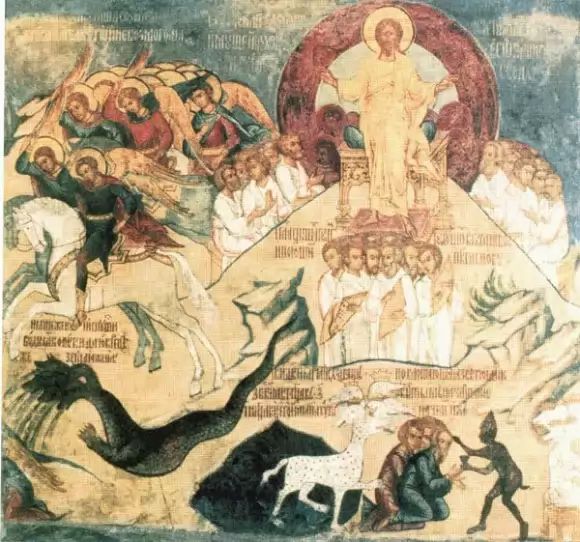
Icon of the Last Judgment. Seventeenth century. 

The fact is that even good deeds, as with all other Christian actions, have their dangers. From the example of the Pharisee and the elder son in the parable of the Prodigal Son we have already seen how religious effort can take on an ungodly character that alienates man from God’s love. The same thing can happen with good deeds. If a Christian immerses himself in them to the point of completely forgetting the primary goal of human existence, then it is unlikely he will do himself any good. Good deeds themselves, if one forgets the memory of death, can acquire the character of an activity that is excited, chaotic, and scattered. 

When the Jewish woman poured precious myrrh onto the head of Jesus, certain of the disciples said among themselves: Why was this waste of ointment made? For it might have been sold… and have been given to the poor (Mark 14:4-5). The indignant disciples probably expected the Savior to endorse their feelings. Christ, however, comes to the defense of this “squanderer”: why trouble ye her? she hath wrought a good work on Me. For ye have the poor with you always, and whensoever ye will ye may do them good: but Me ye have not always (Mark 14:6-7). 

With these words the Savior warns His followers that the work of keeping oneself in the truth of the Gospel is of utmost importance and, moreover, that this does not yield in importance to Christian good deeds; in some cases it even surpasses them. Indeed, Christ tells us that our eternal fate depends entirely and wholly on deeds of mercy. By including this call to mercy in the general discourse on the Second Coming, however, the Gospel establishes the proportionality and consistency of every part of the Christian activity that makes up our salvation. As such, if we will always have in mind the Second Coming and the Dread Judgment, but all the while become so absorbed in the expectation of the end that we lose sight of concrete deeds of mercy, we will most likely not acquire that love without which no one can see God. Yet if we give ourselves over enthusiastically to deeds of love while forgetting about the fleeting and vain nature of all that takes place on earth and the memory of death, then our good deeds will take on an emotional rather than spiritual character and not bring us any closer to God.

In Ecclesiastes we read: To every thing there is a season, and a time to every purpose under the heaven… a time to keep silence… A time to love (3:1-8). A time of silence – a time of solitude and standing noetically before God’s Judgment – is no less essential to Christianity than the active and continuous performance of good deeds. This silence not only returns us from the superficial life around us back to our own depths, but also reminds us of the finite nature of everything that takes place on earth, thereby purifying our love from emotional exaltation.

Therefore, from the publican’s repentance to deeds of love and mercy; from good deeds to the memory of death; and from the memory of death back to repentance and prayer, we must make our journey toward the joyful and bright days of Christ’s Resurrection. The Gospel readings during these preparatory weeks show us the direction we are to follow in our Lenten journey: they are like road signs showing us the way to the Heavenly Jerusalem, to the Lord’s eternal and unceasing Pascha.

Revelation & Knowledge of God In Humility – Archimandrite Aimilianos

In his marvelous book, ‘The Way of the Spirit – Reflections on Life In God’ , we have an outstanding homily (Chapter 10) given by Archimandrite Aimilanianos at this time of beginning our preparation for Lent. It is powerful and quite simple in its message of how essential our humility is to allowing God to find us and to reveal Himself to us. I’ve dramatically shortened this homily but hopefully captured much of the essence of his message that was delivered on February 23rd, 1986.

Revelation & Knowledge of God in Humility Homily

Today is the beginning of the Triodion, which is one of the most significant days in the life of the Church. 1 Today we cross a threshold. Today a shift occurs, the atmosphere changes, and all the essential elements are transformed. And all of this happens in order to prepare us for the greatest and most wonderful period of the year: Great Lent. The Triodion opens up a door which leads directly to heaven. The Triodion is an enchanting meadow, where Christ is the shepherd, and God feeds His spiritual flock. 2

As we heard in the Matins service this morning, Christ enters the life of the Church with a special mission, ”teaching us, by parables, to correct our lives”. What does it mean to ”correct our life”? It means to clarify your position with respect to God and the Church. It means to get to know God better, and to establish a relationship with Him that you won’t abandon. Are we going to live with God, or, in the end, go our separate ways? Nobody gets married in order to get divorced, but divorces often happen The same thing occurs with God.

Today we heard the parable of the Publican and the Pharisee (Lk 18:10-14). It speaks of humility. I won’t repeat the story to you now, because you all know it perfectly well. But within the larger meaning of the parable, there’s something I’d like you to take careful note of. The Pharisee thought he knew God. He believed that he and God were friends. He was, however, mistaken in this belief, and it was rather the other man, the Publican, who was God’s friend.

The Pharisee thought he knew God, but he didn’t. It’s not that easy to know God. But because he faithfully observed the outward rules of religion, he was under the false impression that God was somehow in his debt, that God owed him something. God for him was a kind of accountant, keeping a set of books showing what people owed him and what he owed them. But it’s not like that.

The moment the Pharisee said, I’m not like those other people (Lk18:11), he cut himself off from God. Why? Because God is humble, and since the Pharisee felt no need for humility, it follows that he felt no need for God. He knew the law, and the traditions of his faith, but he did not know God.

The Publican, on the other hand, had no illusions about himself. He was sunk up to his neck in the swamp of his sins. And yet, even though he was awash in the slime of his transgressions, what did he say to God? Be merciful to me a sinner (Lk 18.13). And at that moment, in his sinful, suffering, disconsolate heart, he felt certain that he was justified, thanks to his humility and the frank acknowledgement of his sinfulness. As the Lord tells us, he went down to his house justified (Lk 18.14), which means that God recognized and received him. As a sinner he had been living in darkness, but his humility brought him into the light of paradise and granted him communion with God. 5

Next Sunday, we shall hear another wonderful parable: the story of the Prodigal Son (Lk 15:11-32), which also speaks of humility and our return to God. This parable reveals that God is our Heavenly Father, and the founder, builder, and Lord of the Church, into which he welcomes all who approach him with compunction, and who ultimately choose God over the things of the world.

On the third Sunday, we will hear the parable about the Second Coming of Christ and the Final Judgement (Mt 25:31-46). This parable present us with a vision of Christ enthroned in His glory, and reveals to us that He does not judge us by human standards of justice, but rather by the measure of our humility. For in his own humility, Christ has concealed Himself in the person of the poor, and only those with the spirit of humility are able to stoop down and minister to Him.

Thereafter we come to the last Sunday before Lent, called Cheese-Fare Sunday. Having reached the end of this preliminary period of preparation, we begin again at the beginning, with a review of history; the God of humility invites us to return, not simply to paradise, but into the very kingdom of heaven.

In each of these Gospel stories, we find the answers to our deepest questions: Who is God? What is God? How is God revealed? To whom does God reveal Himself? These are universal human questions, and thus they are our questions too, and so our theme today is how God is revealed and made known to us.

The Son of God does not come in symbols, or in clouds or still breezes. Instead, He removed his garments of light (cf. Ps 103.2) and clothed Himself in the garments of human nature. Long ago, God made man a little god. Now, God Himself becomes man, and this is beyond anything that man could ever have imagined or hoped for.

Until God become man, He built bridges, so that He might cross over to us, and we to Him. Now He abolishes all distances, removes all boundaries, and comes to dwell with us forever. Unable to endure the loss of His creation, He sets aside His unspeakable glory and humbles Himself, definitively taking on our condition. 15

And His whole life was an ongoing self-abasement, an unending self-emptying, from the moment of His conception until His death and burial and beyond. In the extreme humility of His descent, God did not stop at the clouds. Neither did His journey end on earth. He went all the way to hell. In His extreme humility, He descends to the extremity of man’s damnation, and stretches forth His hands to those sitting in the darkness and the shadow of death (cf. Lk 1.79). In stretching forth His hands, He embraces all: those who loved Him, and those who hated Him; those who stood by Him throughout His life, and those who denied Him. He extends His open hands to all, so that anyone who wants can take hold of Him, and He will pull them out of Hell. 16 Lower than this, there is no place for man or God to go.

In light of God’s descent, everything has changed. When the highest entered the lowest, when God entered the realm of hell, everything there was turned upside down. The Devil was defeated. Death yielded to life. Darkness was swallowed up by light. Fallen man ascended into heaven. In union with Christ, human nature now sits on the throne of God, being filled with the Holy Spirit. God has descended, and reduced Himself for our sake, while redeemed humanity has become a great mass, exalted, so high as to surpass heaven itself. In his sermon on humility, St. Basil says that “from a state of nothingness, man has expanded into the heavens.” 17 And all of this can be ours, if only we humble ourselves.

But to commune truly with the humble God, we must be humble. This is why Christ says: He who humbles himself will be exalted (Mt 23.12). What does exalted mean here? It means that such a person will attain to the knowledge of God. It doesn’t mean being glorified in some abstract way, or being established in a comfortable place in heaven, still less does it mean that men will honor and praise us. It means that the Holy Spirit will reveal all things to our hearts, as long as we humble ourselves and bow our heads to God.

In the person of Christ, we can see that humility is a quality of God, a feature of His hypostasis. God is not God if He is not humble. And neither can I be like god unless I am humble. Indeed, without humility, I’ll become a demon. Humility must therefore be a condition of my being. I must embrace humility, knowing that, when I live in humility, I live in God.

What is humility? It is, as we have been saying, the life of God, the form of divine life, and we see this clearly in the life of Christ, who descended from heaven to extreme lowliness. In everything that concerns Him we find lessons of humility. He was born in a cave, and placed not in a crib but in a trough. He grew up in the house of a poor carpenter. He was subject to His mother and Joseph. He was taught, and applied Himself to lessons He did not need to learn. He accepted baptism from the hands of John His servant. When He was slandered and arrested and threatened with death, He did not make use of His marvelous powers (Mt 26.53). He subjected Himself to temporal authority. He was brought before the high priest as if he were a common criminal, and then led to the governor. He silently bore insults and false accusations, and in silence He submitted to His sentence, although with one word He could have refuted the false witnesses. He was spat upon by the lowest and vilest of men. He surrendered Himself to death on the cross, the most shameful form of death known to man. From His birth to the end of His life, He displayed humility in all things. 18 And this is why St. Isaac the Syrian says that “humility is the raiment of divinity.” 19

Following the example of Christ, humility is the distinguishing characteristic of the Christian life, and the foundation for our relation with God. The more humble we are, the more God will reveal Himself to us. And the more we know about God, the more humble we become. We need all the virtues, but without humility they achieve nothing. Even fasting, prayer, and love itself can do nothing without humility. But when prayer and fasting are joined with humility, we become the companion of God, and enter the divine environment in such a way that, as we’ve said, we become gods ourselves.

We must not seek to know God, or anything else from or about God. We must rather humble ourselves. God will then come to us and give us that which we desire. If you don’t humbly acknowledge your spiritual poverty, you won’t be able to ask God to give you the treasures of His grace. But through humility and prayer, God pours out the riches of His knowledge, granting us communion in His own life.

But rather than being filled with the knowledge of God, we normally live with a void at the center of our existence. There is a hole in our heart, into which crawl all the cares and worries of life. We work ourselves to exhaustion in pursuit of success and happiness. We struggle to improve our position in society, to attend the right schools, and move in the right kinds of circles. But the void within us is always on the increase. Nothing in the world can fill it, because it can only be filled by God.

But we mustn’t despair, because despair itself is a sign of pride, and thus will take us even further away from the humble God. Avoid that road. Resist temptation, struggle, take up your cross, and God will come and find you, wherever you are. As He did to Adam, He’ll ask you where you are, what’s happened, and extend His hand to you. You will awake from your state of spiritual confusion, and you’ll see Him wishing to draw you toward greater knowledge of Him.

Then, the empty place within you will become like the ark of the covenant. It will become a holy place in which God will dwell. Though your heart was a tomb in which Christ was dead, it will now be filled with light, with angels sitting on either side of it, as the resurrected Christ comes to meet you. For your part, you need to endure a little darkness, and struggle against temptations; to hold fast when you feel like despairing. But don’t despair. God will come.

Another problem we have is that we tire easily. When it comes to worldly pursuits, our energy knows no bounds, but we grow weary very quickly when God is concerned. Those who chase after wealth or glory never tire of doing so. Others pursue sensual pleasures, tirelessly chasing after sin. But even the thought of running after God leaves us feeling fatigued. We get tired, and then we forget, and then we’re led astray by the world. But then something happens to make us think of God, and so we make promises and resolutions, but, after a little while, forget all about them, and so it goes round and round. But think about the material things you’re chasing after and accumulating in great piles: they’re all banal, fleeting, and utterly without meaning.

If you are able to see this, then sink the eyes of your soul deep into your heart—be it ever so twisted and perverted—and ask God to take over. Hovering over the chaos of your life, God will shine His light (cf. Gen 1.3), and the abyss of hell that was in you will be transformed into heaven. God is humble, and will not shrink from entering into your sinful heart in order to rescue you from sin. That’s God! And only God can do this. No one and nothing else in this world can raise you from your state of death. There is no other cure for your wound, no other remedy for what ails you. In whatever you do, choose the path of humility, and God will glorify you. In that way, you will travel on a safe and sure road, having angels as your companions, and quickly arrive at the house of God. Christ will acknowledge you as His own disciple, and shall grant you His peace, for He says: Learn from me, because I am meek and humble of heart, and you shall find rest for your souls (Mt 11.29).

What does the Triodion for this week Sunday of the Publican & Pharisee have to teach us?

In the Matins service for the Sunday of the Publican & Pharisee, we are invited yo see how pride keeps us stuck and separated from God and how humility can lead us to an ’amendment of life’ and thus a ’change of heart’.

Triodion – Matins Sunday of Publican & Pharisee

Through parables leading all mankind to amendment of life, Christ raises up the Publican from his abasement and humbles the Pharisee in his pride.

Let us make haste to follow the Pharisee in his virtues and to emulate the Publican in his humility, and let us hate what is wrong in each of them: foolish pride and the defilement of transgressions.

The crafty enemy lies in wait for the righteous and despoils them through vainglory, while he binds sinners fast in in the noose of despair. But let us emulate the Publican and hasten to escape from both these evils.

As the Publican, let us offer the Creator prayers for mercy. Let us avoid the ungrateful praying of the Pharisee and the boastful words with which he judged his neighbor, that we may gain God’s forgiveness and His light.

Matins Sunday of Publican & Pharisee Triodion p.102 -109

What is pride and how is it central to what separates us from God and each other?

Arguably , the C.S. Lewis classic Mere Christianity in Chapter 8 entitled ’The Great Sin’ captures the essence of how pride distorts our lives and denies us what we most need in coming to participate in this daily possibility of communion with God and each other.

Excerpts from Chapter 8 ’The Great Sin’ Mere Christianity by C.S. Lewis

I now come to that part of Christian morals where they differ most sharply from all other morals. There is one vice of which no man in the world is free; which every one in the world loathes when he sees it in someone else; and of which hardly any people, except Christians, ever imagine that they are guilty themselves. I have heard people admit that they are bad-tempered, or that they cannot keep their heads about girls or drink, or even that they are cowards. I do not think I have ever heard anyone who was not a Christian accuse himself of this vice. And at the same time I have very seldom met anyone, who was not a Christian, who showed the slightest mercy to it in others. There is no fault which makes a man more unpopular, and no fault which we are more unconscious of in ourselves. And the more we have it ourselves, the more we dislike it in others.

The vice I am talking of is Pride or Self-Conceit: and the virtue opposite to it, in Christian morals, is called Humility. You may remember, when I was talking about sexual morality, I warned you that the centre of Christian morals did not lie there. Well, now, we have come to the centre. According to Christian teachers, the essential vice, the utmost evil, is Pride. Unchastity, anger, greed, drunkenness, and all that, are mere fleabites in comparison: it was through Pride that the devil became the devil: Pride leads to every other vice: it is the complete anti-God state of mind.

Does this seem to you exaggerated? If so, think it over. I pointed out a moment ago that the more pride one had, the more one disliked pride in others. In fact, if you want to find out how proud you are the easiest way is to ask yourself, ‘How much do I dislike it when other people snub me, or refuse to take any notice of me, or shove their oar in, or patronise me, or show off?’ The point is that each person’s pride is in competition with every one else’s pride. It is because I wanted to be the big noise at the party that I am so annoyed at someone else being the big noise. Two of a trade never agree. Now what you want to get clear is that Pride is essentially competitive—is competitive by its very nature—while the other vices are competitive only, so to speak, by accident. Pride gets no pleasure out of having something, only out of having more of it than the next man. We say that people are proud of being rich, or clever, or good-looking, but they are not. They are proud of being richer, or cleverer, or better-looking than others. If everyone else became equally rich, or clever, or good-looking there would be nothing to be proud about. It is the comparison that makes you proud: the pleasure of being above the rest. Once the element of competition has gone, pride has gone. That is why I say that Pride is essentially competitive in a way the other vices are not. The sexual impulse may drive two men into competition if they both want the same girl. But that is only by accident; they might just as likely have wanted two different girls. But a proud man will take your girl from you, not because he wants her, but just to prove to himself that he is a better man than you. Greed may drive men into competition if there is not enough to go round; but the proud man, even when he has got more than he can possibly want, will try to get still more just to assert his power. Nearly all those evils in the world which people put down to greed or selfishness are really far more the result of Pride.

The Christians are right: it is Pride which has been the chief cause of misery in every nation and every family since the world began. Other vices may sometimes bring people together: you may find good fellowship and jokes and friendliness among drunken people or unchaste people. But pride always means enmity—it is enmity. And not only enmity between man and man, but enmity to God.

In God you come up against something which is in every respect immeasurably superior to yourself. Unless you know God as that—and, therefore, know yourself as nothing in comparison—you do not know God at all. As long as you are proud you cannot know God. A proud man is always looking down on things and people: and, of course, as long as you are looking down, you cannot see something that is above you.

That raises a terrible question. How is it that people who are quite obviously eaten up with Pride can say they believe in God and appear to themselves very religious? I am afraid it means they are worshipping an imaginary God. They theoretically admit themselves to be nothing in the presence of this phantom God, but are really all the time imagining how He approves of them and thinks them far better than ordinary people: that is, they pay a pennyworth of imaginary humility to Him and get out of it a pound’s worth of Pride towards their fellow-men. I suppose it was of those people Christ was thinking when He said that some would preach about Him and cast out devils in His name, only to be told at the end of the world that He had never known them. And any of us may at any moment be in this death-trap. Luckily, we have a test. Whenever we find that our religious life is making us feel that we are good—above all, that we are better than someone else—I think we may be sure that we are being acted on, not by God, but by the devil. The real test of being in the presence of God is, that you either forget about yourself altogether or see yourself as a small, dirty object. It is better to forget about yourself altogether.

It is a terrible thing that the worst of all the vices can smuggle itself into the very centre of our religious life. But you can see why. The other, and less bad, vices come from the devil working on us through our animal nature. But this does not come through our animal nature at all. It comes direct from Hell. It is purely spiritual: consequently it is far more subtle and deadly. For the same reason, Pride can often be used to beat down the simpler vices. Teachers, in fact, often appeal to a boy’s Pride, or, as they call it, his self-respect, to make him behave decently: many a man has overcome cowardice, or lust, or ill-temper, by learning to think that they are beneath his dignity—that is, by Pride. The devil laughs. He is perfectly content to see you becoming chaste and brave and self-controlled provided, all the time, he is setting up in you the Dictatorship of Pride—just as he would be quite content to see your chilblains cured if he was allowed, in return, to give you cancer. For Pride is spiritual cancer: it eats up the very possibility of love, or contentment, or even common sense.

Before leaving this subject I must guard against some possible misunderstandings:

We must not think Pride is something God forbids because He is offended at it, or that Humility is something He demands as due to His own dignity—as if God Himself was proud. He is not in the least worried about His dignity. The point is, He wants you to know Him: wants to give you Himself. And He and you are two things of such a kind that if you really get into any kind of touch with Him you will, in fact, be humble—delightedly humble, feeling the infinite relief of having for once got rid of all the silly nonsense about your own dignity which has made you restless and unhappy all your life. He is trying to make you humble in order to make this moment possible: trying to take off a lot of silly, ugly, fancy-dress in which we have all got ourselves up and are strutting about like the little idiots we are. I wish I had got a bit further with humility myself: if I had, I could probably tell you more about the relief, the comfort, of taking the fancy-dress off—getting rid of the false self, with all its ‘Look at me’ and ‘Aren’t I a good boy?’ and all its posing and posturing. To get even near it, even for a moment, is like a drink of cold water to a man in a desert.

A really humble man …will not be thinking about humility: he will not be thinking about himself at all. If anyone would like to acquire humility, I can, I think, tell him the first step. The first step is to realise that one is proud. And a biggish step, too. At least, nothing whatever can be done before it. If you think you are not conceited, it means you are very conceited indeed.

What are you relying on?

We live in a culture that idolizes individual power and self-reliance. We miss something very crucial if we approach our preparation for Lent without deepening our humility and dependence on Christ. This short extract from a homily by Father Phillip LeMaster may be helpful in identifying how this trap of self-reliance can manifest itself during Lent. It’s interesting that a central tenet of his homily is drawn from the short desperate prayer found in the Gospel of Mark which many of us can so deeply relate to … ‘I believe, help my unbelief’. Perhaps this prayer epitomizes this necessity of a relentless cycle of receiving from Him all that is good and then circling in our emptiness back to Him as the ‘treasury of good gifts’ and ‘giver of life’.

As we think about the condition of the hearts of the Publican and Pharisee, it’s useful to ask this question of what is the power source for how they are praying and living their lives. It seems clear that much of what was missing in the heart of the Pharisee is a ‘with God’ experience and realization of how dependent he is upon God for whatever manifestation of virtue appears in his life. The Pharisee was living in the delusion and distortion that he was the creator of these virtues and he was worshipping and praying to the small imaginary god of self and self reliance not the True and Triune God. And perhaps one of the greatest assets and aspirations of the Publican was the clarity in his heart that only in the humility of a ‘with God’ reliance could he be delivered from his darkness to Light.

Jesus said unto him, If thou canst believe, all things are possible to him that believeth. And straightway the father of the child cried out, and said with tears, Lord, I believe; help thou mine unbelief. 

Mark 9: 23 – 24

Father Phillip LeMaster

As we continue the Lenten journey, we must remember that this season is not about us and what we think we can achieve spiritually by relying on our own willpower or virtue to perform acts of religious devotion.  Spiritual disciplines are not exercises in self-reliance, as though we earn something from God by being diligent in performing them.  Instead, they are simply ways of helping us share more fully in the life of Christ as we grow in recognizing our sinfulness and opening ourselves to receive His healing mercy.  No amount of piety could conquer the power of death and make a path for us to participate personally in the eternal life of God by grace.  Only the God-Man, in His full Self-offering on the Cross, could do that. Lent is preparation to unite ourselves to Christ in His Passion, for “The Son of man will be delivered into the hands of men, and they will kill Him; and after He is killed, He will rise on the third day.” He is the eternal High Priest Who “has gone as a forerunner on our behalf” into the Heavenly Tabernacle where He intercedes for us eternally (Rom. 8:34).

The healing of our souls is found by sharing in the life of Christ.  We will be able to unite ourselves to Him in holiness only when we know the weakness of our faith as we turn away from self-reliance and receive His mercy from the depths of our souls.  The disciplines of Lent are teachers of humility that should help us “commend ourselves and one another, and all our life, unto Christ our God.”  He accepted the imperfect faith of the father of the demon-possessed boy, and He will do the same with us if we come to Him in the same humble spirit.  Doing so is really the only way to prepare to follow the Savior to His Cross and empty tomb.

Why is humility the ’mother of all virtues’

“Humility is the root, mother, nurse, foundation, and bond of all virtue”

St. John Chrysostom

We begin our Triodion journey with the powerful and timeless example of the Publican’s humility and the Pharisee’s pride. We cannot manifest any of the virtues authentically without God. Without humility, we find ourselves isolated and alone without what we most need. With humility , we open the door of our hearts to the Triune God and our thirst for the true sustainability of the living water of His mercy and grace.

I love Father Thomas Hopko’s description of humility as “seeing reality as it is in God”. And in this reality , we can see each of our breaths as an unceasing reminder of our dependence and reliance on Him. In this deepening awareness and vision of His moment by moment grace that enlivens us ; we have a chance to see more clearly our ‘right size’ and become more open to the majesty of His.

We cannot authentically produce any virtue without this foundation of humility that allows this flow from God to us. The distortion of what we believe we are producing autonomously in good without Him is simply not real ; it is the vanity and ignorance of what we imagine. Our vanity and ignorance separate us from His Holy Spirit as the ‘giver of life’ who is ‘everywhere present and filling all things’. With this distortion of what we see as a reality without God, we ease God out (EGO) of our daily consciousness as well as the vision and experience of how we live our lives. We place ourselves in the center of our lives instead of God.

We can now see in our Church Fathers the ’inner coherence’ and great wisdom in placing the Publican and Pharisee as our first encounter in the Triodion. Whatever good we may experience in Lent will rely and depend upon its birth from this ‘mother’ of humility and our openness to be ’with God’ in the whatever of our lives.

The short extract below from Father Thomas Hopko also reminds us that Christ in his Triune relationship is our perfect model and demonstration of humility.

Volume IV – Spirituality … The Virtues … Humility by Father Thomas Hopko

In the Orthodox tradition, humility has often been called the “mother of all virtues,” and pride has been named “the cause of all sin.” The wise and honest person is the one who is humble.

Pride goes before destruction, and a haughty spirit before a fall.

It is better to be of a lowly spirit with the poor, than to divide the spoils with the proud.

A man’s pride will bring him low, but he who is lowly in spirit will retain honor 

Proverbs 16.18, 16.19, 29.23

According to the Gospel, in the Song of the Virgin, the Lord scatters the proud in the imagination of their hearts and exalts those who are humble and meek (cf. Lk 1.51–52). This is the exact teaching of Jesus.

For everyone who exalts himself will be humbled, and he who humbles himself will be exalted (Lk 14.11, 18.14, Prov 3.34).

Humility does not mean degradation or remorse. It does not mean effecting some sort of demeaning external behavior. It does not mean considering oneself as the most vile and loathsome of creatures. Christ Himself was humble and He did not do this. God Himself, according to the spiritual tradition of the Church, has perfect humility, and He certainly does not act in this way.

Genuine humility means to see reality as it actually is in God. It means to know oneself and others as known by God—a power, according to Saint Isaac, greater than that of raising the dead! The humble lay aside all vanity and conceit in the service of the least of God’s creatures, and consider no good act as beneath one’s dignity and honor. Humility is to know oneself, without the grace of God, as dust, sinful and dead.

God is humble because He cares about the least: the birds in the air, the grass in the fields, the worst of sinners (cf. Mt 6.25–30). Christ is humble because He associates with the lowly, becoming the slave of all in taking on Himself the sins of the world.

If I then, your Lord and Master have washed your feet, you also ought to wash one another’s feet. For I have given you an example, that you also should do as I have done to you (Jn 13.14–15).

You know that the rulers of the pagans lord it over them, and their great men exercise authority over them. It shall not be so among you; but whoever would be great among you must be your servant, and whoever would be first among you must be your slave; even as the Son of Man came not to be served, but to serve, and to give His life as a ransom for many (Mt 20.25–28).

All Christians are to follow the example of Christ in His divine humility. Saint Paul teaches:

Do nothing from selfishness or conceit, but in humility count others better than yourselves. Let each of you look not to his own interests, but also to the interests of others. Have this mind among yourselves, which you have in Christ Jesus, who though He was in the form of God, did not count equality with God a thing to be grasped, but emptied Himself, taking the form of a servant, being born in the likeness of men. And being found in human form He humbled Himself and became obedient unto death, even death on a cross. Therefore God has highly exalted Him and bestowed on Him the name which is above every name, that at the name of Jesus every knee should bow, in heaven and on earth and under the earth, and every tongue confess that Jesus is Lord, to the glory of God the Father (Phil 2.3–11).

The exaltation of Jesus as a man depended entirely on His self-emptying humility. True greatness, divine greatness, is the ability to be the least and do the least with the absolute certitude that it is externally and divinely important, that it is an imitation of God Himself.

True humility for the sinful man is to know that indeed, according to one’s own possibilities and gifts, each one is truly the first and greatest of sinners (cf. 1 Tim 1.15), for each one has sinned in his own way “like no other man” (Saint Andrew of Crete, 7th c., Penitential Canon). The truly humble person is the one who, confessing his sins, is “faithful over little,” and doing so, is exalted by the Lord and is “set over much.” Only such a person will “enter into the joy of his Master” (Mt 25.14–23, Lk 19.17).

What do I truly treasure?

Our actions, attitudes, and awareness have a lot to teach us about what we honestly treasure in the depths of our hearts. I find this article by Father Stephen Freeman entitled ’The Treasures of the Heart’ very helpful as I enter this Pre-Lenten period and desire to see more clearly, with God’s help, the truth of what lies within me. I’ve created a slightly shortened extract of the full article below. I hope this may help you reflect and gain some clarity about this important question that we can ask and perhaps even answer right now today.

The Treasures of the Heart – Father Stephen Freeman

A good man out of the good treasure of his heart brings forth good; and an evil man out of the evil treasure of his heart brings forth evil. For out of the abundance of the heart his mouth speaks. 

Matthew 12:34-35

Christ’s teaching on the heart points to it as the very center of our life. He does not describe it as inherently good or inherently bad. It is inherently central. It is that place in the core of our existence from which all words and actions flow. And so Christ tells us simply that if the treasure of our heart is good – it will be evidenced by the good things we say and do – and, conversely, if the treasure of our heart is evil – it, too, will be evidenced by the evil things we say and do. What we should take from this is the realization that we are daily laying up treasure (good or evil) in the heart.

I recently gave some thought to St. Macarius’ saying on the treasures of the heart – that we find dragons and lions, poisonous beasts, etc., and that we find God, the angels, the life and the kingdom, the heavenly cities and the treasuries of grace. My thoughts stayed with his imagery as I walked myself through the day. It was obvious that over the course of the day I myself added to the treasures of my heart – and to some extent – others added to that treasure as well.

One image that came to me was travel on our busy freeways. In East Tennessee it seems that our interstate highway system is in a constant state of “under construction.” At times traffic is heavy, too fast, and frightening (especially if you add in cell-phone usage and the like as we zip along at freeway speeds). The image that came to mind was of cars barreling down the highway with dragons and lions and poisonous beasts pouring out the windows as travelers cursed one another on their daily commute. “Road rage” is a common phenomenon all across the nation. I wondered how we would react if we could actually see the “treasures” of our heart pouring out of our cars.

The same image could be applied across the whole of the day. For we are either bringing forth good out of the treasure of a good heart or pouring out dragons from the treasure of an evil heart.

There was an additional thought. The nature of the heart’s treasure is their inexhaustibility. When we pour forth our treasure we do not see its decrease. Quite the opposite – dragons begat dragons. And in the same way, every act of kindness of mercy does not diminish the kindness and mercy of our heart but multiplies them. Kindness begats kindness.

And so it is that over the course of every day we not only nurture the treasure of our own heart (for good or ill), we also add, or attempt to add, to the treasures of those around us. Some of the poisonous beasts that I find within my heart have been dwelling there a long time – placed there even when I was a child.

And so a significant question for all of us (daily) is: what treasure do I share with others?

Meditating on such imagery should also drive us deeper into repentance (not guilt, but repentance). What am I doing with the beasts that inhabit my heart? Frequent confession – telling the truth about the state of my heart is important. But equally important (perhaps more so) is the attention we should give to the good treasures that are so lacking. Every act of kindness and mercy, every effort towards forgiveness of everyone for everything, does not exhaust the heart but stores up good treasures in the presence of the good God. Avoiding evil is an effort not to do something. I always find that such efforts alone are very weak indeed. The man who is busy being kind cannot be busy being evil. One of the powers of goodness is that it actually has substance rather than absence. And so St. Paul exhorts us, “Overcome evil by doing good” (Romans 12:21).

Dragons depart ….

What is the condition of my heart?

As we begin our Pre-Lent Adult Education this Sunday , I thought it might be useful to raise questions which may be very relevant to our preparation process for Lent. This week’s upcoming Sunday of the Publican & Pharisee can stimulate lots of these opportunities for self reflection about where we stand in relation to pride and humility.

Here are two quotes … the first from a 4th century saint, St. Macarius of Eqypt and the second from a well known Nobel Prize winning Orthodox author of the 20th century, Alexander Solzhenitsyn. Both are useful reminders that our spiritual battlefield today and every day lies within our own hearts:

And the heart itself is but a small vessel, yet there also are dragons and there are lions; there are poisonous beasts and all the treasures of evil. And there are rough and uneven roads; there are precipices. But there is also God, also the angels, the life and the kingdom, the light and the Apostles, the treasures of grace—there are all things

St Macarius ‘50 Spiritual Homilies and Great Letter’ (Homily 43)

“The line separating good and evil passes not through states, nor between classes, nor between political parties either — but right through every human heart — and through all human hearts. This line shifts. Inside us, it oscillates with the years. And even within hearts overwhelmed by evil, one small bridgehead of good is retained”

Alexander Solzhenitsyn ‘The Gulag Archipelago’