
The Liturgical Structure of Lent

By Father Alexander Schmemann

To understand the various liturgical particularities of the Lenten period, we must remember that they express and convey to us the spiritual meaning of Lent and are related to the central idea of Lent, to its function in the liturgical life of the Church. It is the idea of repentance. In the teaching of the Orthodox Church however, repentance means much more than a mere enumeration of sins and transgressions to the priest. Confession and absolution are but the result, the fruit, the “climax” of true repentance. And, before this result can be reached, become truly valid and meaningful, one must make a spiritual effort, go through a long period of preparation and purification. Repentance, in the Orthodox acceptance of this word, means a deep, radical reevaluation of our whole life, of all our ideas, judgments, worries, mutual relations, etc. It applies not only to some “bad actions,” but to the whole of life, and is a Christian judgment passed on it, on its basic presuppositions. At every moment of our life, but especially during Lent, the Church invites us to concentrate our attention on the ultimate values and goals, to measure ourselves by the criteria of Christian teaching, to contemplate our existence in its relation to God. This is repentance and it consists therefore, before everything else, in the acquisition of the Spirit of repentance, i.e., of a special state of mind, a special disposition of our conscience and spiritual vision.

The Lenten worship is thus a school of repentance. It teaches us what is repentance and how to acquire the spirit of repentance. It prepares us for and leads us to the spiritual regeneration, without which “absolution” remains meaningless. It is, in short, both teaching about repentance and the way of repentance. And, since there can be no real Christian life without repentance, without this constant “reevaluation” of life, the Lenten worship is an essential part of the liturgical tradition of the Church. The neglect of it, its reduction to a few purely formal obligations and customs, the deformation of its basic rules constitute one of the major deficiencies of our Church life today. The aim of this article is to outline at least the most important structures of Lenten worship, and thus to help Orthodox Christians to recover a more Orthodox idea of Lent.

(1) Sundays of Preparation

Three weeks before Lent proper begins we enter into a period of preparation. It is a constant feature of our tradition of worship that every major liturgical event – Christmas, Easter, Lent, etc., is announced and prepared long in advance. Knowing our lack of concentration, the “worldliness” of our life, the Church calls our attention to the seriousness of the approaching event, invites us to meditate on its various “dimensions”; thus, before we can practice Lent, we are given its basic theology.

Pre-lenten preparation includes four consecutive Sundays preceding Lent.

1. Sunday of the Publican and Pharisee

On the eve of this day, i.e., at the Saturday Vigil Service, the liturgical book of the Lenten season – the Triodion makes its first appearance and texts from it are added to the usual liturgical material of the Resurrection service. They develop the first major theme of the season: that of humility; the Gospel lesson of the day (Lk. 18, 10-14) teaches that humility is the condition of repentance. No one can acquire the spirit of repentance without rejecting the attitude of the Pharisee. Here is a man who is always pleased with himself and thinks that he complies with all the requirements of religion. Yet, he has reduced religion to purely formal rules and measures it by the amount of his financial contribution to the temple. Religion for him is a source of pride and self-satisfaction. The Publican is humble and humility justifies him before God.

(2) Sunday of the Prodigal Son

The Gospel reading of this day (Lk. 15, 11-32) gives the second theme of Lent: that of a return to God. It is not enough to acknowledge sins and to confess them. Repentance remains fruitless without the desire and the decision to change life, to go back to God. The true repentance has as its source the spiritual beauty and purity which man has lost. “…I shall return to the compassionate Father crying with tears, receive me as one of Thy servants.” At Matins of this day to the usual psalms of the Polyeleos “Praise ye the name of the Lord” (Ps. 135), the Psalm 137 is added, “By the rivers of Babylon, there we sat down, yea we wept, when we remembered Zion… If I forget thee, O Jerusalem, let my right hand forget her cunning…” The Christian remembers and knows that what he lost: the communion with God, the peace and joy of His Kingdom. He was baptized, introduced into the Body of Christ. Repentance, therefore, is the renewal of baptism, a movement of love, which brings him back to God.

(3) Sunday of the Last Judgment(Meat Fare)

On Saturday, preceding this Sunday (Meat Fare Saturday) the Typikon prescribes the universal commemoration of all the departed members of the Church. In the Church we all depend on each other, belong to each other, are united by the love of Christ. (Therefore no service in the Church can be “private”.) Our repentance would not be complete without this act of love towards all those, who have preceded us in death, for what is repentance if not also the recovery of the spirit of love, which is the spirit of the Church. Liturgically this commemoration includes Friday Vespers, Matins and Divine Liturgy on Saturday.

The Sunday Gospel (Mt. 25, 31-46) reminds us of the third theme of repentance: preparation for the last judgment. A Christian lives under Christ’s judgment. He will judge us on how seriously we took His presence in the world, His identification with every man, His gift of love. “I was in prison, was naked…” All our actions, attitudes, judgments and especially relations with other people must be referred to Christ, and to call ourselves “Christians” means that we accept life as service and ministry. The parable of the Last Judgment gives us “terms of reference” for our self-evaluation.

On the week following this Sunday a limited fasting is prescribed. We must prepare and train ourselves for the great effort of Lent. Wednesday and Friday are non-liturgical days with Lenten services (cf. infra). On Saturday of this week (Cheesefare Saturday) the Church commemorates all men and women who were “illumined through fasting” i.e., the Holy Ascetics or Fasters. They are the patterns we must follow, our guides in the difficult “art” of fasting and repentance.

(4) Sunday of Forgiveness(Cheese Fare)

This is the last day before Lent. Its liturgy develops three themes: (a) the “expulsion of Adam from the Paradise of Bliss.” Man was created for paradise, i.e., for communion with God, for life with Him. He has lost this life and his existence on earth is an exile. Christ has opened to every one the doors of Paradise and the Church guides us to our heavenly fatherland. (b) Our fast must not be hypocritical, a show off. We must “appear not unto men to fast, but unto our Father who is in secret” (cf.Sunday Gospel, Mt. 6, 14-21), and (c) its condition is that we forgive each other as God has forgiven us – “If ye forgive men their trespasses, your Heavenly Father will also forgive you.”

The evening of that day, at Vespers, Lent is inaugurated by the Great Prokimenon: “Turn not away Thy face from Thy servant, for I am in trouble; hear me speedily. Attend to my soul and deliver it.” After the service the rite of forgiveness takes place and the Church begins its pilgrimage towards the glorious day of Easter.

(1) The Canon of St. Andrew of Crete

The Great Canon of St. Andrew of Crete. On the first four days of Lent – Monday through Thursday – the Typikon prescribes the reading at Great Compline (i.e., after Vespers) of the Great Canon of St. Andrew of Crete, divided in four parts. This canon is entirely devoted to repentance and constitutes, so to say, the “inauguration of Lent.” It is repeated in its complete form at Matins on Thursday of the fifth week of Lent.

(2) Weekdays of Lent – The Daily Cycle

Lent consists of six weeks or forty days. It begins on Monday after the Cheese Fare Sunday and ends on Friday evening before Psalm Sunday. The Saturday of Lazarus’ resurrection, the Palm Sunday and the Holy Week form a special liturgical cycle not analyzed in this article. The Lenten weekdays – Monday through Friday – have a liturgical structure very different from that of Saturdays and Sundays. We will deal with these two days in a special paragraph.

The Lenten weekday cycle, although it consists of the same services, as prescribed for the whole year (Vespers, Compline, Midnight, Matins, Hours) has nevertheless some important particularities:

(a) It has its own liturgical book – the Triodion. Throughout the year the changing elements of the daily services – troparia, stichira, canons – are taken from the Octoechos(the book of the week) and the Menaion (the book of the month, giving the office of the Saint of the day). The basic rule of Lent is that the Octoechos is not used on weekdays but replaced by the Triodion, which supplies each day with,

— at Vespers – a set of stichiras (3 for “Lord, I have cried” and 3 for the “Aposticha”) and 2 readings or “parimias” from the Old Testament.

— at Matins – 2 groups of “cathismata” (“Sedalny,” short hymns sung after the reading of the Psalter), a canon of three odes (or “Triodion” which gave its name to the whole book) and 3 stichiras at the “Praises,” i.e., sung at the end of the regular morning psalms 148, 149, 150 – at the Sixth Hour – a “parimia” from the Book of Isaiah.

The commemoration of the Saint of the day (“Menaion”) is not omitted, but combined with the texts of the Triodion. The latter are mainly, if not exclusively penitential in their content. Especially deep and beautiful are the “idiornela” (“Samoglasni”) stichira of each day (1 at Vespers and 1 at Matins).

(b) The use of Psalter is doubled. Normally the Psalter, divided in 20 cathismata is read once every week: (1 cathisma. at Vespers, 2 at Matins). During Lent it is read twice (1 at Vespers, 3 at Matins, 1 at the Hours 3, 6 and 9). This is done of course mainly in monasteries, yet to know that the Church considers the psalms to be an essential “spiritual food” for the Lenten season is important.

(c) The Lenten rubrics put an emphasis on prostrations. They are prescribed at the end of each service with the Lenten prayer of St. Ephrem the Syrian, “O Lord and Master of my life,” and also after each of the special Lenten troparia at Vespers. They express the spirit of repentance as “breaking down” our pride and selfsatisfaction. They also make our body partake of the effort of prayer.

(d) The Spirit of Lent is also expressed in the liturgical music. Special Lenten “tones” or melodies are used for the responses at litanies and the “Alleluias” which replace at Matins the solemn singing of the “God is the Lord and has revealed Himself unto us.”

(e) A characteristic feature of Lenten services is the use of the Old Testament, normally absent from the daily cycle. Three books are read daily throughout Lent: Genesis with Parables at Vespers. Isaiah at the Sixth Hour. Genesis tells us the story of Creation, Fall and the beginnings of the history of salvation. Parables is the book of Wisdom, which leads us to God and to His precepts. Isaiah is the prophet of redemption, salvation and the Messianic Kingdom.

(f) The liturgical vestments to be used on weekdays of Lent are dark, theoretically purple.

The order for the weekday Lenten services is to be found in the Triodion (“Monday of the first week of Lent”). Of special importance are the regulations concerning the singing of the Canon. Lent is the only season of the liturgical year that has preserved the use of the nine biblical odes, which formed the original framework of the Canon.

(3) Non-Liturgical Days

The Liturgy of the Presanctified Gifts

On weekdays of Lent (Monday through Friday) the celebration of the Divine Liturgy is strictly forbidden. They are non-liturgical days, with one possible exception – the Feast of Annunciation (then the Liturgy of St. Chrysostom is prescribed after Vespers). The reason for this rule is that the Eucharist is by its very nature a festal celebration, the joyful commemoration of Christ’s Resurrection and presence among His disciples. (For further elaboration of this point cf. my note “Eucharist and Communion” in St. Vladimir’s Quarterly, Vol. 1, No. 2, April 1957, pp. 31-33.) But twice a week, on Wednesdays and Fridays, the Church prescribes the celebration after Vespers, i.e., in the evening of the Liturgy of the Presanctified Gifts (cf. the order of this service in I. Hapgood, The Service Book, pp. 127-146.) It consists of solemn Great Vespers and communion with the Holy Gifts consecrated on the previous Sunday. These days being days of strict fasting (theoretically: complete abstinence) are “crowned” with the partaking of the Bread of Life, the ultimate fulfillment of all our efforts.

(4) Saturdays of Lent

Lenten Saturdays, with the exception of the first – dedicated to the memory of the Holy Martyr Theodore Tyron, and the fifth – the Saturday of the Acathistos, are days of commemoration of the departed. And, instead of multiplying the “private requiem liturgies” on days when they are forbidden, it would be good to restore this practice of one weekly universal commemoration of all Orthodox Christians departed this life, of their integration in the Eucharist, which is always offered “on behalf of all and for all.”

The Acathistos Saturday is the annual commemoration of the deliverance of Constantinople in 620. The “Acathist,” a beautiful hymn to the Mother of God, is sung at Matins.

(5) Sundays of Lent

Each Sunday in Lent, although it keeps its character of the weekly feast of Resurrection, has its specific theme, Triodion is combined with Octoechos.

1st Sunday — “Triumph of Orthodoxy” — commemorates the victory of the Church over the last great heresy – Iconoclasm (842).

2nd Sunday — is dedicated to the memory of St. Gregory Palamas, a great Byzantine theologian, canonized in 1366.

3rd Sunday — “of the Veneration of the Holy Cross”– At Matins the Cross is brought in a solemn procession from the sanctuary and put in the center of the Church where it will remain for the whole week. This ceremony announces the approaching of the Holy Week and the commemoration of Christ’s passion. At the end of each service takes place a special veneration of the Cross.

4th Sunday —St. John the Ladder, one of the greatest Ascetics, who in his “Spiritual Ladder” described the basic principles of Christian spirituality.

5th Sunday — St. Mary of Egypt, the most wonderful example of repentance.

On Saturdays and Sundays – days of Eucharistic celebration – the dark vestments are replaced by light ones, the Lenten melodies are not used, and the prayer of St. Ephrem with prostrations omitted. The order of the services is not of the Lenten type, yet fasting remains a rule and cannot be broken (cf. my article “Fast and Liturgy,” in St. Vladimir’s Quarterly, Vol. III, No. 1, Winter 1959). Each Sunday night, Great Vespers with a special Great Prokimenon is prescribed.

At the conclusion of this brief description of the liturgical structure of Lent, let me emphasize once more that Lenten worship constitutes one of the deepest, the most beautiful and the most essential elements of our Orthodox liturgical tradition. Its restoration in the life of the Church, its understanding by Orthodox Christions, constitute one of the urgent tasks of our time.
Triodion – CheeseFare Week – Themes Preparing Us For Great Lent

Up to this point, the Triodion has only had messages for us on Sundays. This week it begins to expand itself into daily Matins and Vespers services. These Triodion daily services continue throughout Lent and Holy Week.

So, what are the key messages for this first day of daily Triodion services?

Monday’s Triodion messages fit into themes that look backwards at our Pre-Lenten preparation as well as forward to the upcoming Sunday of the Expulsion of Adam from Paradise and of course the Lenten Fast itself which begins a week from today on March 7th. Below are the key themes along with some quotes from Monday’s Daily Matins and Vespers Services.

1. Desire/Eagerness (Zacchaus)

The entranceway to divine repentance * hath been opened: * let us eagerly enter therein, * purified in body and observing abstinence * from food and the passions, * as obedient servants of Christ * who hath called the world into the heavenly Kingdom. * Let us offer unto the King of all * a tenth part of the whole year, ** that with love we may behold His Resurrection.

The bright forefeast of the time of abstinence, the bright threshold of the Fast hath appeared today, wherefore brethren, let us run the race with hope and great eagerness.

2. Humility/ God’s Mercy (Publican)

My way of life is shameful and bitter, but Thy mercy and compassion are immeasurable O Lover of mankind, wherefore I beseech Thee O Savior, grant unto me who doth sing Thy praises with love, time for repentance.

3. Repentance (Prodigal)

Having wasted my whole life living prodigally, I have been hired by bitter and wicked citizens; but O Christ who desireth that I turn back to Thy compassion, reject me not.

The beginning of compunction and repentance is to make a stranger of sin and abstain from passions. Therefore, let us hasten to cut off our wicked deeds.

Behold, the door of repentance hath already opened, O friends of God: come, let us make haste to enter therein, that Christ not close it and we be shut out as unworthy

4. Being Merciful & God’s Judgement (Last Judgement)

Behold, now is the season of repentance, the forefeast that prepareth us to enter the Fast. Awake, O my soul, and with a fervent heart be reconciled to thy God and Benefactor, and thus escape His just and truly fearful judgment

The time for repentance hath begun; be not heedless, O my soul. Give bread to the hungry, and pray unto the Lord every day and night and each hour, that He may save thee.

5. Expulsion of Adam from Paradise (Coming This Sunday)

By transgressing I have emulated our forefather Adam, and wretched as I am, I have been cast out from sweet joy. Therefore I fall down before Thee in repentance weeping: O Lord save me.

6. Lenten Fast & Fasting ( Our fast begins slowly this week and in high gear next)

At all times the Fast is profitable for those * who choose to observe it, * for the temptations of devils are rendered ineffective * against those who fast, * rather the protectors of our lives, the angels, * abide with us who with fortitude, ** cleanse ourselves by fasting.

With fasting let us hasten to wash away * the filth of our transgressions, * and by means of mercy and compassion to the poor, * let us enter the bridal chamber of the Bridegroom Christ, ** who hath bestowed upon us great mercy.

7. Preparation and Purifying Ourselves ( General throughout Pre-Lent and Lent)

Announcing that spring is upon us, the week of cleansing which prepareth us for the holy Fast, let us all now illumine our souls and bodies thereby

Standing before the entrance and gateway of the Fast, let us not begin it with reckless abandon and drunkenness, rather, let us eagerly enter with purity of thought, that we may worthily receive crowns of immortality and the fruit of our labors.

Last Judgment – Father Alexander Schmemann from his book ’Great Lent’

Our Pre-Lenten journey now brings us face to face with something that many of may find uncomfortable: Christ’s parable of the Last Judgment. Our temptation may be to elevate our own judgment(s) above the starkness and clarity that Christ presents to us in this powerful parable.

Certainly, one possibility of why the Church Fathers have placed this in our path at this point is to wake us up to the seriousness and sobriety we need for the journey ahead. It may also be true that this sobriety, this wakefulness, needs to apply itself to our tendencies to dismiss those judgments from our Lord and Savior that we may find difficult to understand or accept.

We are not alone. I think of the Apostle Peter’s response to what he perceived as the unacceptable truth of what would happen to Christ.

From that time forth began Jesus to shew unto his disciples, how that he must go unto Jerusalem, and suffer many things of the elders and chief priests and scribes, and be killed, and be raised again the third day.  Then Peter took him, and began to rebuke him, saying, Be it far from thee, Lord: this shall not be unto thee.  But he turned, and said unto Peter, Get thee behind me, Satan: thou art an offence unto me: for thou savourest not the things that be of God, but those that be of men.

Matthew 16: 21 – 23

When we think about the first two weeks of our Pre-Lenten preparation, it is clear what the examples of the Publican and Prodigal have to teach us about repentance. But what do the examples of the Pharisee and the elder son have to teach us about what prevents us from repenting? Are there some common barriers to repentance that these examples illumine and illustrate?

Certainly, most of us would point to the pride of the Pharisee as a barrier that prevented him from the experience of ongoing repentance so essential to our spiritual journeys.

Isn’t an important aspect of this pride the inflation we place on our own judgements of ourselves and of our knowledge of what ’God’s will’ should be in our circumstances? The Pharisee’s judgement that I am not like these others men … these sinners? The elder son’s belief that his judgement of what is just and fair about what should happen to his brother should be the way his Father sees this?

And isn’t it clear that these judgements of the Pharisee and elder son are completely lacking in a fidelity to what Christ has given us as our Great Commandment?

Jesus said unto him, Thou shalt love the Lord thy God with all thy heart, and with all thy soul, and with all thy mind. This is the first and great commandment. And the second is like unto it, Thou shalt love thy neighbour as thyself. On these two commandments hang all the law and the prophets.

Matthew 22: 36 – 40

Isn’t a way of thinking about the sin and separation between the elder son and his Father, this allegiance we have to our distorted judgements that are devoid of an experience and expression of love? The possibility that our judgements are separating us from the most basic and foundational experience of a communion of Love with our Father and the expression of that Love to our neighbor.

I find this quote very compelling:

“Repentance is the beginning, middle and end of the Christian way of life.”

St. Gregory Palamas

Perhaps, our Church Fathers have prepared us for the Sunday of the Last Judgement by reminding us of how far our own judgements are from those that are inspired by Him. With this in mind, let’s look now at what Father Schemman has to say.

Father Alexander Schemman on the Last Judgement

Christianity is the religion of love. Christ left with his disciples not a doctrine of individual salvation but a new commandment “that you love one another”, and He added: ”By this shall all know that you are my disciples, if you love one another.” Love is thus the foundation, the very life of the Church which is, in the words of St. Ignatius of Antioch, the ”unity of faith and love.” Sin is always absence of love, and therefore separation, isolation, war of all against all. The new life given by Christ and conveyed to us by the Church is, first of all, a life of reconciliation, of ”gathering into oneness of those who were dispersed,” the restoration of love broken by sin. But how can we even begin our return to God and our reconciliation with Him if in ourselves we do not return to the unique new commandment of love?

When Christ comes to judge us, what will be the criterion of His judgment? The parable answers: love – not a mere humanitarian concern for abstract justice and the anonymous ”poor,” but concrete and personal love for the human person, any human person, that God makes me encounter in my life.

Christian love is the ”possible impossibility” to see Christ in another man, whoever he is, and who God, in his eternal and mysterious plan, has decided to introduce into my life. .. For indeed, what is love if not the mysterious power which transcends the accidental and the external in the ”other” – his physical appearance, social rank, ethnic origin, intellectual capacity – and reaches the soul, the unique and uniquely personal ”root” of a human being, truly the part of God in him? If God loves every man it is because He alone knows the priceless and absolutely unique treasure, the “soul” or ”person” He gave every man. Christian love then is the participation in that divine knowledge and the gift of that divine love. There is no ”impersonal” love because love is the wonderful discovery of the ”person” in ”man,” of the personal and unique in the common and general. It is the discovery in each man of that which is ”lovable” in him, of that which is from God.

In this respect, Christian love is sometimes the opposite of ”social activism” with which one so often identifies Christianity today. To a “social activist” the object of love is not ”person” but man, an abstract unit of a not less abstract ”humanity.” But for Christianity, man is ”lovable” because he is person. There person is reduce to man; here man is seen only as person. The ”social activist” has no interest for the personal, and easily sacrifices it to the ”common interest.” Christianity may seem to be, and in some way actually is, rather skeptical about that abstract ”humanity,” but it commits a mortal sin against itself each time it gives up its concern and love for the person. Social activism is always ”futuristic” in its approach, it always acts in the name of justice, order, happiness to come, to be achieved. Christianity cares little about that problematic future but puts the whole emphasis on the now – the only decisive time for love. The two attitudes are not mutually exclusive, but they must not be confused. Christian love aims beyond “this world”. It is itself a ray, a manifestation of the Kingdom of God; it transcends and overcomes limitations, all “conditions” of this world because its motivation as well as its goals and consummation is in God.

The parable of the Last Judgment is about Christian love. Not all of us are called to work for ”humanity,” yet each one of us has received the gift and grace of Christ’s love. We know that all men ultimately need this personal love – the recognition in them of their unique soul in which the beauty of the whole creation is reflected in a unique way. We also know that men are in prison and are sick and thirsty and hungry because that personal love has been denied them. And, finally, we know that however narrow and limited the framework of our personal existence, each one of us has been made responsible for a tiny part of the Kingdom of God, made responsible by the very gift of Christ’s love. Thus, on whether or not we have accepted this responsibility , on whether we have loved or refused to love, shall we be judged. For ”inasmuch as you have done it unto one of the least of these My brethren, you have done it unto Me … ”

Sunday of the Last Judgment – Homily by Archpriest Symeon Lev

We know that Christians should avoid vainglory, conceit, and the tacit expectation of rewards of grace during Lent. However, even the most careful and unceasing self-control does not always lead to the desired results. Protecting oneself from hidden vainglory during Lent is by no means easy. This is where Christian good deeds – when one really takes on human grief – can be of help. After all, when we move away from ourselves by coming into contact with concrete human trouble and misfortune, by sharing in someone’s oppressive grief, our own concerns fade into the background, silent and diminished. One person grieves because of frequent colds, while another dreams of learning to walk without crutches. When we see real grief right in front of us we begin to experience a burning shame not only for our own petty vainglory, but also for our prosperity: just recently we thought it defective and dared complain about our lot. 

The Holy Church of Christ insists that we perform good deeds during the time of Great Lent, inasmuch as our acts of mercy not only relieve other people’s plights, making their lives easier and brighter, but they turn the struggler’s attention from himself to others, thereby quietly freeing him from his egotistical self. The wave of love that arises in us when we share in the misfortunes of others fills us with Divine life, animating and inspiring us while driving the passions far away, thereby cleansing us from their harmful and troublesome effects. 

Why is the subject of good deeds so tightly interwoven in the Gospel with that of the end of the world and the Second Coming of Christ? After all, it would seem that the call to mercy is not especially inspiring when we are simultaneously being reminded that the earth and all deeds therein shall be consumed.

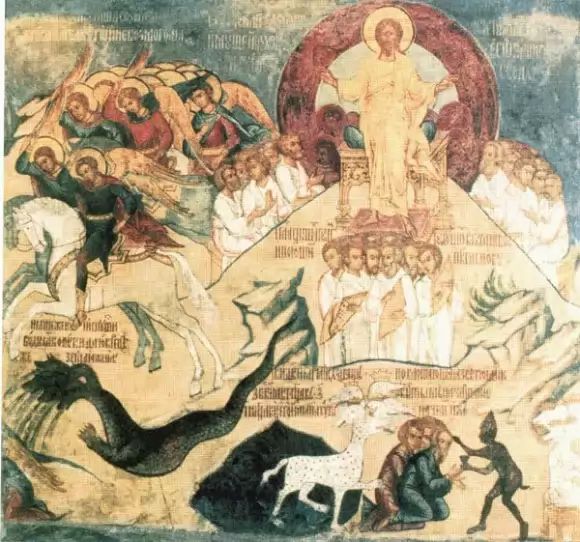
Icon of the Last Judgment. Seventeenth century. 

The fact is that even good deeds, as with all other Christian actions, have their dangers. From the example of the Pharisee and the elder son in the parable of the Prodigal Son we have already seen how religious effort can take on an ungodly character that alienates man from God’s love. The same thing can happen with good deeds. If a Christian immerses himself in them to the point of completely forgetting the primary goal of human existence, then it is unlikely he will do himself any good. Good deeds themselves, if one forgets the memory of death, can acquire the character of an activity that is excited, chaotic, and scattered. 

When the Jewish woman poured precious myrrh onto the head of Jesus, certain of the disciples said among themselves: Why was this waste of ointment made? For it might have been sold… and have been given to the poor (Mark 14:4-5). The indignant disciples probably expected the Savior to endorse their feelings. Christ, however, comes to the defense of this “squanderer”: why trouble ye her? she hath wrought a good work on Me. For ye have the poor with you always, and whensoever ye will ye may do them good: but Me ye have not always (Mark 14:6-7). 

With these words the Savior warns His followers that the work of keeping oneself in the truth of the Gospel is of utmost importance and, moreover, that this does not yield in importance to Christian good deeds; in some cases it even surpasses them. Indeed, Christ tells us that our eternal fate depends entirely and wholly on deeds of mercy. By including this call to mercy in the general discourse on the Second Coming, however, the Gospel establishes the proportionality and consistency of every part of the Christian activity that makes up our salvation. As such, if we will always have in mind the Second Coming and the Dread Judgment, but all the while become so absorbed in the expectation of the end that we lose sight of concrete deeds of mercy, we will most likely not acquire that love without which no one can see God. Yet if we give ourselves over enthusiastically to deeds of love while forgetting about the fleeting and vain nature of all that takes place on earth and the memory of death, then our good deeds will take on an emotional rather than spiritual character and not bring us any closer to God.

In Ecclesiastes we read: To every thing there is a season, and a time to every purpose under the heaven… a time to keep silence… A time to love (3:1-8). A time of silence – a time of solitude and standing noetically before God’s Judgment – is no less essential to Christianity than the active and continuous performance of good deeds. This silence not only returns us from the superficial life around us back to our own depths, but also reminds us of the finite nature of everything that takes place on earth, thereby purifying our love from emotional exaltation.

Therefore, from the publican’s repentance to deeds of love and mercy; from good deeds to the memory of death; and from the memory of death back to repentance and prayer, we must make our journey toward the joyful and bright days of Christ’s Resurrection. The Gospel readings during these preparatory weeks show us the direction we are to follow in our Lenten journey: they are like road signs showing us the way to the Heavenly Jerusalem, to the Lord’s eternal and unceasing Pascha.

What are you relying on?

We live in a culture that idolizes individual power and self-reliance. We miss something very crucial if we approach our preparation for Lent without deepening our humility and dependence on Christ. This short extract from a homily by Father Phillip LeMaster may be helpful in identifying how this trap of self-reliance can manifest itself during Lent. It’s interesting that a central tenet of his homily is drawn from the short desperate prayer found in the Gospel of Mark which many of us can so deeply relate to … ‘I believe, help my unbelief’. Perhaps this prayer epitomizes this necessity of a relentless cycle of receiving from Him all that is good and then circling in our emptiness back to Him as the ‘treasury of good gifts’ and ‘giver of life’.

As we think about the condition of the hearts of the Publican and Pharisee, it’s useful to ask this question of what is the power source for how they are praying and living their lives. It seems clear that much of what was missing in the heart of the Pharisee is a ‘with God’ experience and realization of how dependent he is upon God for whatever manifestation of virtue appears in his life. The Pharisee was living in the delusion and distortion that he was the creator of these virtues and he was worshipping and praying to the small imaginary god of self and self reliance not the True and Triune God. And perhaps one of the greatest assets and aspirations of the Publican was the clarity in his heart that only in the humility of a ‘with God’ reliance could he be delivered from his darkness to Light.

Jesus said unto him, If thou canst believe, all things are possible to him that believeth. And straightway the father of the child cried out, and said with tears, Lord, I believe; help thou mine unbelief. 

Mark 9: 23 – 24

Father Phillip LeMaster

As we continue the Lenten journey, we must remember that this season is not about us and what we think we can achieve spiritually by relying on our own willpower or virtue to perform acts of religious devotion.  Spiritual disciplines are not exercises in self-reliance, as though we earn something from God by being diligent in performing them.  Instead, they are simply ways of helping us share more fully in the life of Christ as we grow in recognizing our sinfulness and opening ourselves to receive His healing mercy.  No amount of piety could conquer the power of death and make a path for us to participate personally in the eternal life of God by grace.  Only the God-Man, in His full Self-offering on the Cross, could do that. Lent is preparation to unite ourselves to Christ in His Passion, for “The Son of man will be delivered into the hands of men, and they will kill Him; and after He is killed, He will rise on the third day.” He is the eternal High Priest Who “has gone as a forerunner on our behalf” into the Heavenly Tabernacle where He intercedes for us eternally (Rom. 8:34).

The healing of our souls is found by sharing in the life of Christ.  We will be able to unite ourselves to Him in holiness only when we know the weakness of our faith as we turn away from self-reliance and receive His mercy from the depths of our souls.  The disciplines of Lent are teachers of humility that should help us “commend ourselves and one another, and all our life, unto Christ our God.”  He accepted the imperfect faith of the father of the demon-possessed boy, and He will do the same with us if we come to Him in the same humble spirit.  Doing so is really the only way to prepare to follow the Savior to His Cross and empty tomb.

What do I truly treasure?

Our actions, attitudes, and awareness have a lot to teach us about what we honestly treasure in the depths of our hearts. I find this article by Father Stephen Freeman entitled ’The Treasures of the Heart’ very helpful as I enter this Pre-Lenten period and desire to see more clearly, with God’s help, the truth of what lies within me. I’ve created a slightly shortened extract of the full article below. I hope this may help you reflect and gain some clarity about this important question that we can ask and perhaps even answer right now today.

The Treasures of the Heart – Father Stephen Freeman

A good man out of the good treasure of his heart brings forth good; and an evil man out of the evil treasure of his heart brings forth evil. For out of the abundance of the heart his mouth speaks. 

Matthew 12:34-35

Christ’s teaching on the heart points to it as the very center of our life. He does not describe it as inherently good or inherently bad. It is inherently central. It is that place in the core of our existence from which all words and actions flow. And so Christ tells us simply that if the treasure of our heart is good – it will be evidenced by the good things we say and do – and, conversely, if the treasure of our heart is evil – it, too, will be evidenced by the evil things we say and do. What we should take from this is the realization that we are daily laying up treasure (good or evil) in the heart.

I recently gave some thought to St. Macarius’ saying on the treasures of the heart – that we find dragons and lions, poisonous beasts, etc., and that we find God, the angels, the life and the kingdom, the heavenly cities and the treasuries of grace. My thoughts stayed with his imagery as I walked myself through the day. It was obvious that over the course of the day I myself added to the treasures of my heart – and to some extent – others added to that treasure as well.

One image that came to me was travel on our busy freeways. In East Tennessee it seems that our interstate highway system is in a constant state of “under construction.” At times traffic is heavy, too fast, and frightening (especially if you add in cell-phone usage and the like as we zip along at freeway speeds). The image that came to mind was of cars barreling down the highway with dragons and lions and poisonous beasts pouring out the windows as travelers cursed one another on their daily commute. “Road rage” is a common phenomenon all across the nation. I wondered how we would react if we could actually see the “treasures” of our heart pouring out of our cars.

The same image could be applied across the whole of the day. For we are either bringing forth good out of the treasure of a good heart or pouring out dragons from the treasure of an evil heart.

There was an additional thought. The nature of the heart’s treasure is their inexhaustibility. When we pour forth our treasure we do not see its decrease. Quite the opposite – dragons begat dragons. And in the same way, every act of kindness of mercy does not diminish the kindness and mercy of our heart but multiplies them. Kindness begats kindness.

And so it is that over the course of every day we not only nurture the treasure of our own heart (for good or ill), we also add, or attempt to add, to the treasures of those around us. Some of the poisonous beasts that I find within my heart have been dwelling there a long time – placed there even when I was a child.

And so a significant question for all of us (daily) is: what treasure do I share with others?

Meditating on such imagery should also drive us deeper into repentance (not guilt, but repentance). What am I doing with the beasts that inhabit my heart? Frequent confession – telling the truth about the state of my heart is important. But equally important (perhaps more so) is the attention we should give to the good treasures that are so lacking. Every act of kindness and mercy, every effort towards forgiveness of everyone for everything, does not exhaust the heart but stores up good treasures in the presence of the good God. Avoiding evil is an effort not to do something. I always find that such efforts alone are very weak indeed. The man who is busy being kind cannot be busy being evil. One of the powers of goodness is that it actually has substance rather than absence. And so St. Paul exhorts us, “Overcome evil by doing good” (Romans 12:21).

Dragons depart ….

By The Waters Of Babylon Psalm 137 – Recording and Father Seraphim Rose Homily

YouTube Recording

“By the waters of Babylon, there we sat down, yea, we wept, when we remembered Zion”.

In these words of the Lenten Psalm, we Orthodox Christians, the New Israel, remember that we are in exile. For Orthodox Russians, banished from Holy Russia,[2] the Psalm has a special meaning; but all Orthodox Christians, too, live in exile in this world, longing to return to our true home, Heaven.

For us the Great Fast is a season of exile ordained for us by our Mother, the Church, to keep fresh in us the memory of Zion from which we have wandered so far. We have deserved our exile and we have great need of it because of our great sinfulness. Only through the chastisement of exile, which we remember in the fasting, prayer and repentance of this season.

Do we remain mindful of our Zion?

“If I forget thee, O Jerusalem…”

Weak and forgetful, even in the midst of the Great Fast we live as though Jerusalem did not exist for us. We fall in love with the world, our Babylon; we are seduced by the frivolous pastimes of this “strange land” and neglect the services and discipline of the Church which remind us of our true home. Worse yet, we love our very captors – for our sins hold us captive more surely than any human master – and in their service we pass in idleness the precious days of Lent when we should be preparing to meet the Rising Sun of the New Jerusalem, the Resurrection of our Lord Jesus Christ.

There is still time; we must remember our true home and weep over the sins which have exiled us from it. Let us take to heart the words of St. John of the Ladder: “Exile is separation from everything in order to keep the mind inseparable from God. An exile loves and produces continual weeping.” Exiled from Paradise, we must become exiled from the world if we hope to return.

This we may do by spending these days in fasting, prayer, separation from the world, attendance at the services of the Church, in tears of repentance, in preparation for the joyful Feast that is to end this time of exile; and by bearing witness to all in this “strange land” of our remembrance of that even greater Feast that shall be when our Lord returns to take His people to the New Jerusalem, from which there shall be no more exile, for it is eternal.

+ Fr. Seraphim Rose, March 1965

Footnotes:

[1] “By the Waters of Babylon” is the entire Psalm 137 sung to a plaintive melody, after the Polyelos Psalm during Matins. It is only sung in church the three Sundays that precede Great Lent: Sunday of the Prodigal Son, The Last Judgment (Meatfare) and Forgivensss (Cheesefare) It is significant that this same hymn is chanted at the beginning of the service of monastic tonsure.

[2] This homily was written in 1965, when the church in Russia was still under captivity to the Communist regime.

Open To Me The Gates Of Repentance – Song & Lyrics

YouTube Recording

Glory to the Father and to the Son and to the Holy Spirit. Open to me the doors of repentance O Lifegiver; for my spirit rises early to pray towards Thy Holy Temple, bearing the temple of my body all defiled. But in Thy Compassion purify me by the loving kindness of Thy Mercy. Now and ever and unto ages of ages. Amen. Lead me on the paths of Salvation O Mother of God, for I have covered my soul in shameful sins and have wasted my life in lazy acts. But by your intercessions, deliver me from all impurity. Have mercy on me O God according to Thy Great Mercy and according to the multitude of Thy Compassions blot out my transgressions. When I think of the many evil things I have done, wretched I am, I tremble at the fearful day of Judgement, but trusting in Thy loving kindness, like David I cry to Thee. Have mercy on me O God, have mercy on me O God, Have mercy on me O God according to Thy great Mercy.

Open To Me The Gates of Repentance – Ancient Faith- Homily on Pharisee & Publican – Father Patrick Reardon

Audio LInk


In the name of the Father and of the Son and of the Holy Spirit. Amen.

Well, this morning at matins, after the recitation of the 50th psalm, we all knelt down and began the Triodion. “Open unto me the gates of repentance.” Yesterday I called Hannah, and I said, “Let’s make sure we do that during communion tomorrow as well: Open to me the gates of repentance.” This little hymn-snatch signifies that the Church begins the season known in the East as the Triodion, which consists of the Great Fast and the three Sundays just prior to the Great Fast. Until recent times, this period was known in the West as Septuagesima, which also consisted of the Great Fast and the three Sundays just prior to the Great Fast. They stopped calling it that some time back in the ‘60s, I believe—at least the Roman Catholics did; the Episcopalians persevered for another ten years, and then they petered out.

In English-speaking countries, but only in English-speaking countries, the season of the Great Fast came to be called Lent. The Church actually knows nothing about a “Lent.” It’s a term derived from the Old English expression, lencten, which means, simply, “spring.” The purpose of the first part of the Triodion, or Septuagesima, as it was called in Latin, is to get our hearts and minds ready for the Great Fast. Now, one would think it’s enough just to do the Great Fast just to get ready for Pascha. You would think that would be enough getting ready. No, that’s not enough getting ready. You’ve got to get ready for the Fast, too. At least if you’re going to take it seriously, you’ve got to get ready for it!

Consequently, the gospel readings for these three Sundays were chosen with great care, because they are directed at themes central to the purpose of the Great Fast. It may be said that the gospel story we just heard—the parable of the Publican and the Pharisee—goes to the very heart of the matter by introducing the Pauline theme of justification. Indeed, let us make this idea, justification, the first of today’s three reflections on the gospel reading.

Here, once again, the first sentence of that reading says that Jesus spoke this parable to some who trusted in themselves that they were just and despised others. Observe here the word “just” in the plural form this morning is dikaioi. We recognize in this adjective a basic concern with the theology of St. Paul. Beginning with the Galatian controversy in the early 50s and going on to its full elaboration in the epistle to the Romans about five years later, the Apostle Paul was preoccupied with the question: How do human beings become just, dikaios, in the sight of God?

This question came to the fore in the mind of Paul when certain Christians arrived in Galatia in the early 50s, claiming that Christians were obliged to observe the Mosaic law, all the prescriptions of the Mosaic law, just as Jesus had observed the Mosaic law. This was the claim that Paul himself felt obliged to refute. He contended that God’s eternal word did not come to earth simply to reinforce the claims of the Torah; he came, rather, to elevate human beings into the divine life and to transform them by the outpouring of the Holy Spirit. That is to say, Paul insisted that one does not become a child of God by observing the Torah—now, that’s a Jew saying that: one does not become a child of God by observing the Torah—but by the transformation of the heart and mind, by the energy of the Holy Spirit.

In the epistle to the Romans Paul wrote that

There is no condemnation to those who are in Christ Jesus, for as many as were led by the Spirit of God, these are the sons of God. For you did not receive the spirit of bondage again to fear, but you received the spirit of adoption, by whom we cry out: Abba, Father! The Spirit himself bears witness to our spirit (he says) because we are the children of God.

Now, in today’s parable, just what was wrong with the prayer of the Pharisee? Luke indicates the problem when he declares that Jesus spoke this parable to some who trusted in themselves. It is with this verse that we commence the period of the Triodion, that Jesus spoke this parable to those who trusted in themselves. The first parable of which we are warned in this season, brothers and sisters, is the real danger of self-reliance. As we prepare for Lent and for this great celebration that follows it, our first concern must be not to trust in ourselves. So important is this message in today’s parable that it appears again at the end of the story where Jesus says of the publican: “I tell you, this man went down to his house justified rather than the other.” Here is a man who did not trust in himself.

Once again, notice the modifier: the just man (dikaios) is the justified man (dedikaiōmenos). The former is the perfect passive participle: we become just by being justified, and we are justified only if we rely on God and not on ourselves.

We don’t fast because the man in this morning’s gospel is standing up there bragging that he fasts—twice a week! He was a Jew, so it was Monday and Thursday, but for us it means Wednesday and Friday—but not this week! I’ve always had a feeling—but I must be hesitant to say this, I think—that the chief purpose of Lent is to prove to yourself that you have got the guts to hurt yourself, but maybe that’s not right.

Ironically, one of the normal aspects of the annual observance of Lent is the experience of failure. I say it’s a normal aspect simply because it happens a lot. Indeed, the rigors of the lenten discipline are so severe that arguably most Christians fail to observe all of them. Somewhere along the line they’re going to inadvertently going to eat peanut butter or something, which certainly none of the early Christians would have touched. Even now, the fast we have is so modified. Now, I do not find this view written down anywhere as a point of principle, but I have not failed to observe over the years how many Christians feel like failures during Lent. And, you know, that’s not the American way. America is the country of winners! So it’s very hard to have this experience of failure. We’re supposed to win.

Recently, I was visiting the grandchildren down in Georgia, and they’re all into sports. It seemed to me, my impression was that no matter where you appeared in the standings in the league, everybody got a trophy at the end of the year, because America’s a country of winners! It’s very difficult, with that kind of mindset, to appreciate the Cross. If you find this to be the case in your own lives, I ask you to remember this parable we heard today. The evangelist tells us that Jesus spoke this parable “to some who trusted in themselves.” Perhaps the most important lesson that we may learn in this annual “spring cleaning” of our souls is not to trust in ourselves, but in the God to whom we plead, “Have mercy on me, a sinner!” I don’t believe it’s going to be possible to become a saint at all unless we find some way of dealing with a sense of failure, incorporating this sense of failure into our experience of the Christian life. And that’s what the Cross means.

Second, this morning, let’s speak of prayer. The parable begins: “Two men went up to the temple to pray.” This is the story about prayer. Specifically, it is a story about how to pray. Now draw your attention to the personal nature of this prayer. The prayer in this morning’s parable is not liturgical prayer; it is solitary prayer, which in the gospel stories is chiefly exemplified by Jesus himself. Indeed, there is the major mark to prove that Jesus is a human being: he prays. He prays. On so many occasions, we read that Jesus went out to a solitary place to pray. This is the kind of prayer concerning which Jesus instructs us. “When you pray, go into your room, and when you have shut your door, pray to the Father in secret.”Beloved, let me spare no efforts of rhetoric in emphasizing how fundamental this kind of prayer is. It is absolutely essential that each of us, every day, and if possible several times a day, retire from everything else and pray to the Father in secret, all by ourselves, placing our hearts and minds under the gaze of the Father who sees in secret. Jesus tells us to do that. I sometimes ask people—very often I ask people, in confession—“How often do you pray?” “Well, I sort of pray while I’m doing other things.” Not good enough! You’re supposed to do that anyway. You must retire from what you’re doing and pray exclusively. Praying to the Father in secret: that’s the instruction that Jesus himself gives us.This kind of prayer, this dialogue with God, is the most important part of the day, and we need to be convinced on this point. There is no life in Christ without this solitary prayer. What do we say to God when we come to him in secret, when we enter into the inner temple and close the door to all distractions, when we lay aside, at least for a while, all earthly cares? What are the words and sentiments that rise in our minds, take shape in our hearts, and are expressed with our lips? It could be all sorts of things, but the one thing we must not do is tell God something we don’t mean, just pray empty prayers, just recite prayers that we really do not mean because they’re just words, they’re just formulas.In the words of prayer, I believe, we’re not left on our own. Primacy of place belongs surely to those prayers which we know to be inspired by the Holy Spirit. If one cannot pray and mean the psalms, then revert to what we had today—beat your breasts—because there’s something seriously wrong. If you can pray the psalms and not mean them, there’s something seriously wrong with the heart and mind. Beat the breast and pray for mercy.When we pray those prayers, we are surely praying in the Holy Spirit, because they’re inspired by the Holy Spirit. So we stand before the holy Father and say to him something like this: “Receive me according to thy word, that I may live, and let me not be put to shame in my expectation.” May I have a show of hands of those of you who would not mean that if you said it?Receive me according to thy word, that I may live, and put me not to shame in my expectation. Come to help me, and I will be saved, and I will meditate on thy statutes continually. My flesh trembles for the fear of thee, and I am terrified by thy judgments. I have done judgment and justice; leave me not to mine oppressors. Receive thy servant unto good, and let not the proud oppress me. Mine eyes have failed for thy salvation and for the word of thy righteousness. Deal with thy servant according to thy mercy, and teach me thy statutes. I am thy servant; give me understanding that I may know thy testimonies.Where did I find this prayer? Opened the Bible and put my finger on something. The Bible’s full of such prayers! If you have a better prayer than that, then for heaven’s sake, pray it! [Laughter] But we make our own the inspired prayers of holy Scriptures. Let us try with all our hearts and with the full force of concentration to mean what we say, use great effort to mean it, work at it. Prayer must be worked at. And thereby we become such worshipers as the Father seeks. What we hope for in such prayer is a total transformation of our inner life, keeping our minds fixed on God, and remaining aware that he reads our hearts.This Triodion, this Lent, let’s be resolved to become people of prayer—but don’t give it up when Pascha comes. Keep working at it.Third, this parable indicates that we pray from a sense of need. The Pharisee in the story didn’t need anything; he had it all. He was not like other men, and he thanked God for the fact. He practiced tithing; he kept the fast days. Indeed, he needed nothing and he asked for nothing. You might notice that in today’s prayer: the Pharisee didn’t ask for anything. The presumption of Jesus is that we’re praying from a position of need, and therefore we ask for things.According to St. Cyril of Alexandria, this Pharisee was practicing self-deception. His prayer lacked one of the most essential components of prayer, which is vigilance over one’s soul. The publican, on the other hand, prayed entirely out of sense of need, even desperation. He asked only for one thing, the one thing necessary: God’s mercy. According to the story, this publican, as he prayed, beat his breast. That is to say, he attempted to break his heart, because “a broken and contrite heart, God will not despise.” In this respect, several Church Fathers commented that being a repentant sinner is a better state than not being a sinner at all. I don’t believe I would have the nerve to make such a claim if it had not already been made by the likes of Macarius the Great, Gregory the Theologian, and John Chrysostom. I rely on their authority.Repeated prayer for the divine mercy is, above all, an affirmation of Christ’s redemptive lordship as the defining revelation of God in history. “Lord Jesus Christ, Son of God”—there is the act of faith: “Lord Jesus Christ, Son of God, have mercy on me.” It’s a proclamation of faith in the form of address to the Savior of the world. It’s only in the Holy Spirit can we proclaim that Jesus is Lord. It is permeated with the divinizing energies of that Holy Spirit. Furthermore, it is a confession of sinfulness, trapped in a place with a broken and contrite heart, continuously in the presence of the living Christ and under the bounteous mercy of his blood.

Taking the Lenten Journey – Ancient Faith – Father Ted Paraskevopoulos

Audio Link

Many people have the—I guess you could say—common assumption that Lent begins with Clean Monday, which this year falls on February 23, and that that is the beginning of the Fast which leads to the Great Feast, the center of our faith, which is Holy Resurrection—Pascha, Easter. But really, if we look at the ecclesiastical year, and we look at the cycle of services and the themes that are being introduced to us, that journey towards the resurrection of Christ begins today, with the beginning of the cycle called the Triodion. The Triodion, it’s named after a book that we use—the psaltis use and the priests use inside the altar—which is called The Triodion, and it begins today and ends right before the resurrection of Christ.

The themes of the Triodion are of repentance, of self-examination, of self-discovery, and we see that the Triodion starts four weeks before the actual Fast begins. We start today with the Sunday of the Publican and the Pharisee, the theme of true repentance and pseudo-repentance, two different characters, and how we approach actual repentance and how we approach humility and whether we have true humility or not. Next week we will have the Sunday of the Prodigal Son, another beautiful story of repentance and coming back to the Father. The Sunday after that we have the Sunday of the Last Judgment. And the Sunday after that, which is the last Sunday before the beginning of the Fast, is the Sunday of Forgiveness, another beautifully themed Sunday.

All these themes that we have are done intentionally to prepare us for this journey, which we call in Greek the journey towards the resurrection, which is Great Lent. Even if we pay attention to the whole cycle of the year, we see that Pascha, the Resurrection, takes up a third of the year, if we take into account starting to today, leading to Pascha, and even the afterfeasts: the Ascension all the way up to Pentecost, which is fifty days after Easter. That whole block of time takes up a third of our year, which means that this Feast of Pascha is the most important. Most important not only for teaching, but most important for our own personal spirituality, that we dedicate such a long period of time to focus on one event.

Many people ask me, “Father, I really don’t feel that I can actually do the things that the Church asks me to do,” which is to fast, to pray, to confess, to go to more services. It seems a bit overwhelming, and it can be very overwhelming, especially when we’ve never done it before. Many people tell me, “Father, I’ve just become accustomed to fasting on the last week, Holy Week, and then I’ll just go into Easter and experience it.” Other people say, “Well, Father, I don’t even do that. I just show up for the Anastasi.” And as we can see with the thousands of people that show up on Anastasi night, that is usually the case, that many of our brothers and sisters simply show up for the light, as if the light saved them.

I always respond to people like this and friends of mine whom I grew up with that doing the journey, actually struggling through it and actually following the different traditions and the Fast, leading up to Easter and not doing it and simply just showing up at the end are two very different experiences. I used to have a professor in seminary who said it really beautifully to us. He said that the Lenten journey, and indeed the whole Triodion, is like climbing a mountain. The top, of course, is the goal. It is the union with God. It is the witnessing of the holy Resurrection. It is the beautiful view that you get from the top. So we begin from the bottom, and we struggle to climb this mountain. We have many difficulties: we fall, we get back up again. Some of us climb faster than others. Some of us turn around and help those who have fallen behind us; others help from behind. We all try to climb this mountain. For those who struggle and work hard and finally make it to the top, which is the end of Lent, beginning the actual Resurrection—for those the experience at the top is very, very different from [that of] those who simply hopped on the helicopter and flew to the top and got dropped off. Both will experience the view. Both will experience the light of the Resurrection. But those who struggled to reach the top, for them the experience will be completely different. They will appreciate it more, they will have a sense of accomplishment, and it will be much more of a profound experience than [that of] those who didn’t work for it but simply showed up.

I can attest to that even as a young man, growing up in Toronto. When I was a young man growing up, there were some years where I did the Fast, and there were some years where I did not, unfortunately. And I can attest to the difference in experience, of struggling and growing through the actual spiritual exercises and reaching that night of the Resurrection after having fasted for 47 days, and not only fasted but examining my conscience and going to confession and helping others and doing more volunteer work—the whole thing—and reaching that point of the Resurrection, it is a point that is quite moving, because we have opened up our souls, have cleansed our souls, and we have allowed for the light of the Resurrection to have entered into us. The years in which I did nothing—my heart was closed, so when I attempted to experience that light, it was not the same thing. It didn’t have the same spiritual potency as it did the years that I tried.

So I say all this not because I’m trying to force or trying to persuade everybody to go to church every Sunday, but rather so that we understand what the cycles of the Church are, why they are set up the way they are for the last 2,000 years, and why they work and why all these things are put in place to prepare us for what the Fathers say is the three-fold method of achieving salvation or achieving holiness.

For the Fathers, the three stages are katharsis, which basically means purification; photisis, which means illumination; and theosis, which means divinization, becoming like God, becoming holy. We have to understand that one cannot come before the other. First we have to purify ourselves before we can be enlightened. And after we are enlightened, we can actually become divine.

So if we don’t do these things, we will never be able to understand what the Church is talking about. We will never be able to see the reality which Christ reveals to us in the Resurrection. It will just simply be another night, another night of going to the church and lighting a candle and taking it back home, devoid of anything spiritual, devoid of anything that is truly profound in our lives. But for those who take the chance… And I hope that all of you take the chance this year, beginning with today, not to do everything perfectly—you can’t; that’s okay—but to try, to maybe take a few steps further, to do a little more than what you did the year before. And maybe next year you do a little more than that, but to try, a little bit.

And together we can climb the mountain, and together we can truly enjoy the light of the Resurrection as it’s supposed to be enjoyed, as it’s supposed to be perceived. It all begins with today, and it ends with the Resurrection of our Lord and Savior Jesus Christ on the evening of Pascha. Amen.