Each of us has become our own Adam

By Father Jonathon Lincoln

For, although Adam sinned first and has brought death upon all who were not in his own time, yet each of them who has been born from him has prepared for himself the coming torment. And further, each of them has chosen for himself the coming glory…. Adam is, therefore, not the cause, except only for himself, but each of us has become our own Adam.

2 Baruch 54:15, 19

“Each of us has become our own Adam.” Each of us has run away from God, each of us has repeated the sin of choosing death rather than life. To each of us, God gives us an opportunity for repentance, calling out, “Where are you? Come back!” (Gen. 3:9). 

And in that same sense, each of us is the prodigal son. God waits patiently for our return, eagerly watching the road (Luke 15:20). Like the prodigal son, the only person we can ultimately find responsibility for our sins is…ourselves.

Fr. Alexander Schmemann’s reflection on this parable in Great Lent: Journey to Pascha beautifully relates the self-inflicted sufferings of the younger brother to each and every person, as we have all, to some degree, traded the freedom of our Father’s home for slavery in exile. 

It is easy indeed to confess that I have not fasted on prescribed days, or missed my prayers, or become angry. It is quite a different thing, however, to realize suddenly that I have defiled my spiritual beauty, that I am far away from my real home, my real life, and that something precious and pure and beautiful has been hopelessly broken in the very texture of my existence. Yet this, and only this, is repentance, and therefore it is also a deep desire to return, to go back, to recover that lost home.

Fr. Alexander Schmemann, Great Lent: Journey to Pascha, pp. 21-22

The hymns for the feast likewise make the connection to my own life: am the prodigal son. 

I, a wretched man, hide my face in shame:
I have squandered the riches my Father gave to me;
I went to live with senseless beasts;
I sought their food and hungered, for I had not enough to eat.
I will arise, I will return to my compassionate Father;
He will accept my tears, as I kneel before Him, crying:
“In Thy tender love for all men, receive me as one of Thy servants and save me!”

“Glory” verse at the Aposticha at Great Vespers, Tone 6

The parable of the Prodigal Son shows us the importance of personal responsibility for our sins—how owning up to our failings, truly repenting from the depths of our heart, is the first step toward reunification with our loving Father.

What this return to God demands, therefore, is the courage to face our sins, to own up for our mistakes and not to blame other people or our circumstances. Courage with humility—”I recognize that I’ve wounded myself, and now it’s time to come clean.”

We spend so much time trying to convince ourselves that we’re OK, that we’re not so bad, that other people are worse, that it’s someone else’s fault; all of these thoughts are barriers to repentance, barriers to the reaching the deep place of the soul, where our real person lives, deep below our personas, self-justifications, and excuses. 

Each of us has become our own Adam.

Each of us has become our own prodigal son. 

But each of us also has an opportunity to return to God, today, while there is still time.

Triodion – Why do we fast? – Archbishop Kallistos Ware

The primary aim of fasting is to make us conscious of our dependence upon God. If practiced seriously, the Lenten abstinence from food – particularly in the opening days – involves a considerable measure of real hunger, and also a feeling of tiredness and physical exhaustion. The purpose of this is to lead us in turn to a sense of inward brokenness and contrition; to bring us, that is, to the point where we appreciate the full force of Christ’s statement, ‘Without Me you can do nothing’ (John 15: 5). If we always take our fill of food and drink, we easily grow over-confident in our own abilities, acquiring a false sense of autonomy and self-sufficiency. The observance of a physical fast undermines this sinful complacency. Stripping from us the specious assurance of the Pharisee – who fasted, it is true, but not in the right spirit – Lenten abstinence gives us the saving self dissatisfaction of the Publican (Luke I 8: 10-1 3). Such is the function of the hunger and the tiredness: to make us ‘poor in spirit’, aware of our helplessness and of our dependence on God’s aid.

Yet it would be misleading to speak only of this element of weariness and hunger. Abstinence leads, not merely-to this, but also to a sense of lightness, wakefulness, freedom and joy. Even if the fast proves debilitating at first, afterwards we find that it enables us to sleep less, to think more clearly, and to work more decisively. As many doctors acknowledge, periodical fasts contribute to bodily hygiene. While involving genuine self-denial, fasting does not seek to do violence to our body but rather to restore it to health and equilibrium. Most of us in the Western world habitually eat more than we need. Fasting liberates our body from the burden of excessive weight and makes it a willing partner in the task of prayer, alert and responsive to the voice of the Spirit.

It will be noted that in common Orthodox usage the words ‘fasting’ and ‘abstinence’ are employed interchangeably. Prior to the Second Vatican Council, the Roman Catholic Church made a clear distinction between the two terms: abstinence concerned the types of food eaten, irrespective of quantity, whereas fasting signified a limitation on the number of meals or on the amount of food that could be taken. Thus on certain days both abstinence and fasting were required; alternatively, the one might be prescribed but not the other. In the Orthodox Church a clear-cut distinction is not made between the two words. During Lent there is frequently a limitation on the number of meals eaten each day, 5 but when a meal is permitted there is no restriction on the amount of food allowed. The Fathers simply state, as a guiding principle, that we should never eat to satiety but always rise from the table feeling that we could have taken more and that we are now ready for prayer.

If it is important not to overlook the physical requirements of fasting, it is even more important not to overlook its inward significance. Fasting is not a mere matter of diet. It is moral as well as physical. True fasting is to be converted in heart and will; it is to return to God, to come home like the Prodigal to our Father’s house. In the words of St. John Chrysostom, it means ‘abstinence not only from food but from sins’. ‘The fast’, he insists, ‘should be kept not by the mouth alone but also by the eye, the ear, the feet, the hands and all the members of the body’: the eye must abstain from impure sights, the ear from malicious gossip, the hands from acts of injustice. 6 It is useless to fast from food, protests St. Basil, and yet to indulge in cruel criticism and slander: ‘You do not eat meat, but you devour your brother’ . 7 The same point is made in the Triodion, especially during the first week of Lent:

As we fast from food, let us abstain also from every passion. . .

Let us observe a fast acceptable and pleasing to the Lord.
True fasting is to put away all evil,
To control the tongue, to forbear from anger,
To abstain from lust, slander, falsehood and perjury.
If we renounce these things, then is our fasting true and acceptable to God.
Let us keep the Fast not only by refraining from food,
But by becoming strangers to all the bodily passions. 8

The inner significance of fasting is best summed up in the triad: prayer, fasting, almsgiving. Divorced from prayer and from the reception of the holy sacraments, unaccompanied by acts of compassion, our fasting becomes pharisaical or even demonic. It leads, not to contrition and joyfulness, but to pride, inward tension and irritability. The link between prayer and fasting is rightly indicated by Father Alexander Elchaninov. A critic of fasting says to him: ‘Our work suffers and we become irritable. . . . I have never seen servants [in pre-revolutionary Russia] so bad tempered as during the last days of Holy Week. Clearly, fasting has a very bad effect on the nerves.’ To this Father Alexander replies: ‘You are quite right. . . . If it is not accompanied by prayer and an increased spiritual life, it merely leads to a heightened state of irritability. It is natural that servants who took their fasting seriously and who were forced to work hard during Lent, while not being allowed to go to church, were angry and irritable.’ 9

Fasting, then, is valueless or even harmful when not combined with prayer. In the Gospels the devil is cast out, not by fasting alone, but by ‘prayer and fasting’ (Matt. 17: 21 ; Mark 9: 29); and of the early Christians it is said, not simply that they fasted, but that they ‘fasted and prayed’ (Acts 13: 3; compare 14: 23). In both the Old and the New Testament fasting is seen, not as an end in itself, but as an aid to more intense and living prayer, as a preparation for decisive action or for direct encounter with God. Thus our Lord’s forty-day fast in the wilderness was the immediate preparation for His public ministry (Matt. 4: 1-11). When Moses fasted on Mount Sinai (Exod. 34: 28) and Elijah on Mount Horeb (3 [1] Kgs. 19: 8-12), the fast was in both cases linked with a theophany. The same connection between fasting and the vision of God is evident in the case of St. Peter (Acts 10: 9-17). He ‘went up on the housetop to pray about the sixth hour, and he became very hungry and wanted to eat; and it was in this state that he fell into a trance and heard the divine voice. Such is always the purpose of ascetic fasting – to enable us, as the Triodion puts it, to ‘draw near to the mountain of prayer’. 10

Prayer and fasting should in their turn be accompanied by almsgiving – by love for others expressed in practical form, by works of compassion and forgiveness. Eight days before the opening of the Lenten fast, on the Sunday of the Last Judgment, the appointed Gospel is the Parable of the Sheep and the Goats (Matt. 25′: 31-46), reminding us that the criterion in the coming judgment will not be the strictness of our fasting but the amount of help that we have given to those in need. In the words of the Triodion:


Knowing the commandments of the Lord, let this be our way of life:
Let us feed the hungry, let us give the thirsty drink,
Let us clothe the naked, let us welcome strangers,
Let us visit those in prison and the sick.
Then the Judge of all the earth will say even to us:
‘Come, ye blessed of My Father, inherit the Kingdom prepared for you.’ 11

This stanza, it may be noted in passing, is a typical instance of the ‘evangelical’ character of the Orthodox service-books. In common with so many other texts in the Triodion, it is simply a paraphrase of the words of Holy Scripture. 12

It is no coincidence that on the very threshold of the Great Fast, at Vespers on the Sunday of Forgiveness, there is a special ceremony of mutual reconciliation: 13  for without love towards others there can be no genuine fast. And this love for others should not be limited to formal gestures or to sentimental feelings, but should issue in specific acts of almsgiving. Such was the firm conviction of the early Church. The second-century Shepherd of Hermas insists that the money saved through fasting is to be given to the widow, the orphan and the poor. 14 But almsgiving means more than this. It is to give not only our money but our time, not only what we have but what we are; it is to give a part of ourselves. When we hear the Triodion speak of almsgiving, the word should almost always be taken in this deeper sense. For the mere giving of money can often be a substitute and an evasion, a way of protecting ourselves from closer personal involvement with those in distress. On the other hand, to do nothing more than offer reassuring words of advice to someone crushed by urgent material anxieties is equally an evasion of our responsibilities (see Jas. 2: 16). Bearing in mind the unity already emphasized between man’s body and his soul, we seek to offer help on both the material and the spiritual levels at once.

‘When thou seest the naked, cover him; and hide not thyself from thine own flesh.’ The Eastern liturgical tradition, in common with that of the West, treats Isaiah 58: 3-8 as a basic Lenten text.


So we read in the Triodion:

While fasting with the body, brethren, let us also fast in spirit.
Let us loose every bond of iniquity;
Let us undo the knots of every contract made by violence;
Let us tear up all unjust agreements;
Let us give bread to the hungry
And welcome to our house the poor who have no roof to cover them,
That we may receive great mercy from Christ our God. 15

Always in our acts of abstinence we should keep in mind St. Paul’s admonition not to condemn others who fast less strictly: ‘Let not him who abstains pass judgment on him who eats’ (Rom. 14: 3). Equally, we remember Christ’s condemnation of outward display in prayer, fasting or almsgiving (Matt. 6: 1-18). Both these Scriptural passages are often recalled in the Triodion:

Consider well, my soul: dost thou fast? Then despise not thy neighbor.
Dost thou abstain from food? Condemn not thy brother.

Come, let us cleanse ourselves by almsgiving and acts of mercy to the poor,
Not sounding a trumpet or making a show of our charity.
Let not our left hand know what our right hand is doing;
Let not vainglory scatter the fruit of our almsgiving;
But in secret let us call on Him that knows all secrets:
Father, forgive us our trespasses, for Thou lovest mankind. 16

If we are to understand correctly the text of the Triodion and the spirituality that underlies it, there are five misconceptions about the Lenten fast against which we should guard. In the first place, the Lenten fast is not intended only for monks and nuns, but is enjoined on the whole Christian people. Nowhere do the Canons of the Ecumenical or Local Councils suggest that fasting is only for monks and not for the laity. By virtue of their Baptism, all Christians – whether married or under monastic vows – are Cross-bearers, following the same spiritual path. The exterior conditions in which they live out their Christianity display a wide variety, but in its inward essence the life is one. Just as the monk by his voluntary self-denial is seeking to affirm the intrinsic goodness and beauty of God’s creation, so also is each married Christian required to be in some measure an ascetic. The way of negation and the way of affirmation are interdependent, and every Christian is called to follow both ways at once.

In the second place, the Triodion should not be misconstrued in a Pelagian sense.If the Lenten texts are continually urging us to greater personal efforts, this should not be taken as implying that our progress depends solely upon the exertion of our own will. On the contrary, whatever we achieve in the Lenten fast is to be regarded as a free gift of grace from God. The Great Canon of St. Andrew of Crete leaves no doubt at all on this point:

I have no tears, no repentance, no compunction;
But as God do Thou Thyself, O Saviour, bestow them on me. 17

In the third place, our fasting should not be self-willed but obedient. When we fast, we should not try to invent special rules for ourselves, but we should follow as faithfully as possible the accepted pattern set before us by Holy Tradition. This accepted pattern, expressing as it does the collective conscience of the People of God, possesses a hidden wisdom and balance not to be found in ingenious austerities devised by our own fantasy. Where it seems that the traditional regulations are not applicable to our personal situation, we should seek the counsel of our spiritual father – not in order legalistically to secure a ‘dispensation’ from him, but in order humbly with his help to discover what is the will of God for us. Above all, if we desire for ourselves not some relaxation but some piece of additional strictness, we should not embark upon it without our spiritual father’s blessing. Such has been the practice since the early centuries of the Church’s life:

Abba Antony said: ‘I know of monks who fell after much labor and lapsed into madness, because they trusted in their own work and neglected the commandment that says: “Ask your father, and he will tell you.'” (Deut. 32: 7)


Again he said: ‘So far as possible, for every step that a monk takes, for every drop of water that he drinks in his cell, he should consult the gerontes, in case he makes some mistake in this.’ 18

These words apply not only to monks but also to lay people living in the ‘world’, even though the latter may be bound by a less strict obedience to their spiritual father. If proud and willful, our fasting assumes a diabolical character, bringing us closer not to God but to Satan. Because fasting renders us sensitive to the realities of the spiritual world, it can be dangerously ambivalent: for there are evil spirits as well as good.


In the fourth place, paradoxical though it may seem, the period of Lent is a time not of gloom but of joyfulness. It is true that fasting brings us to repentance and to grief for sin, but this penitent grief, in the vivid phrase of St. John Climacus, is a ‘joy-creating sorrow’ . 19 The Triodion deliberately mentions both tears and gladness in a single sentence:

Grant me tears falling as the rain from heaven,O Christ,
As I keep this joyful day of the Fast. 20

It is remarkable how frequently the themes of joy and light recur in the texts for the first day of Lent:


With joy let us enter upon the beginning of the Fast.
Let us not be of sad countenance. . . .
Let us joyfully begin the all-hallowed season of abstinence;
And let us shine with the bright radiance of the holy commandments. . . 
All mortal life is but one day, so it is said,
To those who labor with love.
There are forty days in the Fast;
Let us keep them all with joy. 21

The season of Lent, it should be noted, falls not in midwinter when the countryside is frozen and dead, but in spring when all things are returning to life. The English word ‘Lent’ originally had the meaning ‘springtime’; and in a text of fundamental importance the Triodion likewise describes the Great Fast as ‘springtime’:


The springtime of the Fast has dawned,
The flower of repentance has begun to open.
O brethren, let us cleanse ourselves from all impurity
And sing to the Giver of Light:
Glory be to Thee, who alone lovest mankind. 22

Lent signifies not winter but spring, not darkness but light, not death but renewed vitality. Certainly it has its somber aspect, with the repeated prostrations at the weekday services, with the dark vestments of the priest, with the hymns sung to a subdued chant, full of compunction. In the Christian Empire of Byzantium theatres were closed and public spectacles forbidden during Lent; 23 and even today weddings are forbidden in the seven weeks of the fast. 24 Yet these elements of austerity should not blind us to the fact that the fast is not a burden, not a punishment, but a gift of God’s grace:

Come,O ye people, and today let us accept
The grace of the Fast as a gift from God. 25

Fifthly and finally, our Lenten abstinence does not imply a rejection of God’s creation. As St. Paul insists, ‘Nothing is unclean in itself’ (Rom. 14: 14). All that God has made is ‘very good’ (Gen. I: 31): to fast is not to deny this intrinsic goodness but to reaffirm it. ‘To the pure all things are pure’ (Titus I: I S), and so at the Messianic banquet in the Kingdom of heaven there will be no need for fasting and ascetic self-denial. But, living as we do in a fallen world, and suffering as we do from the consequences of sin, both original and personal, we are not pure; and so we have need of fasting. Evil resides not in created things as such but in our attitude towards them, that is, in our will. The purpose of fasting, then, is not to repudiate the divine creation but to cleanse our will. During the fast we deny our bodily impulses – for example, our spontaneous appetite for food and drink – not because these impulses are in themselves evil, but because they have been disordered by sin and require to be purified through self-discipline. In this way, asceticism is a fight not against but for the body; the aim of fasting is to purge the body from alien defilement and to render it spiritual. By rejecting what is sinful in our will, we do not destroy the God-created body but restore it to its true balance and freedom. In Father Sergei Bulgakov’s phrase, we kill the flesh in order to acquire a body.

But in rendering the body spiritual, we do not thereby dematerialize it, depriving it of its character as a physical entity. The ‘spiritual’ is not to be equated with the non-material, neither is the ‘fleshly’ or carnal to be equated with the bodily. In St. Paul’s usage, ‘flesh’ denotes the totality of man, soul and body together, in so far as he is fallen and separated from God; and in the same way ‘spirit’ denotes the totality of man, soul and body together, in so far as he is redeemed and divinized by grace. 26 Thus the soul as well as the body can become carnal and fleshly, and the body as well as the soul can become spiritual. When St. Paul enumerates the ‘works of the flesh’ (Gal. 5: 19-21), he includes such things as sedition, heresy and envy, which involve the soul much more than the body. In making our body spiritual, then, the Lenten fast does not suppress the physical aspect of our human nature, but makes our materiality once more as God intended it to be.

This has been extracted from the full article that replicates what is in the Triodion.

Triodion – CheeseFare Week – Themes Preparing Us For Great Lent

Up to this point, the Triodion has only had messages for us on Sundays. This week it begins to expand itself into daily Matins and Vespers services. These Triodion daily services continue throughout Lent and Holy Week.

So, what are the key messages for this first day of daily Triodion services?

Monday’s Triodion messages fit into themes that look backwards at our Pre-Lenten preparation as well as forward to the upcoming Sunday of the Expulsion of Adam from Paradise and of course the Lenten Fast itself which begins a week from today on March 7th. Below are the key themes along with some quotes from Monday’s Daily Matins and Vespers Services.

1. Desire/Eagerness (Zacchaus)

The entranceway to divine repentance * hath been opened: * let us eagerly enter therein, * purified in body and observing abstinence * from food and the passions, * as obedient servants of Christ * who hath called the world into the heavenly Kingdom. * Let us offer unto the King of all * a tenth part of the whole year, ** that with love we may behold His Resurrection.

The bright forefeast of the time of abstinence, the bright threshold of the Fast hath appeared today, wherefore brethren, let us run the race with hope and great eagerness.

2. Humility/ God’s Mercy (Publican)

My way of life is shameful and bitter, but Thy mercy and compassion are immeasurable O Lover of mankind, wherefore I beseech Thee O Savior, grant unto me who doth sing Thy praises with love, time for repentance.

3. Repentance (Prodigal)

Having wasted my whole life living prodigally, I have been hired by bitter and wicked citizens; but O Christ who desireth that I turn back to Thy compassion, reject me not.

The beginning of compunction and repentance is to make a stranger of sin and abstain from passions. Therefore, let us hasten to cut off our wicked deeds.

Behold, the door of repentance hath already opened, O friends of God: come, let us make haste to enter therein, that Christ not close it and we be shut out as unworthy

4. Being Merciful & God’s Judgement (Last Judgement)

Behold, now is the season of repentance, the forefeast that prepareth us to enter the Fast. Awake, O my soul, and with a fervent heart be reconciled to thy God and Benefactor, and thus escape His just and truly fearful judgment

The time for repentance hath begun; be not heedless, O my soul. Give bread to the hungry, and pray unto the Lord every day and night and each hour, that He may save thee.

5. Expulsion of Adam from Paradise (Coming This Sunday)

By transgressing I have emulated our forefather Adam, and wretched as I am, I have been cast out from sweet joy. Therefore I fall down before Thee in repentance weeping: O Lord save me.

6. Lenten Fast & Fasting ( Our fast begins slowly this week and in high gear next)

At all times the Fast is profitable for those * who choose to observe it, * for the temptations of devils are rendered ineffective * against those who fast, * rather the protectors of our lives, the angels, * abide with us who with fortitude, ** cleanse ourselves by fasting.

With fasting let us hasten to wash away * the filth of our transgressions, * and by means of mercy and compassion to the poor, * let us enter the bridal chamber of the Bridegroom Christ, ** who hath bestowed upon us great mercy.

7. Preparation and Purifying Ourselves ( General throughout Pre-Lent and Lent)

Announcing that spring is upon us, the week of cleansing which prepareth us for the holy Fast, let us all now illumine our souls and bodies thereby

Standing before the entrance and gateway of the Fast, let us not begin it with reckless abandon and drunkenness, rather, let us eagerly enter with purity of thought, that we may worthily receive crowns of immortality and the fruit of our labors.

Bearing the Shame of Confession – Extract from the book ‘Remember thy First Love’ by Archimandrite Zacharias Zacharou

In our prior classes , we discussed the topic of shame. I thought it might be useful to further explore this. Below is a short Q&A that looks at this topic in the context of the Sacrament of Confession:

Question: In taking the steps which you have presented to us, the most difficult thing, I think, is to overcome the fear of shame. This is what I try to do in my parish. People will not come to confession although their souls are burdened and things are driving them crazy, because they cannot overcome the shame to admit their sins. How do you lead people in this direction?

Answer: I think that the strength to bear shame is a gift from God. When I was a young and inexperienced spiritual father, Elder (i.e now Saint) Sophrony told me to encourage the young people to confess precisely the things of which they are ashamed, for if they learn to do so, shame is transformed into strength against the passions, and they will overcome sin. This is precisely what occurred in the person of Zacchaeus. He bore shame voluntarily, and the Lord, Who was on His way to Jerusalem in order to suffer the Cross of shame, saw Zacchaeus bearing shame for His sake and recognized in him a kindred spirit. Zacchaeus had put himself prophetically in the way of the Christ, in the way of the Cross, and in a prophetic way the mystery of the Cross and Resurrection of Christ was activated in the heart of Zacchaeus. His heart was enlarged and he was able to enter into the power of faith. Christ has saved us through the Cross of shame, so when we suffer shame for His sake He considers this as gratitude, and in return He transmits to us His grace which regenerates our life.

This is exactly what happens in confession. Those who confess sincerely and take upon themselves the shame for their sins are regenerated. But those who shrug their shoulders and say, ‘Nothing special, the usual things…’ they do not bear any shame, their heart remains unmoved, and they hardly receive any benefit. But those who, with shame and a contrite heart, strip their souls naked before God and before another mortal, ‘of like passions’ (Acts 14:15) with them—that shame of theirs really finds the heart, humbles it and brings it to the surface. This then, opens the heart to receive the grace of regeneration, of consolation. We see this in the life of many that come to us: the greater the shame they bear with contrition, accusing themselves before God, the greater the grace they receive to amend their lives and make a new beginning.

Sunday of the Last Judgment – Homily by Archpriest Symeon Lev

We know that Christians should avoid vainglory, conceit, and the tacit expectation of rewards of grace during Lent. However, even the most careful and unceasing self-control does not always lead to the desired results. Protecting oneself from hidden vainglory during Lent is by no means easy. This is where Christian good deeds – when one really takes on human grief – can be of help. After all, when we move away from ourselves by coming into contact with concrete human trouble and misfortune, by sharing in someone’s oppressive grief, our own concerns fade into the background, silent and diminished. One person grieves because of frequent colds, while another dreams of learning to walk without crutches. When we see real grief right in front of us we begin to experience a burning shame not only for our own petty vainglory, but also for our prosperity: just recently we thought it defective and dared complain about our lot. 

The Holy Church of Christ insists that we perform good deeds during the time of Great Lent, inasmuch as our acts of mercy not only relieve other people’s plights, making their lives easier and brighter, but they turn the struggler’s attention from himself to others, thereby quietly freeing him from his egotistical self. The wave of love that arises in us when we share in the misfortunes of others fills us with Divine life, animating and inspiring us while driving the passions far away, thereby cleansing us from their harmful and troublesome effects. 

Why is the subject of good deeds so tightly interwoven in the Gospel with that of the end of the world and the Second Coming of Christ? After all, it would seem that the call to mercy is not especially inspiring when we are simultaneously being reminded that the earth and all deeds therein shall be consumed.

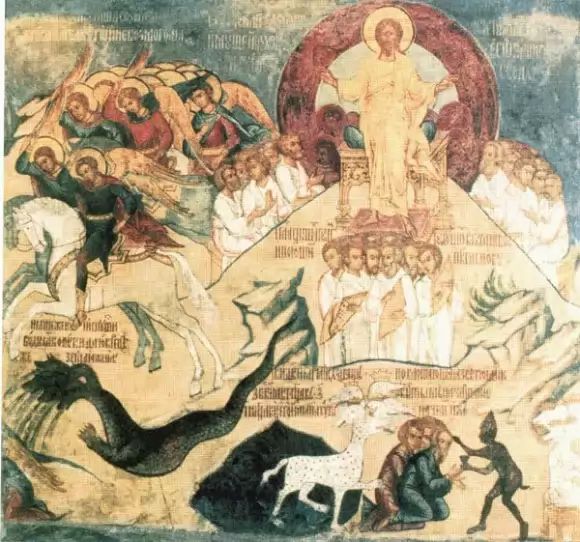
Icon of the Last Judgment. Seventeenth century. 

The fact is that even good deeds, as with all other Christian actions, have their dangers. From the example of the Pharisee and the elder son in the parable of the Prodigal Son we have already seen how religious effort can take on an ungodly character that alienates man from God’s love. The same thing can happen with good deeds. If a Christian immerses himself in them to the point of completely forgetting the primary goal of human existence, then it is unlikely he will do himself any good. Good deeds themselves, if one forgets the memory of death, can acquire the character of an activity that is excited, chaotic, and scattered. 

When the Jewish woman poured precious myrrh onto the head of Jesus, certain of the disciples said among themselves: Why was this waste of ointment made? For it might have been sold… and have been given to the poor (Mark 14:4-5). The indignant disciples probably expected the Savior to endorse their feelings. Christ, however, comes to the defense of this “squanderer”: why trouble ye her? she hath wrought a good work on Me. For ye have the poor with you always, and whensoever ye will ye may do them good: but Me ye have not always (Mark 14:6-7). 

With these words the Savior warns His followers that the work of keeping oneself in the truth of the Gospel is of utmost importance and, moreover, that this does not yield in importance to Christian good deeds; in some cases it even surpasses them. Indeed, Christ tells us that our eternal fate depends entirely and wholly on deeds of mercy. By including this call to mercy in the general discourse on the Second Coming, however, the Gospel establishes the proportionality and consistency of every part of the Christian activity that makes up our salvation. As such, if we will always have in mind the Second Coming and the Dread Judgment, but all the while become so absorbed in the expectation of the end that we lose sight of concrete deeds of mercy, we will most likely not acquire that love without which no one can see God. Yet if we give ourselves over enthusiastically to deeds of love while forgetting about the fleeting and vain nature of all that takes place on earth and the memory of death, then our good deeds will take on an emotional rather than spiritual character and not bring us any closer to God.

In Ecclesiastes we read: To every thing there is a season, and a time to every purpose under the heaven… a time to keep silence… A time to love (3:1-8). A time of silence – a time of solitude and standing noetically before God’s Judgment – is no less essential to Christianity than the active and continuous performance of good deeds. This silence not only returns us from the superficial life around us back to our own depths, but also reminds us of the finite nature of everything that takes place on earth, thereby purifying our love from emotional exaltation.

Therefore, from the publican’s repentance to deeds of love and mercy; from good deeds to the memory of death; and from the memory of death back to repentance and prayer, we must make our journey toward the joyful and bright days of Christ’s Resurrection. The Gospel readings during these preparatory weeks show us the direction we are to follow in our Lenten journey: they are like road signs showing us the way to the Heavenly Jerusalem, to the Lord’s eternal and unceasing Pascha.

Prodigal Son Adult Education Class – February 20th 2022

In our class this week, our major theme will be the experience of ’exile’ as it relates to the parable of Prodigal Son. We’ll explore this experience through Orthodox homilies and reflections that link exile as essential to repentance. These readings contain very useful insights about not just the younger son but also the older one.

We’ll also review some begin key quotes/messages from Triodion.

Additionally, our Church Fathers have added Psalm 137 (By the Rivers of Babylon) to the Matins service beginning this week. It continues through the remaining Sundays before Lent. This psalm is a further powerful exploration of this theme of exile quite poignant to the ear. We’ll discuss the significance of this psalm and also listen to it during our class time together.

Below is an outline of the class tomorrow with links for you to explore and review if you have an opportunity before the class.

I.Reading,Group & self reflections on this week’s key themes of exile (30 minutes)

Exile Of Both Sons

What lessons can we gain from the elder son?

Why is exile so essential to an authentic experience of repentance?

II. Key Quotes/Messages From Triodion (10 minutes)

Sunday of Prodigal Son Triodion Quotes

Matins Change – Singing of ‘By the Rivers of Bablyon’ Psalm 137 (10 minutes)

YouTube Recording

Father Thomas Hopko Commentary on Psalm 137

Key Triodion Quotes / Messages from Sunday of Prodigal Son

In the Matins service for the Sunday of the Prodigal Son, we see how our actions and attitudes have exiled us far from the Love of our Father. We also see how the repentance of the prodigal is received by our merciful Father. The connections between the Prodigal Son, Publican and wise thief are powerful reminders of how crucial it is that we see ourselves with clarity not with a pride that rejects the glory of the Lover of mankind. The pride of how we apply human justice to reject the grace of God seems to be a crucial lesson the elder son has to teach. Our inclination to elevate our judgement above God’s is a common manifestation of pride we see illustrated with the Pharisee last week and now the elder son this week. Perhaps, like me, you can see how my judgements of ‘how it should be’ can separate me from the reality that ’He is everyone present and fillest all things’ … if I have eyes of faith to see.

I have been enslaved to foreign strangers, exiled in the land of corruption, and I am filled with shame. But returning now, O merciful One, I cry to Thee: “I have sinned”.

Utterly beside myself, I have clung insanely to the sins suggested to me by the passions. But do Thou accept me, O Christ, as the Prodigal.

I have wasted in riotous living the riches which the Father hath given me, and am now filled with shame and enslaved to fruitless thoughts. Wherefore I cry unto Thee: “O Lover of mankind be compassionate unto me and save me”.

In hunger I find myself deprived of every blessing, and exiled from Thee O all-good one, be compassionate to me who now return unto Thee,  and save me O Christ, who doth praise Thy love for mankind.

Foolishly have I fled from Thy glory, O Father, * in wickedness wasting the wealth that Thou hast given me. * Wherefore with the voice of the Prodigal I cry unto Thee: * “I have sinned before Thee, O compassionate Father. ** Accept me who repent, and make me as one of Thy hired servants”.

Ikos: Every day our Savior doth teach us with His own voice: let us therefore hearken to the Scriptures concerning the Prodigal who once again became wise, and with faith let us emulate the good example of his repentance. With humbleness of heart let us cry out to Him Who knoweth the hidden things of all: “We have sinned against Thee, O compassionate Father, and can never be worthy to be called Thy children as we were before. But since Thou art by nature the Lover of mankind, accept me and make me as one of Thy hired servants”.

Behold, O Christ, the affliction of my heart; behold my turning back; behold my tears, O Savior, and despise me not. But for the sake of Thy compassion embrace me also once again, that, with the multitude of the saved, I may with thanksgiving sing the praises of Thy mercy.

Like the thief I cry to Thee, “Remember me.” and like the Publican, with eyes cast down to earth, I beat my breast saying, “Be merciful.” Like the Prodigal O compassionate One, deliver me from every evil, O King of all, that I may sing the praises of Thy boundless compassion.

O Good One, I have departed far from Thee, * but forsake me not, neither reject me from Thy Kingdom. * The evil enemy hath stripped me and taken all of my wealth; * I have squandered, like the Prodigal, the good gifts given to my soul. * But now I have arisen and returned, and to Thee I cry aloud: * “Make me as one of Thy hired servants. * For, for my sake on the Cross Thou didst stretch out Thy sinless hands, * to snatch me from the evil beast * and to clothe me once again in my first raiment ** for Thou alone art plenteous in mercy.

Ruled by corrupting thoughts, I am full of darkness and separated far from Thee, and have lost all care for myself, O compassionate One. Therefore save me as I fall down before Thee in repentance

Matins Service Sunday of the Prodigal Son

What does the elder son in the Prodigal Son parable have to teach us?

The theme of exile and how it relates to both sons is crucial and often overlooked. Archimandrite Zacharias (Zacharou) in his book ’At the Doors of Holy Lent’ does a powerful deep dive into how much the elder son has to teach us about the condition of our hearts, how distant our hearts may be from God, and our need for repentance. I think this article is a very good compliment to the article entitled ’Exile of Both Sons’ by Father Robert Aida.

At The Doors of Holy Lent – Archimandrite Zacharias

The elder son may have been a child of the Father, but his heart was not with Him. He lived in his Father’s house enjoying His wealth, but he had not given his heart to Him. He had put his confidence in external works and he never worked on his heart. Therefore, he could not enter the house and join the feast for the return of his brother. He speaks about his brother with no compassion as if he were a stranger. In his dialogue with the Father, without even naming him, he resentfully refers to him with the words, ‘this your son’. 

The firstborn son had wasted his life, turning it into the formal fulfilment of his duty, instead of increasing it and enriching it as an offering of love. If he had nurtured tender love for the Father, he would not have condemned any of His acts, but would have followed His slightest desire as something holy and sacred. 

The elder son represents first the Pharisees, who justified themselves in all things and would have preferred to see a sinner be destroyed rather than forgiven. They put their confidence in their rights and considered themselves to be the elect of God. They thought they knew His law and that they were not transgressing His commandments. On the other hand, blinded as they were by pride, they were not only unable to recognise the Son of God in the Person of the meek and lowly Jesus, but they also confronted Him as a criminal. They condemned Him and in the end they even killed Him. 

This son also represents a number of Christians, who live a comfortable life, performing external pious works and taking for granted their own salvation. Yet, for created and sinful man to enter the heavenly banquet, it is not enough to pay a visit to the church, light a candle, listen to the beautiful chanting and then leave. An ontological transformation must occur in his heart and man must develop an inner relationship of love with his Father ‘which is in heaven’. And since through His incarnation, Christ has become the most known among the three Persons of the Holy Trinity, He is our Father, brother and Saviour, He is all things. Through the invocation of His Name, the heart is changed and cultivated. 

‘Therefore came his father out, and intreated him.’ God humbles Himself before man and condescends to his weaknesses, so as to sustain and care for every soul in His goodness, and receive them in His Kingdom. The Father not only hastened to comfort the prodigal son, but also came out to console his other son who protested at being treated unjustly. 

‘And he answering said to his father, Lo, these many years do I serve thee, neither transgressed I at any time thy commandment: and yet thou never gavest me a kid, that I might make merry with my friends. But as soon as this thy son was come, which hath devoured thy living with harlots, thou hast killed for him the fatted calf. And he said unto him, Son, thou art ever with me, and all that I have is thine. It was meet that we should make merry, and be glad: for this thy brother was dead, and is alive again; and was lost, and is found.’ 

The elder son had fallen prey to the illusion that he had never broken any commandment, his heart was far from his Father. The eyes of his soul were not open to discern the repentance of his brother and the change in his soul. Instead, he only judged his external actions, and though he lacked accurate knowledge of them, he enumerated them. His words contained wilfulness, envy and harshness. The elder son is the personification of human justice, who considers that God is obliged to him and resists His will. If he had given his heart to the Father without reserve, he would have found the trust to take part in the feast with no need to ask for details. He would have rejoiced with the joy of his Father. The man who repents and returns to God is not concerned about anything except His justice and wisdom, which he unquestioningly accepts in times of both sorrow and joy. 

When the Lord appeared after the Resurrection to the disciples at the lake of Gennesaret, He restored Peter as the chief of the apostles with His threefold question: ‘Dost thou love me?’, and then foretold him his martyrdom. Peter turned to John and asked Christ puzzled: ‘What shall this man do?’ The Lord then gave him another great lesson through the words: ‘If I will that he tarry till I come, what is that to thee? follow thou me.’ 37 Our eyes must not wander around to see what the others do, how they react, what they say. Our gaze must remain fixed on the Lord, Who will lead us to the haven of salvation, if we follow Him. 

‘Son, thou art ever with me, and all that I have is thine.’ When we convince God that we love Him as our Father, He gives us all His life. He gives to all the same commandments and the same promises. The knowledge of His love and of His thirst to impart to us by grace all that belongs to Him by nature, floods the soul with gratitude and leaves no room in the heart for the hideous passion of envy. 

The word of the Father, ‘All that I have is thine,’ is fearful. If God Himself is mindful of all things and makes us partakers of His eternal treasure, then we cannot lack anything. His Light shines for all and is not diminished when it illumines not only us but also our brethren. It is like the flame of the candle, which remains the same, even if it ignites millions of other candles. In every portion of His Body and Blood, He gives us the entire wealth of His gifts. The Lord gives us all things, but we also have a great debt: to follow Him and consider the salvation of our brother and of the whole world as our own concern and joy. Then, all the abundance of gifts that sprang from the coming of the Paraclete, the Holy Spirit, will become our own. 

The Light proceeding from the Father gives us the ‘light of the knowledge of the glory of God in the face of Jesus Christ’ 38… The image of the only begotten Son of one substance with the Father, the Logos, kindles a strong desire in us to become like Him in all things… We suffer but in a hitherto-unknown way… We shrink into ourselves, knowing ourselves for what we are, while at the same time God comes forward to embrace us like the father of the prodigal son. Fear and trembling depart from us, giving place to wonder at God. He clothes us in rich garments. He adorns us with great gifts, the noblest of which is all-embracing love. Our initial suffering of repentance is transformed into the joy and sweetness of love which now takes a new form–compassion for every creature deprived of divine Light. 39 

The Lord Jesus Christ Who overcame the world, is a Living God, always present among us. He reigns unto all ages. If we surrender our whole heart to Him with trust and cultivate a relationship of love, humility and thanksgiving with Him, nothing will be able to make us waver. Through the continual and painful struggle of our repentance, we will leave behind our old sins. We will make a new beginning to return to the house of the Father and our life will be blessed and renewed. When the end of time will come, this relationship with the Lord will continue, but on another level, stronger, more perfect, indescribable.

Revelation & Knowledge of God In Humility – Archimandrite Aimilianos

In his marvelous book, ‘The Way of the Spirit – Reflections on Life In God’ , we have an outstanding homily (Chapter 10) given by Archimandrite Aimilanianos at this time of beginning our preparation for Lent. It is powerful and quite simple in its message of how essential our humility is to allowing God to find us and to reveal Himself to us. I’ve dramatically shortened this homily but hopefully captured much of the essence of his message that was delivered on February 23rd, 1986.

Revelation & Knowledge of God in Humility Homily

Today is the beginning of the Triodion, which is one of the most significant days in the life of the Church. 1 Today we cross a threshold. Today a shift occurs, the atmosphere changes, and all the essential elements are transformed. And all of this happens in order to prepare us for the greatest and most wonderful period of the year: Great Lent. The Triodion opens up a door which leads directly to heaven. The Triodion is an enchanting meadow, where Christ is the shepherd, and God feeds His spiritual flock. 2

As we heard in the Matins service this morning, Christ enters the life of the Church with a special mission, ”teaching us, by parables, to correct our lives”. What does it mean to ”correct our life”? It means to clarify your position with respect to God and the Church. It means to get to know God better, and to establish a relationship with Him that you won’t abandon. Are we going to live with God, or, in the end, go our separate ways? Nobody gets married in order to get divorced, but divorces often happen The same thing occurs with God.

Today we heard the parable of the Publican and the Pharisee (Lk 18:10-14). It speaks of humility. I won’t repeat the story to you now, because you all know it perfectly well. But within the larger meaning of the parable, there’s something I’d like you to take careful note of. The Pharisee thought he knew God. He believed that he and God were friends. He was, however, mistaken in this belief, and it was rather the other man, the Publican, who was God’s friend.

The Pharisee thought he knew God, but he didn’t. It’s not that easy to know God. But because he faithfully observed the outward rules of religion, he was under the false impression that God was somehow in his debt, that God owed him something. God for him was a kind of accountant, keeping a set of books showing what people owed him and what he owed them. But it’s not like that.

The moment the Pharisee said, I’m not like those other people (Lk18:11), he cut himself off from God. Why? Because God is humble, and since the Pharisee felt no need for humility, it follows that he felt no need for God. He knew the law, and the traditions of his faith, but he did not know God.

The Publican, on the other hand, had no illusions about himself. He was sunk up to his neck in the swamp of his sins. And yet, even though he was awash in the slime of his transgressions, what did he say to God? Be merciful to me a sinner (Lk 18.13). And at that moment, in his sinful, suffering, disconsolate heart, he felt certain that he was justified, thanks to his humility and the frank acknowledgement of his sinfulness. As the Lord tells us, he went down to his house justified (Lk 18.14), which means that God recognized and received him. As a sinner he had been living in darkness, but his humility brought him into the light of paradise and granted him communion with God. 5

Next Sunday, we shall hear another wonderful parable: the story of the Prodigal Son (Lk 15:11-32), which also speaks of humility and our return to God. This parable reveals that God is our Heavenly Father, and the founder, builder, and Lord of the Church, into which he welcomes all who approach him with compunction, and who ultimately choose God over the things of the world.

On the third Sunday, we will hear the parable about the Second Coming of Christ and the Final Judgement (Mt 25:31-46). This parable present us with a vision of Christ enthroned in His glory, and reveals to us that He does not judge us by human standards of justice, but rather by the measure of our humility. For in his own humility, Christ has concealed Himself in the person of the poor, and only those with the spirit of humility are able to stoop down and minister to Him.

Thereafter we come to the last Sunday before Lent, called Cheese-Fare Sunday. Having reached the end of this preliminary period of preparation, we begin again at the beginning, with a review of history; the God of humility invites us to return, not simply to paradise, but into the very kingdom of heaven.

In each of these Gospel stories, we find the answers to our deepest questions: Who is God? What is God? How is God revealed? To whom does God reveal Himself? These are universal human questions, and thus they are our questions too, and so our theme today is how God is revealed and made known to us.

The Son of God does not come in symbols, or in clouds or still breezes. Instead, He removed his garments of light (cf. Ps 103.2) and clothed Himself in the garments of human nature. Long ago, God made man a little god. Now, God Himself becomes man, and this is beyond anything that man could ever have imagined or hoped for.

Until God become man, He built bridges, so that He might cross over to us, and we to Him. Now He abolishes all distances, removes all boundaries, and comes to dwell with us forever. Unable to endure the loss of His creation, He sets aside His unspeakable glory and humbles Himself, definitively taking on our condition. 15

And His whole life was an ongoing self-abasement, an unending self-emptying, from the moment of His conception until His death and burial and beyond. In the extreme humility of His descent, God did not stop at the clouds. Neither did His journey end on earth. He went all the way to hell. In His extreme humility, He descends to the extremity of man’s damnation, and stretches forth His hands to those sitting in the darkness and the shadow of death (cf. Lk 1.79). In stretching forth His hands, He embraces all: those who loved Him, and those who hated Him; those who stood by Him throughout His life, and those who denied Him. He extends His open hands to all, so that anyone who wants can take hold of Him, and He will pull them out of Hell. 16 Lower than this, there is no place for man or God to go.

In light of God’s descent, everything has changed. When the highest entered the lowest, when God entered the realm of hell, everything there was turned upside down. The Devil was defeated. Death yielded to life. Darkness was swallowed up by light. Fallen man ascended into heaven. In union with Christ, human nature now sits on the throne of God, being filled with the Holy Spirit. God has descended, and reduced Himself for our sake, while redeemed humanity has become a great mass, exalted, so high as to surpass heaven itself. In his sermon on humility, St. Basil says that “from a state of nothingness, man has expanded into the heavens.” 17 And all of this can be ours, if only we humble ourselves.

But to commune truly with the humble God, we must be humble. This is why Christ says: He who humbles himself will be exalted (Mt 23.12). What does exalted mean here? It means that such a person will attain to the knowledge of God. It doesn’t mean being glorified in some abstract way, or being established in a comfortable place in heaven, still less does it mean that men will honor and praise us. It means that the Holy Spirit will reveal all things to our hearts, as long as we humble ourselves and bow our heads to God.

In the person of Christ, we can see that humility is a quality of God, a feature of His hypostasis. God is not God if He is not humble. And neither can I be like god unless I am humble. Indeed, without humility, I’ll become a demon. Humility must therefore be a condition of my being. I must embrace humility, knowing that, when I live in humility, I live in God.

What is humility? It is, as we have been saying, the life of God, the form of divine life, and we see this clearly in the life of Christ, who descended from heaven to extreme lowliness. In everything that concerns Him we find lessons of humility. He was born in a cave, and placed not in a crib but in a trough. He grew up in the house of a poor carpenter. He was subject to His mother and Joseph. He was taught, and applied Himself to lessons He did not need to learn. He accepted baptism from the hands of John His servant. When He was slandered and arrested and threatened with death, He did not make use of His marvelous powers (Mt 26.53). He subjected Himself to temporal authority. He was brought before the high priest as if he were a common criminal, and then led to the governor. He silently bore insults and false accusations, and in silence He submitted to His sentence, although with one word He could have refuted the false witnesses. He was spat upon by the lowest and vilest of men. He surrendered Himself to death on the cross, the most shameful form of death known to man. From His birth to the end of His life, He displayed humility in all things. 18 And this is why St. Isaac the Syrian says that “humility is the raiment of divinity.” 19

Following the example of Christ, humility is the distinguishing characteristic of the Christian life, and the foundation for our relation with God. The more humble we are, the more God will reveal Himself to us. And the more we know about God, the more humble we become. We need all the virtues, but without humility they achieve nothing. Even fasting, prayer, and love itself can do nothing without humility. But when prayer and fasting are joined with humility, we become the companion of God, and enter the divine environment in such a way that, as we’ve said, we become gods ourselves.

We must not seek to know God, or anything else from or about God. We must rather humble ourselves. God will then come to us and give us that which we desire. If you don’t humbly acknowledge your spiritual poverty, you won’t be able to ask God to give you the treasures of His grace. But through humility and prayer, God pours out the riches of His knowledge, granting us communion in His own life.

But rather than being filled with the knowledge of God, we normally live with a void at the center of our existence. There is a hole in our heart, into which crawl all the cares and worries of life. We work ourselves to exhaustion in pursuit of success and happiness. We struggle to improve our position in society, to attend the right schools, and move in the right kinds of circles. But the void within us is always on the increase. Nothing in the world can fill it, because it can only be filled by God.

But we mustn’t despair, because despair itself is a sign of pride, and thus will take us even further away from the humble God. Avoid that road. Resist temptation, struggle, take up your cross, and God will come and find you, wherever you are. As He did to Adam, He’ll ask you where you are, what’s happened, and extend His hand to you. You will awake from your state of spiritual confusion, and you’ll see Him wishing to draw you toward greater knowledge of Him.

Then, the empty place within you will become like the ark of the covenant. It will become a holy place in which God will dwell. Though your heart was a tomb in which Christ was dead, it will now be filled with light, with angels sitting on either side of it, as the resurrected Christ comes to meet you. For your part, you need to endure a little darkness, and struggle against temptations; to hold fast when you feel like despairing. But don’t despair. God will come.

Another problem we have is that we tire easily. When it comes to worldly pursuits, our energy knows no bounds, but we grow weary very quickly when God is concerned. Those who chase after wealth or glory never tire of doing so. Others pursue sensual pleasures, tirelessly chasing after sin. But even the thought of running after God leaves us feeling fatigued. We get tired, and then we forget, and then we’re led astray by the world. But then something happens to make us think of God, and so we make promises and resolutions, but, after a little while, forget all about them, and so it goes round and round. But think about the material things you’re chasing after and accumulating in great piles: they’re all banal, fleeting, and utterly without meaning.

If you are able to see this, then sink the eyes of your soul deep into your heart—be it ever so twisted and perverted—and ask God to take over. Hovering over the chaos of your life, God will shine His light (cf. Gen 1.3), and the abyss of hell that was in you will be transformed into heaven. God is humble, and will not shrink from entering into your sinful heart in order to rescue you from sin. That’s God! And only God can do this. No one and nothing else in this world can raise you from your state of death. There is no other cure for your wound, no other remedy for what ails you. In whatever you do, choose the path of humility, and God will glorify you. In that way, you will travel on a safe and sure road, having angels as your companions, and quickly arrive at the house of God. Christ will acknowledge you as His own disciple, and shall grant you His peace, for He says: Learn from me, because I am meek and humble of heart, and you shall find rest for your souls (Mt 11.29).

How does facing our shame in confession enhance our repentance

As we discussed in our first class regarding the Publican and Pharisee, our shame, like that of Adam and Eve , separates us from God as we attempt to coverup and hide with our own form of fig leaves. As we’ve seen in the last two weeks with Zaccheus and now the Publican, our repentance and reconciliation with God is not founded upon some false pretense of ourselves but the truth of who we are and the truth of who God is. He is big enough to accept us in the fullness of whatever is true. The article below from a parish priest in Texas does a very good job of laying out the high level of this process in becoming real to ourselves and God in confession. I find this article quite prescriptive and practical for what I can do differently in confession as I prepare myself for the Lenten journey ahead. It is a very real example of a movement away from the pride of my self reliance to deepening my humility and dependance upon God and others. Using my Google Map analogy , the practice outlined below can be very useful in placing me where I am not where I might like to pretend I am.

Do You Want Grace? Embrace Shame – Father Peter Kavanaugh

Becoming Aware of Personal Sin

“In order for a person to repent and to be healed from sin, he must first become aware of his sinfulness…The gift of the grace of awareness of one’s sinfulness, which is of essential and fundamental value to the spiritual restoration of man, is bestowed according to the measure of that man’s faith in the word of Christ” (Archimandrite Zacharias).

There is nothing secret about how you can share a deeper relationship with God. It requires you becoming more and more aware of your sin. The more aware you are of your sin the more fervently you can repent, the more radically you can turn towards God. However, this cannot be done on your own. This is impossible in any private setting. Awareness of sins comes from communion — from living within community — parish life, monasticism, marriage, day-to-day relationships, and most of all, from the Sacrament of Confession. Imagine living in a time without mirrors. You could never see your own face, and you could only know the blemishes on your face by someone else telling you. That is how sin works. We cannot know our own inner life without the aid of others, in particular, without the guidance of a spiritual father. In the Orthodox Church, we are urged to partake in the Sacrament of Confession as frequently as possible, ideally, on a monthly basis. To quote Metropolitan Joseph, “this is not an option.” Why? Because by not doing so, we end up living in a state of delusion about our inner life. When confession is a way of life, we become aware of our inner “stuff” and our need for repentance.

The Greater the Shame, the Greater the Grace

“The believer endures shame before a father-confessor…As soon as he becomes aware of his iniquity, he does not hide it. ‘He confesses his transgressions unto the Lord.’ For the shame that he endures through this act of repentance the Lord forgives him ‘the iniquity of his heart’ and renews him through the grace of eternal salvation. The greater the shame one experiences when one reveals one’s sins during confession, the more will be the power and the grace received for the renewal of one’s life” (Archimandrite Zacharias).

Imagine you have gangrene. You are afraid to reveal it to your doctor because of shame. How could you possibly dare to show something so foul and putrid to another person? Nonetheless, the longer you go before revealing it, the deeper the gangrene sets until it is too late. In reality, anyone with sense would rush to the doctor to have the infection purified as quickly as possible. In the same way, all truly-spiritually minded people rush to their confessor with haste. To be Christian is to be a “health addict” in the truest sense. But the shame! We are embarrassed by our sins. We want to be liked. We do not want others, let alone a priest, to see who we really are (or who we believe we are). We dread the feeling of shame. Yet, as Christians, we have to come to love the shame. We should hunger for it, knowing that the more honestly we confess, the more shame we feel when we face ourselves in the mirror of another person, the more thorough will be our healing and transformation. If it means getting God, bring on the shame.

Shame Uproots Evil and Prepares the Soul for Holiness

“Pain and shame because of one’s sins plough the fallow heart and uproot the dishonorable passions that are in it. They heal and unify the powers of the soul so that it may accomplish the divine commandment to love and be able to stand before the Lord ‘in spirit and in truth.’ If we remain attached to our own self-esteem and are afraid to be ashamed because of our sins, then we will not come to know the price of the blows the Lord endured for our salvation” (Archimandrite Zacharias).

“Therefore also now, saith the Lord, turn ye even to me with all your heart, and with fasting, and with weeping, and with mourning: And rend your heart, and not your garments, and turn unto the Lord your God: for he is gracious and merciful, slow to anger, and of great kindness, and repenteth him of the evil” (Joel 2:12-13).

How often do we remain attached, cling to, crave to protect our self-esteem? We are desperate to hide, as Adam and Eve were desperate to cower in the bushes. We are clinging to death. How silly. God simply wanted Adam and Eve to come out and fix the relationship. Paradise was a step away, but they preferred the hiding. It is time to be honest with ourselves. We pretend to be decent Christian people, good enough, comfortable as we are. Yet, if we truly believed we were good enough, why would we avoid confession as we do? In the gut, we know what lies within, and it burdens us day and night. All the while, Christ stands with open arms, ready to heal and to love. One last word: Most of the time, we cringe at the words: “shame,” “sin”, and “repentance.” Why is this? I believe it is because we have not yet experienced enough of God’s grace. The more we experience confession, the more we open our wounds to heaven and receive God’s profound washing, the more we come to long for shame and repentance. It becomes a joy to discover and admit one’s sins. It becomes the greatest happiness to tap into the shame, because we discover the grace. How beautiful it is to let go and be clean — to really know that we are clean! How wonderful to discover and dive into God’s infinite love!

Full Article Link