Triodion – Why do we fast? – Archbishop Kallistos Ware

The primary aim of fasting is to make us conscious of our dependence upon God. If practiced seriously, the Lenten abstinence from food – particularly in the opening days – involves a considerable measure of real hunger, and also a feeling of tiredness and physical exhaustion. The purpose of this is to lead us in turn to a sense of inward brokenness and contrition; to bring us, that is, to the point where we appreciate the full force of Christ’s statement, ‘Without Me you can do nothing’ (John 15: 5). If we always take our fill of food and drink, we easily grow over-confident in our own abilities, acquiring a false sense of autonomy and self-sufficiency. The observance of a physical fast undermines this sinful complacency. Stripping from us the specious assurance of the Pharisee – who fasted, it is true, but not in the right spirit – Lenten abstinence gives us the saving self dissatisfaction of the Publican (Luke I 8: 10-1 3). Such is the function of the hunger and the tiredness: to make us ‘poor in spirit’, aware of our helplessness and of our dependence on God’s aid.

Yet it would be misleading to speak only of this element of weariness and hunger. Abstinence leads, not merely-to this, but also to a sense of lightness, wakefulness, freedom and joy. Even if the fast proves debilitating at first, afterwards we find that it enables us to sleep less, to think more clearly, and to work more decisively. As many doctors acknowledge, periodical fasts contribute to bodily hygiene. While involving genuine self-denial, fasting does not seek to do violence to our body but rather to restore it to health and equilibrium. Most of us in the Western world habitually eat more than we need. Fasting liberates our body from the burden of excessive weight and makes it a willing partner in the task of prayer, alert and responsive to the voice of the Spirit.

It will be noted that in common Orthodox usage the words ‘fasting’ and ‘abstinence’ are employed interchangeably. Prior to the Second Vatican Council, the Roman Catholic Church made a clear distinction between the two terms: abstinence concerned the types of food eaten, irrespective of quantity, whereas fasting signified a limitation on the number of meals or on the amount of food that could be taken. Thus on certain days both abstinence and fasting were required; alternatively, the one might be prescribed but not the other. In the Orthodox Church a clear-cut distinction is not made between the two words. During Lent there is frequently a limitation on the number of meals eaten each day, 5 but when a meal is permitted there is no restriction on the amount of food allowed. The Fathers simply state, as a guiding principle, that we should never eat to satiety but always rise from the table feeling that we could have taken more and that we are now ready for prayer.

If it is important not to overlook the physical requirements of fasting, it is even more important not to overlook its inward significance. Fasting is not a mere matter of diet. It is moral as well as physical. True fasting is to be converted in heart and will; it is to return to God, to come home like the Prodigal to our Father’s house. In the words of St. John Chrysostom, it means ‘abstinence not only from food but from sins’. ‘The fast’, he insists, ‘should be kept not by the mouth alone but also by the eye, the ear, the feet, the hands and all the members of the body’: the eye must abstain from impure sights, the ear from malicious gossip, the hands from acts of injustice. 6 It is useless to fast from food, protests St. Basil, and yet to indulge in cruel criticism and slander: ‘You do not eat meat, but you devour your brother’ . 7 The same point is made in the Triodion, especially during the first week of Lent:

As we fast from food, let us abstain also from every passion. . .

Let us observe a fast acceptable and pleasing to the Lord.
True fasting is to put away all evil,
To control the tongue, to forbear from anger,
To abstain from lust, slander, falsehood and perjury.
If we renounce these things, then is our fasting true and acceptable to God.
Let us keep the Fast not only by refraining from food,
But by becoming strangers to all the bodily passions. 8

The inner significance of fasting is best summed up in the triad: prayer, fasting, almsgiving. Divorced from prayer and from the reception of the holy sacraments, unaccompanied by acts of compassion, our fasting becomes pharisaical or even demonic. It leads, not to contrition and joyfulness, but to pride, inward tension and irritability. The link between prayer and fasting is rightly indicated by Father Alexander Elchaninov. A critic of fasting says to him: ‘Our work suffers and we become irritable. . . . I have never seen servants [in pre-revolutionary Russia] so bad tempered as during the last days of Holy Week. Clearly, fasting has a very bad effect on the nerves.’ To this Father Alexander replies: ‘You are quite right. . . . If it is not accompanied by prayer and an increased spiritual life, it merely leads to a heightened state of irritability. It is natural that servants who took their fasting seriously and who were forced to work hard during Lent, while not being allowed to go to church, were angry and irritable.’ 9

Fasting, then, is valueless or even harmful when not combined with prayer. In the Gospels the devil is cast out, not by fasting alone, but by ‘prayer and fasting’ (Matt. 17: 21 ; Mark 9: 29); and of the early Christians it is said, not simply that they fasted, but that they ‘fasted and prayed’ (Acts 13: 3; compare 14: 23). In both the Old and the New Testament fasting is seen, not as an end in itself, but as an aid to more intense and living prayer, as a preparation for decisive action or for direct encounter with God. Thus our Lord’s forty-day fast in the wilderness was the immediate preparation for His public ministry (Matt. 4: 1-11). When Moses fasted on Mount Sinai (Exod. 34: 28) and Elijah on Mount Horeb (3 [1] Kgs. 19: 8-12), the fast was in both cases linked with a theophany. The same connection between fasting and the vision of God is evident in the case of St. Peter (Acts 10: 9-17). He ‘went up on the housetop to pray about the sixth hour, and he became very hungry and wanted to eat; and it was in this state that he fell into a trance and heard the divine voice. Such is always the purpose of ascetic fasting – to enable us, as the Triodion puts it, to ‘draw near to the mountain of prayer’. 10

Prayer and fasting should in their turn be accompanied by almsgiving – by love for others expressed in practical form, by works of compassion and forgiveness. Eight days before the opening of the Lenten fast, on the Sunday of the Last Judgment, the appointed Gospel is the Parable of the Sheep and the Goats (Matt. 25′: 31-46), reminding us that the criterion in the coming judgment will not be the strictness of our fasting but the amount of help that we have given to those in need. In the words of the Triodion:


Knowing the commandments of the Lord, let this be our way of life:
Let us feed the hungry, let us give the thirsty drink,
Let us clothe the naked, let us welcome strangers,
Let us visit those in prison and the sick.
Then the Judge of all the earth will say even to us:
‘Come, ye blessed of My Father, inherit the Kingdom prepared for you.’ 11

This stanza, it may be noted in passing, is a typical instance of the ‘evangelical’ character of the Orthodox service-books. In common with so many other texts in the Triodion, it is simply a paraphrase of the words of Holy Scripture. 12

It is no coincidence that on the very threshold of the Great Fast, at Vespers on the Sunday of Forgiveness, there is a special ceremony of mutual reconciliation: 13  for without love towards others there can be no genuine fast. And this love for others should not be limited to formal gestures or to sentimental feelings, but should issue in specific acts of almsgiving. Such was the firm conviction of the early Church. The second-century Shepherd of Hermas insists that the money saved through fasting is to be given to the widow, the orphan and the poor. 14 But almsgiving means more than this. It is to give not only our money but our time, not only what we have but what we are; it is to give a part of ourselves. When we hear the Triodion speak of almsgiving, the word should almost always be taken in this deeper sense. For the mere giving of money can often be a substitute and an evasion, a way of protecting ourselves from closer personal involvement with those in distress. On the other hand, to do nothing more than offer reassuring words of advice to someone crushed by urgent material anxieties is equally an evasion of our responsibilities (see Jas. 2: 16). Bearing in mind the unity already emphasized between man’s body and his soul, we seek to offer help on both the material and the spiritual levels at once.

‘When thou seest the naked, cover him; and hide not thyself from thine own flesh.’ The Eastern liturgical tradition, in common with that of the West, treats Isaiah 58: 3-8 as a basic Lenten text.


So we read in the Triodion:

While fasting with the body, brethren, let us also fast in spirit.
Let us loose every bond of iniquity;
Let us undo the knots of every contract made by violence;
Let us tear up all unjust agreements;
Let us give bread to the hungry
And welcome to our house the poor who have no roof to cover them,
That we may receive great mercy from Christ our God. 15

Always in our acts of abstinence we should keep in mind St. Paul’s admonition not to condemn others who fast less strictly: ‘Let not him who abstains pass judgment on him who eats’ (Rom. 14: 3). Equally, we remember Christ’s condemnation of outward display in prayer, fasting or almsgiving (Matt. 6: 1-18). Both these Scriptural passages are often recalled in the Triodion:

Consider well, my soul: dost thou fast? Then despise not thy neighbor.
Dost thou abstain from food? Condemn not thy brother.

Come, let us cleanse ourselves by almsgiving and acts of mercy to the poor,
Not sounding a trumpet or making a show of our charity.
Let not our left hand know what our right hand is doing;
Let not vainglory scatter the fruit of our almsgiving;
But in secret let us call on Him that knows all secrets:
Father, forgive us our trespasses, for Thou lovest mankind. 16

If we are to understand correctly the text of the Triodion and the spirituality that underlies it, there are five misconceptions about the Lenten fast against which we should guard. In the first place, the Lenten fast is not intended only for monks and nuns, but is enjoined on the whole Christian people. Nowhere do the Canons of the Ecumenical or Local Councils suggest that fasting is only for monks and not for the laity. By virtue of their Baptism, all Christians – whether married or under monastic vows – are Cross-bearers, following the same spiritual path. The exterior conditions in which they live out their Christianity display a wide variety, but in its inward essence the life is one. Just as the monk by his voluntary self-denial is seeking to affirm the intrinsic goodness and beauty of God’s creation, so also is each married Christian required to be in some measure an ascetic. The way of negation and the way of affirmation are interdependent, and every Christian is called to follow both ways at once.

In the second place, the Triodion should not be misconstrued in a Pelagian sense.If the Lenten texts are continually urging us to greater personal efforts, this should not be taken as implying that our progress depends solely upon the exertion of our own will. On the contrary, whatever we achieve in the Lenten fast is to be regarded as a free gift of grace from God. The Great Canon of St. Andrew of Crete leaves no doubt at all on this point:

I have no tears, no repentance, no compunction;
But as God do Thou Thyself, O Saviour, bestow them on me. 17

In the third place, our fasting should not be self-willed but obedient. When we fast, we should not try to invent special rules for ourselves, but we should follow as faithfully as possible the accepted pattern set before us by Holy Tradition. This accepted pattern, expressing as it does the collective conscience of the People of God, possesses a hidden wisdom and balance not to be found in ingenious austerities devised by our own fantasy. Where it seems that the traditional regulations are not applicable to our personal situation, we should seek the counsel of our spiritual father – not in order legalistically to secure a ‘dispensation’ from him, but in order humbly with his help to discover what is the will of God for us. Above all, if we desire for ourselves not some relaxation but some piece of additional strictness, we should not embark upon it without our spiritual father’s blessing. Such has been the practice since the early centuries of the Church’s life:

Abba Antony said: ‘I know of monks who fell after much labor and lapsed into madness, because they trusted in their own work and neglected the commandment that says: “Ask your father, and he will tell you.'” (Deut. 32: 7)


Again he said: ‘So far as possible, for every step that a monk takes, for every drop of water that he drinks in his cell, he should consult the gerontes, in case he makes some mistake in this.’ 18

These words apply not only to monks but also to lay people living in the ‘world’, even though the latter may be bound by a less strict obedience to their spiritual father. If proud and willful, our fasting assumes a diabolical character, bringing us closer not to God but to Satan. Because fasting renders us sensitive to the realities of the spiritual world, it can be dangerously ambivalent: for there are evil spirits as well as good.


In the fourth place, paradoxical though it may seem, the period of Lent is a time not of gloom but of joyfulness. It is true that fasting brings us to repentance and to grief for sin, but this penitent grief, in the vivid phrase of St. John Climacus, is a ‘joy-creating sorrow’ . 19 The Triodion deliberately mentions both tears and gladness in a single sentence:

Grant me tears falling as the rain from heaven,O Christ,
As I keep this joyful day of the Fast. 20

It is remarkable how frequently the themes of joy and light recur in the texts for the first day of Lent:


With joy let us enter upon the beginning of the Fast.
Let us not be of sad countenance. . . .
Let us joyfully begin the all-hallowed season of abstinence;
And let us shine with the bright radiance of the holy commandments. . . 
All mortal life is but one day, so it is said,
To those who labor with love.
There are forty days in the Fast;
Let us keep them all with joy. 21

The season of Lent, it should be noted, falls not in midwinter when the countryside is frozen and dead, but in spring when all things are returning to life. The English word ‘Lent’ originally had the meaning ‘springtime’; and in a text of fundamental importance the Triodion likewise describes the Great Fast as ‘springtime’:


The springtime of the Fast has dawned,
The flower of repentance has begun to open.
O brethren, let us cleanse ourselves from all impurity
And sing to the Giver of Light:
Glory be to Thee, who alone lovest mankind. 22

Lent signifies not winter but spring, not darkness but light, not death but renewed vitality. Certainly it has its somber aspect, with the repeated prostrations at the weekday services, with the dark vestments of the priest, with the hymns sung to a subdued chant, full of compunction. In the Christian Empire of Byzantium theatres were closed and public spectacles forbidden during Lent; 23 and even today weddings are forbidden in the seven weeks of the fast. 24 Yet these elements of austerity should not blind us to the fact that the fast is not a burden, not a punishment, but a gift of God’s grace:

Come,O ye people, and today let us accept
The grace of the Fast as a gift from God. 25

Fifthly and finally, our Lenten abstinence does not imply a rejection of God’s creation. As St. Paul insists, ‘Nothing is unclean in itself’ (Rom. 14: 14). All that God has made is ‘very good’ (Gen. I: 31): to fast is not to deny this intrinsic goodness but to reaffirm it. ‘To the pure all things are pure’ (Titus I: I S), and so at the Messianic banquet in the Kingdom of heaven there will be no need for fasting and ascetic self-denial. But, living as we do in a fallen world, and suffering as we do from the consequences of sin, both original and personal, we are not pure; and so we have need of fasting. Evil resides not in created things as such but in our attitude towards them, that is, in our will. The purpose of fasting, then, is not to repudiate the divine creation but to cleanse our will. During the fast we deny our bodily impulses – for example, our spontaneous appetite for food and drink – not because these impulses are in themselves evil, but because they have been disordered by sin and require to be purified through self-discipline. In this way, asceticism is a fight not against but for the body; the aim of fasting is to purge the body from alien defilement and to render it spiritual. By rejecting what is sinful in our will, we do not destroy the God-created body but restore it to its true balance and freedom. In Father Sergei Bulgakov’s phrase, we kill the flesh in order to acquire a body.

But in rendering the body spiritual, we do not thereby dematerialize it, depriving it of its character as a physical entity. The ‘spiritual’ is not to be equated with the non-material, neither is the ‘fleshly’ or carnal to be equated with the bodily. In St. Paul’s usage, ‘flesh’ denotes the totality of man, soul and body together, in so far as he is fallen and separated from God; and in the same way ‘spirit’ denotes the totality of man, soul and body together, in so far as he is redeemed and divinized by grace. 26 Thus the soul as well as the body can become carnal and fleshly, and the body as well as the soul can become spiritual. When St. Paul enumerates the ‘works of the flesh’ (Gal. 5: 19-21), he includes such things as sedition, heresy and envy, which involve the soul much more than the body. In making our body spiritual, then, the Lenten fast does not suppress the physical aspect of our human nature, but makes our materiality once more as God intended it to be.

This has been extracted from the full article that replicates what is in the Triodion.

Triodion – CheeseFare Week – Themes Preparing Us For Great Lent

Up to this point, the Triodion has only had messages for us on Sundays. This week it begins to expand itself into daily Matins and Vespers services. These Triodion daily services continue throughout Lent and Holy Week.

So, what are the key messages for this first day of daily Triodion services?

Monday’s Triodion messages fit into themes that look backwards at our Pre-Lenten preparation as well as forward to the upcoming Sunday of the Expulsion of Adam from Paradise and of course the Lenten Fast itself which begins a week from today on March 7th. Below are the key themes along with some quotes from Monday’s Daily Matins and Vespers Services.

1. Desire/Eagerness (Zacchaus)

The entranceway to divine repentance * hath been opened: * let us eagerly enter therein, * purified in body and observing abstinence * from food and the passions, * as obedient servants of Christ * who hath called the world into the heavenly Kingdom. * Let us offer unto the King of all * a tenth part of the whole year, ** that with love we may behold His Resurrection.

The bright forefeast of the time of abstinence, the bright threshold of the Fast hath appeared today, wherefore brethren, let us run the race with hope and great eagerness.

2. Humility/ God’s Mercy (Publican)

My way of life is shameful and bitter, but Thy mercy and compassion are immeasurable O Lover of mankind, wherefore I beseech Thee O Savior, grant unto me who doth sing Thy praises with love, time for repentance.

3. Repentance (Prodigal)

Having wasted my whole life living prodigally, I have been hired by bitter and wicked citizens; but O Christ who desireth that I turn back to Thy compassion, reject me not.

The beginning of compunction and repentance is to make a stranger of sin and abstain from passions. Therefore, let us hasten to cut off our wicked deeds.

Behold, the door of repentance hath already opened, O friends of God: come, let us make haste to enter therein, that Christ not close it and we be shut out as unworthy

4. Being Merciful & God’s Judgement (Last Judgement)

Behold, now is the season of repentance, the forefeast that prepareth us to enter the Fast. Awake, O my soul, and with a fervent heart be reconciled to thy God and Benefactor, and thus escape His just and truly fearful judgment

The time for repentance hath begun; be not heedless, O my soul. Give bread to the hungry, and pray unto the Lord every day and night and each hour, that He may save thee.

5. Expulsion of Adam from Paradise (Coming This Sunday)

By transgressing I have emulated our forefather Adam, and wretched as I am, I have been cast out from sweet joy. Therefore I fall down before Thee in repentance weeping: O Lord save me.

6. Lenten Fast & Fasting ( Our fast begins slowly this week and in high gear next)

At all times the Fast is profitable for those * who choose to observe it, * for the temptations of devils are rendered ineffective * against those who fast, * rather the protectors of our lives, the angels, * abide with us who with fortitude, ** cleanse ourselves by fasting.

With fasting let us hasten to wash away * the filth of our transgressions, * and by means of mercy and compassion to the poor, * let us enter the bridal chamber of the Bridegroom Christ, ** who hath bestowed upon us great mercy.

7. Preparation and Purifying Ourselves ( General throughout Pre-Lent and Lent)

Announcing that spring is upon us, the week of cleansing which prepareth us for the holy Fast, let us all now illumine our souls and bodies thereby

Standing before the entrance and gateway of the Fast, let us not begin it with reckless abandon and drunkenness, rather, let us eagerly enter with purity of thought, that we may worthily receive crowns of immortality and the fruit of our labors.

Sunday of the Last Judgment – Homily by Archpriest Symeon Lev

We know that Christians should avoid vainglory, conceit, and the tacit expectation of rewards of grace during Lent. However, even the most careful and unceasing self-control does not always lead to the desired results. Protecting oneself from hidden vainglory during Lent is by no means easy. This is where Christian good deeds – when one really takes on human grief – can be of help. After all, when we move away from ourselves by coming into contact with concrete human trouble and misfortune, by sharing in someone’s oppressive grief, our own concerns fade into the background, silent and diminished. One person grieves because of frequent colds, while another dreams of learning to walk without crutches. When we see real grief right in front of us we begin to experience a burning shame not only for our own petty vainglory, but also for our prosperity: just recently we thought it defective and dared complain about our lot. 

The Holy Church of Christ insists that we perform good deeds during the time of Great Lent, inasmuch as our acts of mercy not only relieve other people’s plights, making their lives easier and brighter, but they turn the struggler’s attention from himself to others, thereby quietly freeing him from his egotistical self. The wave of love that arises in us when we share in the misfortunes of others fills us with Divine life, animating and inspiring us while driving the passions far away, thereby cleansing us from their harmful and troublesome effects. 

Why is the subject of good deeds so tightly interwoven in the Gospel with that of the end of the world and the Second Coming of Christ? After all, it would seem that the call to mercy is not especially inspiring when we are simultaneously being reminded that the earth and all deeds therein shall be consumed.

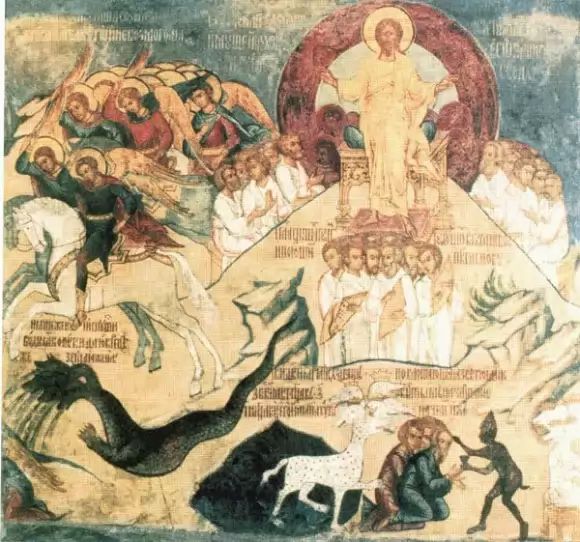
Icon of the Last Judgment. Seventeenth century. 

The fact is that even good deeds, as with all other Christian actions, have their dangers. From the example of the Pharisee and the elder son in the parable of the Prodigal Son we have already seen how religious effort can take on an ungodly character that alienates man from God’s love. The same thing can happen with good deeds. If a Christian immerses himself in them to the point of completely forgetting the primary goal of human existence, then it is unlikely he will do himself any good. Good deeds themselves, if one forgets the memory of death, can acquire the character of an activity that is excited, chaotic, and scattered. 

When the Jewish woman poured precious myrrh onto the head of Jesus, certain of the disciples said among themselves: Why was this waste of ointment made? For it might have been sold… and have been given to the poor (Mark 14:4-5). The indignant disciples probably expected the Savior to endorse their feelings. Christ, however, comes to the defense of this “squanderer”: why trouble ye her? she hath wrought a good work on Me. For ye have the poor with you always, and whensoever ye will ye may do them good: but Me ye have not always (Mark 14:6-7). 

With these words the Savior warns His followers that the work of keeping oneself in the truth of the Gospel is of utmost importance and, moreover, that this does not yield in importance to Christian good deeds; in some cases it even surpasses them. Indeed, Christ tells us that our eternal fate depends entirely and wholly on deeds of mercy. By including this call to mercy in the general discourse on the Second Coming, however, the Gospel establishes the proportionality and consistency of every part of the Christian activity that makes up our salvation. As such, if we will always have in mind the Second Coming and the Dread Judgment, but all the while become so absorbed in the expectation of the end that we lose sight of concrete deeds of mercy, we will most likely not acquire that love without which no one can see God. Yet if we give ourselves over enthusiastically to deeds of love while forgetting about the fleeting and vain nature of all that takes place on earth and the memory of death, then our good deeds will take on an emotional rather than spiritual character and not bring us any closer to God.

In Ecclesiastes we read: To every thing there is a season, and a time to every purpose under the heaven… a time to keep silence… A time to love (3:1-8). A time of silence – a time of solitude and standing noetically before God’s Judgment – is no less essential to Christianity than the active and continuous performance of good deeds. This silence not only returns us from the superficial life around us back to our own depths, but also reminds us of the finite nature of everything that takes place on earth, thereby purifying our love from emotional exaltation.

Therefore, from the publican’s repentance to deeds of love and mercy; from good deeds to the memory of death; and from the memory of death back to repentance and prayer, we must make our journey toward the joyful and bright days of Christ’s Resurrection. The Gospel readings during these preparatory weeks show us the direction we are to follow in our Lenten journey: they are like road signs showing us the way to the Heavenly Jerusalem, to the Lord’s eternal and unceasing Pascha.

How does the parable of the Prodigal Son illustrate God’s goal for us and our purpose?

I find this passage from Archimandrite Zacharias of Essex (disciple of Saint Sophrony of Essex) full of great wisdom and guidance for us as we prepare ourselves this week for the Sunday of the Prodigal Son.

This passage is an extract from his book ’Hidden Man Of The Heart’. Perhaps, this provides some solid ground to a question raised in yesterday’s class…. what is my purpose; why am I here … in the context of this parable. This article may also remind us all of the essential humility that even with a parable which we believe we are quite familiar ; we can humbly accept that ’we realize we know but a little’ and find much to learn.

Within this passage , you will also see how the themes of our hearts, exile, and shame are woven powerfully together into this explanation and exploration of the Prodigal Son.

The Mystery Of Man’s Heart (Extract from Hidden Man of the Heart)

All the ordinances of the undefiled Church are offered to the world for the sole purpose of dis­covering the ‘deep heart’,[1] the centre of man’s hypo­s­tasis. According to the Holy Scriptures, God has fashioned every heart in a special way, and each heart is His goal, a place wherein He desires to abide that He may mani­fest Himself.

Since the kingdom of God is within us,[2] the heart is the battlefield of our salvation, and all ascetic effort is aimed at cleansing it of all filthiness, and preserving it pure before the Lord. ‘Keep thy heart with all diligence; for out of it are the issues of life’, exhorts Solomon, the wise king of Israel.[3] These paths of life pass through man’s heart, and therefore the unquenchable desire of all who ceaselessly seek the Face of the living God is that their heart, once deadened by sin, may be rekindled by His grace.

The heart is the true ‘temple’ of man’s meeting with the Lord. Man’s heart ‘seeketh knowledge’[4] both intellectual and divine, and knows no rest until the Lord of glory comes and abides therein. On His part God, Who is ‘a jealous God’,[5] will not settle for a mere portion of the heart. In the Old Testament we hear His voice crying out, ‘My son, give Me thy heart’;[6] and in the New Testament He commands: ‘Thou shalt love the Lord thy God with all thy heart, and with all thy soul, and with all thy mind, and with all thy strength.’[7] He is the one Who has fashioned the heart of every man in a unique and unrepeatable way, though no heart can contain Him fully because ‘God is greater than our heart’.[8] Nevertheless, when man succeeds in turning his whole heart to God, then God Himself begets it by the incorruptible seed of His word, seals it with His wondrous Name and makes it shine with His perpetual and charis­matic presence. He makes it a temple of His Divinity, a temple not made by hands, able to reflect His ‘shape’ and to hearken unto His ‘voice’ and ‘bear’ His Name.[9] In a word, man then fulfils the purpose of his life, the reason for his coming into the transient existence of this world.

The great tragedy of our time lies in the fact that we live, speak, think, and even pray to God, outside our heart, outside our Father’s house. And truly our Father’s house is our heart, the place where ‘the spirit of glory and of God’[10] would find repose, that Christ may ‘be formed in us’.[11]Indeed, only then can we be made whole, and become hypostases in the image of the true and perfect Hypostasis, the Son and Word of God, Who created us and redeemed us by the precious Blood of His ineffable sacrifice.

Yet, as long as we are held captive by our passions, which distract our mind from our heart and lure it into the ever-changing and vain world of natural and created things, thus depriving us of all spiritual strength, we will not know the new birth from on High that makes us children of God and gods by grace. In fact, in one way or another, we are all ‘prodigal sons’ of our Father in heaven, because, as the Scriptures testify, ‘All have sinned, and come short of the glory of God.’[12] Sin has separated our mind from the life-giving contemplation of God and led it into a ‘far country’.[13] In this ‘far country’ we have been deprived of the honour of our Father’s embrace and, in feeding swine, we have been made subject to demons. We gave ourselves over to dis­honourable passions and the dreadful famine of sin, which then established itself by force, becoming the law of our mem­bers. But now we must come out of this godless hell and return to our Father’s house, so as to uproot the law of sin that is within us and allow the law of Christ’s command­ments to dwell in our heart. For the only path leading out of the torments of hell to the everlasting joy of the Kingdom is that of the divine commandments: with our whole being we are to love God and our neighbour with a heart that is free of all sin.

The return journey from this remote and inhospitable land is not an easy one, and there is no hunger more fearful than that of a heart laid waste by sin. Those in whom the heart is full of the consolation of incorruptible grace can endure all external deprivations and afflictions, trans­form­ing them into a feast of spiritual joy; but the famine in a hardened heart lacking divine consolation is a comfort­less torment. There is no greater misfortune than that of an in­sensible and petrified heart that is unable to distinguish be­tween the luminous Way of God’s Providence and the gloomy confusion of the ways of this world. On the other hand, throughout history there have been men whose hearts were filled with grace. These chosen vessels were enlight­ened by the spirit of prophecy, and were therefore able to dis­tinguish between Divine Light and the darkness of this world.

No matter how daunting and difficult the struggle of purifying the heart may be, nothing should deter us from this undertaking. We have on our side the ineffable good­ness of a God Who has made man’s heart His personal con­cern and goal. In the Book of Job, we read the following aston­ishing words: ‘What is man, that thou shouldest mag­nify him? And that thou shouldest set thine heart upon him? And that thou shouldest visit him every morning, and try him every moment…Why hast thou set me as a mark against thee, so that I am a burden to myself?’[14] We sense God, Who is incomprehensible, pursuing man’s heart: ‘Be­hold, I stand at the door, and knock: if any man hear my voice, and open the door, I will come in to him, and will sup with him, and he with me.’[15] He knocks at the door of our heart, but He also encourages us to knock at the door of His mercy: ‘Knock, and it shall be opened unto you.’[16] When the two doors that are God’s goodness and man’s heart open, then the greatest miracle of our existence occurs: man’s heart is united with the Spirit of the Lord, God feasting with the sons of men.

From the few thoughts we have mentioned, we now begin to see how precious it is to stand before God with our whole heart as we pour it out before Him. We also begin to understand how vital is the task of discovering the heart, because this allows us to talk to God and our Father from the heart and to be heard by Him, and to give Him the right to perfect the work of our renewal and restoration to the original honour we enjoyed as His sons.

We deprive ourselves of the feast of God’s consolation not only when we hand ourselves over to the corruption of sin, feeding swine in a far country, but also when we contend in a negligent way. ‘Cursed be he that doeth the work of the Lord deceitfully,’ warns the Prophet Jeremiah.[17] In the feed­ing of swine, it is the devil, our enemy, who gives us work which is accursed. But if we do the Lord’s work half-heartedly, we put ourselves under a curse, though we may be dwelling in the house of the Lord. For God will not toler­ate division in man’s heart; He is pleased only when man speaks to Him with all his heart and does His work joyfully: ‘God loveth a cheerful giver,’ says the Apostle.[18] He wants our whole heart to be turned and de­voted to Him, and He then fills it with the bounties of His goodness and the gifts of His com­passion. He ‘sows bounti­fully’[19] but He expects the same from us.

As long as man is under the dominion of sin and death, being given over to the power of evil, he becomes in­creas­ingly selfish. In his pride and despair, and being separated from God Who is good, he struggles to survive, but the only thing he gains is a heavier curse upon his head and even greater desolation. But however much he may be cor­rupted by the famine of sin, the primal gift of his having been created in God’s ‘image and likeness’ remains irrevoc­able and indelible. Thus, he always carries within him the possibility of a rising out of the kingdom of darkness and into to the kingdom of light and life. This occurs when he ‘comes to himself’ and in pain of soul confesses, ‘I perish with hunger.’[20]

When fallen man ‘comes to himself’ and turns to God, ‘it is time for the Lord to work’, as we say at the beginning of the Divine Liturgy; in pain, man then enters his own heart, which is the greatest honour reserved by God for man. God knows that He can now seriously con­verse with him, and is attentive to him, for when man enters his heart he speaks to God with knowledge of his true state, for which he now feels responsible. Indeed, man’s whole struggle is waged in order to convince God that he is His child, His very own, and when he has con­vinced Him, then he will hear in his heart those great words of the Gospel, ‘All that I have is thine.’[21] And the moment he convinces God that he is His, God makes the waterfalls of His com­passion to flow, and God’s life be­comes his life. This is the good pleasure of God’s original design in that it is for this that He created man. God then says to the one who has succeeded in persuading Him that he is His, ‘All My life, O man, is thy life.’ Then the Lord, Who is God by nature, grants man His own life, and man becomes a god by grace.

In the Gospel of St Luke we are told that the prodigal son ‘came to himself’ and said, ‘I will arise and go to my father, and will say unto him, Father, I have sinned against heaven and before thee, and am no more worthy to be called thy son.’[22] This is a wondrous moment, a momentous event in the spiritual world. Suffering, affliction, and the menacing famine of the ‘far country’ compel man to look within himself. But a single movement of divine grace is enough to convert the energy of his misfortune into great boldness, and he is enabled to see his heart and all the dead­ness from which he is suffering. Now, with prophetic know­ledge, he boldly confesses that ‘his days are consumed in vanity’.[23] In pain of soul, he discovers that his whole life until then consists of a series of failures and betrayals of God’s commandments, and that he has done no good deed upon earth which can withstand the unbearable gaze of the Eternal Judge. He sees his plight and, like the much-afflicted Job, cries out, ‘Hades is my house.’[24]

With such a lamentation of despair and, thirsting only for God’s blessed eternity, man can then turn his whole being towards the living Lord. He can cry from the depth of his heart to Him Who ‘has power of life and death: who leads to the gates of hell, and brings up again’.[25] This is the turning point in our life, for God the Saviour then begins His work of refashioning man.

When man falls into sin his mind moves in an outward direction and loses itself in created things, but when, con­scious of his perdition, he comes to himself seeking sal­vation, he then moves inward as he searches for the way back to the heart. Finally, when all his being is gathered in the unity of his mind and heart, there is a third kind of movement in which he turns his whole being over to God the Father. Man’s spirit must pass through this threefold circular motion in order to reach perfection.

During the first stage, man lives and acts outside his heart and entertains proud thoughts and considers vain things. In fact, he is in a state of delusion. His heart is dark­ened and void of understanding. In his fallen condition, he prefers to worship and serve ‘the creature more than the Creator’.[26] Because he lives without his heart, he has no dis­cern­ment and is ‘ignorant of [Satan’s] devices’.[27] As the Old Testament wisely observes: ‘The fool hath no heart to get wis­dom’,[28] and because his heart is not the basis of his exist­ence, man remains inexperienced and unfruitful, ‘beat­ing the air’.[29] He is unable to walk steadily in the way of the Lord and is characterised by instability and double-minded­ness.

In the second stage, man ‘comes to himself’, and he begins to have humble thoughts that attract grace and make his heart sensitive. Humble thoughts also enlighten his mind; they are born within himself, and they help him in dis­cerning and accepting only those things that strengthen the heart, so that it stays unshakeable in its resolution to be pleasing to God both in life and in death. During the first stage, man surrenders to a vicious circle of destructive thoughts, whilst in the second, inspired by Christ’s word, he is led along a chain of thoughts, each deeper than the last: from faith he is led to more perfect faith, from hope to firmer hope, from grace to greater grace and from love of God to an ever greater measure of love. ‘We know’, as the Apostle Paul says, ‘that all things work to­gether for good to them that love God.’[30] Indeed, this entry ‘into oneself’ and the discovery of the heart are the work of divine grace. And when man heeds God’s call and co-oper­ates with the grace that is bestowed on him, this grace summons and strengthens all his being.

When the grace of mindfulness of death becomes active, man not only sees that all his days have been consumed in vanity, that everything until now has been a failure, and that he has betrayed God all his life, but he realises that death threatens to blot out all that his con­science has hitherto em­braced, even God. He is now con­vinced that his spirit has need of eternity and that no created thing, neither angel nor man, can help him. This provokes him to seek freedom from every created thing and every passionate attachment. And if he then believes in Christ’s word and turns to Him, then it is easy for him to find his heart because he is be­coming a free being. His faith is salutary, for he now acknow­ledges that Christ is the ‘rewarder of them that diligently seek him’,[31] that is, he believes that Christ is the eternal and almighty Lord Who has come to save the world and will come again to judge the whole world with justice. He has entrusted himself to ‘the law of faith’,[32] and begins to be­lieve in hope against hope,[33] pinning everything on the mercy of God the Saviour. Such true faith can be seen in the Canaanite woman, who received the Lord’s instruction as a dog receives food from its master, and she followed Him freely and steadfastly. As far as she was concerned, God re­mained righteous and forever blessed whether He were to rebuke her or praise her. Faith like this receives the ap­proval of adoption because it grows out of love and humi­l­ity, ever attracting divine grace which opens and quickens the heart.

When man believes and his spirit finds true contact with the Spirit of ‘Jesus Christ who was raised from the dead’[34] and Who lives and reigns forever, he is enlightened so that he can see his spiritual poverty and desolation. He also perceives that he is still far from eternal life, and this gives birth to great fear in him because he is now aware that God is absent from his life. Godly fear such as this strengthens man’s heart to resist sin and begets a firm resolve to prefer heavenly things to earthly things. His life begins to prove the truth of the words of Scripture: ‘The fear of the Lord is the beginning of wisdom.’[35] As man’s heart draws to itself the grace of God, this gift of fear humbles him, and pre­vents him from becoming overbold; that he ‘not think of himself more highly than he ought to think’,[36] and that he keep himself prudently within the limits of created being.

Another infallible means by which the believer finds his heart is in accepting shame for his sins in the sacrament of confession. Christ saved us by enduring the Cross of shame for our sakes. Similarly, when the believer comes out of the camp of this world,[37] he disregards its good opin­ion and judgment, taking upon himself the shame of his sins, and thereby acquiring a humble heart. The Lord re­ceives his sense of shame for his sins as a sacrifice of thanks­giving, and imparts to him the grace of His great Sacrifice on the Cross. This grace so purifies and renews his heart that he can then stand before God in a manner that is pleas­ing to Him.

I have not said much, but I hope it is clear that man’s principal work, which alone gives worth to his life, is the effort of discovering and purifying his ‘deep heart’, that it may be blessed with the indescribable contemplation of our God, Who is Holy.

Source: Archimandrite Zacharias (Zacharou), The hidden man of the heart, edition Stavropegic Monastery of St John the Baptist, Essex 2007, pp. 11-26.

NOTES 

1. Cf. Ps. 64:6., 2.Cf. Luke 17:21., 3. Prov. 4:23., 4. Prov. 15:14., 5. Exod. 34:15,6. Prov. 23:26., 7. Matt. 12:30., 8. 1 John 3:20., 9. Cf. John 5:37; Acts 9:15., 10. 1 Pet. 4:14., 11. Gal. 4:19., 12. Rom. 3:23. , 13. Luke 9:15. , 14. Job 7:17, 15. Rev. 3:20. , 16. Luke 11:9-10. , 17. Jer. 48:10. ,  18. 2 Cor. 9:7. , 19. Cf. 2 Cor. 9:6., 20. Luke 15:17.,21. Luke 15:31. , 22. Luke 15:18-19. , 23. Cf. Ps. 78:33. , 24. Cf. Job 17:13. , 25. Wisdom of Solomon 16:13. , 26. Rom. 1:25. , 27. 2 Cor. 2:11. , 28. Cf. Prov. 17:16. , 29. Cf. 1 Cor. 9:26., 30. Rom. 8:28. , 31. Heb. 11:6. , 32. Rom. 3:27. , 33. Cf. Rom. 4:18. , 34. 2 Tim. 2:8 , 35. Prov. 1:7 LXX. , 36. Rom. 12:3. , 37. Cf. Heb. 13:11-12.

What is the condition of my heart?

As we begin our Pre-Lent Adult Education this Sunday , I thought it might be useful to raise questions which may be very relevant to our preparation process for Lent. This week’s upcoming Sunday of the Publican & Pharisee can stimulate lots of these opportunities for self reflection about where we stand in relation to pride and humility.

Here are two quotes … the first from a 4th century saint, St. Macarius of Eqypt and the second from a well known Nobel Prize winning Orthodox author of the 20th century, Alexander Solzhenitsyn. Both are useful reminders that our spiritual battlefield today and every day lies within our own hearts:

And the heart itself is but a small vessel, yet there also are dragons and there are lions; there are poisonous beasts and all the treasures of evil. And there are rough and uneven roads; there are precipices. But there is also God, also the angels, the life and the kingdom, the light and the Apostles, the treasures of grace—there are all things

St Macarius ‘50 Spiritual Homilies and Great Letter’ (Homily 43)

“The line separating good and evil passes not through states, nor between classes, nor between political parties either — but right through every human heart — and through all human hearts. This line shifts. Inside us, it oscillates with the years. And even within hearts overwhelmed by evil, one small bridgehead of good is retained”

Alexander Solzhenitsyn ‘The Gulag Archipelago’ 

Open To Me The Gates Of Repentance – Song & Lyrics

YouTube Recording

Glory to the Father and to the Son and to the Holy Spirit. Open to me the doors of repentance O Lifegiver; for my spirit rises early to pray towards Thy Holy Temple, bearing the temple of my body all defiled. But in Thy Compassion purify me by the loving kindness of Thy Mercy. Now and ever and unto ages of ages. Amen. Lead me on the paths of Salvation O Mother of God, for I have covered my soul in shameful sins and have wasted my life in lazy acts. But by your intercessions, deliver me from all impurity. Have mercy on me O God according to Thy Great Mercy and according to the multitude of Thy Compassions blot out my transgressions. When I think of the many evil things I have done, wretched I am, I tremble at the fearful day of Judgement, but trusting in Thy loving kindness, like David I cry to Thee. Have mercy on me O God, have mercy on me O God, Have mercy on me O God according to Thy great Mercy.

2018 Homily Zaccheus Sunday – Holy Cross Monastery Abbot Seraphim

Today, as we stand at the threshold of Great Lent, the Holy Church gives to us in the Gospel story of Zaccheus an icon of the Lenten journey which lies ahead. It is precisely an icon, because everything happens as it were in a flash, in one single image passing before our eyes. We hear nothing of Zaccheus’ past, and after these few short verses he never again appears on the pages of the New Testament. In fact, it is only in St. Luke’s Gospel that we hear of him at all. Yet for all its brevity, this Gospel passage contains within itself the entire narrative of salvation.

Zaccheus was the chief among the publicans. The publicans, the tax collectors of the Roman Empire, were considered to be the lowest of the low by the Jewish people. This was not only because they had betrayed their own people, becoming officials of the hated Roman occupation. It was not only because they enriched themselves by preying upon the poor, the weak, and the defenseless, openly committing thievery and extortion among their own neighbors and kinsmen. No, they were considered to be abominations above all because in order to become officials of the Roman Empire, they were required to voluntarily make pagan vows and to offer pagan sacrifice. In exchange for the fleeting riches of this life, they had willingly betrayed their God, their people, and their own souls.

Here is vividly shown the ineffable compassion of our Savior. Even before Zaccheus showed any sign of repentance, the Lord not only did not disdain him, but was even willing to voluntarily take upon Himself this greatest of shames before the people of Israel by eating and lodging in Zaccheus’ house. Truly, the Lord gives nobody up as lost, not even those who have deliberately and knowingly betrayed God and cut themselves off from their divine inheritance as “the seed of Abraham, and heirs according to the promise.” Such is the hope and the power of repentance, which the Church places before our eyes on this last Sunday before the Lenten Triodion is opened and the “Season of Repentance” begins.

And truly, all of us … have betrayed and continue to betray our ineffable and divine calling, choosing to turn away towards the riches of this present life, whatever the form they may take in each of our sinful hearts. As Abba Dorotheos warns us monastics: “We think that having left the world and come to a monastery, we have left everything worldly; but here also, for the sake of meaningless things, we are filled with worldly attachments.” We have crucified ourselves to the world, and yet we have not crucified the world to ourselves. We monastics, far more than those living in the world, are without excuse in our love for the fleeting things of this life, yet all of us alike fall many, many times each day.

This is tragic, and yet we will never pass out of the reach of our own failings so long as we are on this earth. In the words of the Apostle James, all of us stumble in many things. Each of these stumblings has idolatry at its heart; in every fall, we sacrifice a bit of our souls which rightly belongs to God. And yet, though seeing more clearly than we do our deep impurity and ingratitude, the Lord does not reject us as we have rejected Him. He yet comes to us, and even now He is coming to us in the Holy Gifts about to be consecrated, coming to lodge with us in the unworthy and neglected house of our soul.

Seeing this, we must all like Zaccheus hasten to come down and prepare a place for the Lord. As the Holy Fathers teach us, to “come down” is to humble ourselves, which is the absolutely necessary prerequisite to any work of virtue. Had Zaccheus not come down and humbled himself, then doubtless he would have been filled with vainglory and smug self-satisfaction at such a great deed as his giving away of all his goods to the poor and to those he had wronged – and he would have thereby lost Christ, who “resisteth the proud but giveth grace to the humble.”

These works of virtue, however, are still quite necessary, especially – as Zaccheus practiced – those virtues which oppose the passions that run strongest in ourselves. It is a spiritual law that if we are not progressing in virtue then we are falling back into sin, and consequently falling away from the presence of the Lord. Yet at the beginning of this Lenten journey, it is essential to firmly remind ourselves that all virtue, all asceticism, and all piety will serve only for our condemnation if they are not accompanied by a sincere striving for humility.

Yet even more than all of this, there is one aspect of today’s Gospel story which we must learn without fail in order to properly begin our Lenten struggle. What happened to Zaccheus which wrought such a great change in his soul? What was it that not only brought about sincere repentance for his former deeds, that not only filled his heart with longing for a better way of life than that of treachery and ill-gotten gain, but which also inspired him to imagine that such a great change was even possible for such a one as he? Certainly not the hatred, scorn and derision of the righteous ones of his day. In short, what turned him away from all the false glamor, ease and pleasure of this life toward the Kingdom of Heaven, and what made him believe that even one who had fallen so far as he had any hope of entering therein?

The answer is quite simple: he caught a glimpse of Christ. We do not know what was happening in his heart up until that time, but we do know that when he saw Christ, everything changed. His life was instantly and forever transformed. Though he was not touched by the healing hands of the Savior, though he was still separated from the Lord by the crowd of his own sins and passions, yet one glimpse which he caught from the top of a sycamore tree was enough to renew and recreate his heart.

And though all of us standing here have betrayed our God like Zaccheus, yet all of us have also, at least once in our lives, in a brief and fleeting instant, beheld His saving face. Some of us may be given the grace to perceive His presence often. For some of us, that moment may never come again on this earth. But it is enough. It is enough, as long as all the rest of our life is a striving (even if through constant failure) to remember that Holy Face, and to purify – as far as we are able – the house of our heart, in the knowledge that He is coming again at the end of the ages to abide there forever. This was the real meaning of Zaccheus’ asceticism, of his total renunciation of all his former life. It was this that led him to his holy death as a martyr. And so it must be for us also, during this Lenten season and during all the season of our life on this earth. All the righteousness and all the asceticism in the world will avail us nothing if at its heart there is anything other than the all-merciful, all-compassionate, and all-forgiving Face of our Lord and God and Savior Jesus Christ, to Whom be honor and dominion, together with His Father Who is without beginning and His all-holy and good and life-creating Spirit, now and ever, and unto the ages of ages. Amen.

Prayer & the Pandemic – OCA’s Bishop Alexis

God remains our refuge, our peace, and our source of courage. Within this trial, this threat to so much that we hold so very dear, there is a call that is given and a promise that beckons. But to hear that call and see the fulfilment of that promise, we need to approach our Savior as His faithful children have always approached Him, not with self-righteous indignation or self-pitying despondency, but with humble, patient hope.

The call is to prayer of the heart. The promise is the purifying and illumining grace of the Holy Spirit. In the emphasis on more frequent communion over the past forty years, we might be tempted to neglect the necessary ongoing moment-to-moment inner communion with Christ by prayer, that talking with Him and walking with Him that characterized most of the lives of the Apostles before and after the institution of the Mystical Supper. Many of our greatest saints were deprived of Holy Communion for periods of time that for us would be unbearable to contemplate, but that for them were periods of continued growth from glory to glory, because they were never without Holy Communion with Christ through prayer. Prayer is not easy; it requires concentration, dedication, and love, but through the gates of prayer, we can touch Christ, Christ can touch us, and we can be healed. It is imperative for us all to learn to serve Liturgy at the Altar of the heart and the time is now at hand. 

During this crisis of the corona virus, we are given the opportunity to become men and women of deep prayer. We are given the occasion to “enter into our closet, and when we have shut the door, pray to our Father which is in secret” (Matthew 6:6), offering Him our repentance, our gratitude, and our love. We can come to understand that “prayer is a safe fortress, a sheltered harbor, a protector of the virtues, a destroyer of passions. It brings vigor to the soul, purifies the mind, gives rest to those who suffer, consoles those who mourn. Prayer is converse with God, contemplation of the invisible, the angelic mode of life, a stimulus towards the divine, the assurance of things longed for, ‘making real the things for which we hope’” (Theodore, the Great Ascetic, Century 1:61).  As Saint Sophrony of Essex puts it, “prayer is infinite creation, far superior to any form of art or science. Through prayer we enter into communion with Him that was before all worlds…Prayer is delight for the Spirit.” (On Prayer, 9).

The Elder Aimlianos whose love for the Divine Liturgy was incomparable once said, “It is pointless to go to Church, unnecessary to attend Liturgy, and useless to commune, when I am not constantly praying” (The Church at Prayer, 14).  A spiritual life of private prayer is not a monastic prerogative, but the common inheritance of all the faithful. The saintly elder further notes, “The harm that befalls us if we do not know how to pray is incalculable. Incalculable? It is the only harm from which we suffer. There is no catastrophe that can compare to it. If all the stars and all the planets were to collide with one another, and the universe to shatter into smithereens, the damage would be far less than that which befalls us if we don’t know how to pray”  (The Church at Prayer, 10). The threat of the virus perhaps can open our eyes to the threat of not knowing how to pray to God in our heart. The threat of the virus may turn into a blessing that can enliven our spiritual life.

The temptation before us is to deafen our ears to this call to active, arduous prayer to approach God and instead to prefer more passive, easier ways for God to approach us. Now is not the time to try to devise any means to avoid this prayer in private, but it is the time to heed the call to prayer in our heart to the God of our heart. There is a rich, inner world beckoning to us, a world where God is all in God. Let’s take the gift of this time to enter into that world.  And if we do so, when we come together for the Divine Liturgy with a yearning magnified by distance apart, that Liturgy will be more radiant and more angelic than anything we have known before. Through a deep life of inner prayer, we will indeed learn how to set aside all earthly cares, that we may receive the King of all.

Lent and the Shaping Of Desire – Public Orthodoxy by John Monaco

Christianity is a religion of desire. At first glance, this statement may seem counterintuitive and contradictory. After all, Christians are told to deny themselves, to take up their cross and follow Christ (Mt 16:24). Several prayers, especially in the Divine Liturgy, also seem to downplay desire. In the Divine Liturgy of St. John Chrysostom, prior to the reading of the Holy Gospel, the priest prays for the revering of the Lord’s commandments so that, “having trampled down all carnal desires,” the Christian may do that which is pleasing to God. Similarly, the the prayer during the Cherubic Hymn, the priest prays that “No one bound by carnal desires and pleasures is worthy to approach, draw near, or minister to You, the King of Glory.” Church history is filled with numerous examples of ascetics and saints who renounced their desires, whether that includes St. Benedict throwing himself into the thorn bush to chasten his sexual desire, or Eudocia the Samaritan (whom the Orthodox Church commemorated on Forgiveness Sunday) who abandoned her earthly riches and physical beauty to the disdain of her former lovers. Countless entries within the Church’s illustrious hagiography follow a similar trajectory: a person with worldly fame and material pleasures experiences a conversion, and then sells her belongings, and embraces a life of poverty and self-denial. It would then seem that “desire” has an awfully negative place within Christian discourse. In other words, if you desire something, it is probably bad and sinful, and the way to holiness is thus avoiding what we desire and instead pursue those things we do not like.

In theory, one could pursue the Christian life this way. In fact, many have. Assuming desire is evil (particularly bodily desire), one trods the path of famous historical figures: Mani, whose ideas produced the dualistic philosophy of Manichaeism which tormented Augustine of Hippo; Marcion, the Gnostic heretic who repudiated the idea that Christ could have assumed human flesh; Severus, who led an extreme sect of ascetics (the Encratites) and believed marriage, as well as women, were inherently sinful. Orthodox Christian theologians were quick to denounce these figures among others, as such ideas were seen as dangerous and heretical. In affirming the goodness of creation, Orthodox Christianity rejects any notion that matter is evil or that, in order to achieve union with God, one must renounce one’s humanity. At the same time, Orthodoxy is hardly a religion of comfort: the fasting rules (which, of course, can be modified and determined by one’s spiritual father) and extolling of the ascetical life dismisses any idea that Orthodoxy places no demands on its adherents.

Christianity is a religion of desire, precisely because it is concerned with a God who desires to save the human race and who loves mankind. Christians are those who desire to respond to God’s free invitation to love and serve Him here on earth and worship Him forever in eternity. A desire-less Christian is an oxymoron; our intellects are oriented to seek truth and the knowledge of God, and our wills are directed towards loving that which is good and making good use of temporal goods for the sake of loving the Eternal Good. The Christian is the one who desires to follow Christ and orders her desires to pursue those things which lead her closer to Him.

However, as we all know, we do not desire things in a vacuum. Here on earth, human desire is always staged within the context of a fallen world. Our passions move us to desire things outside of their proper place. Desiring sex is good, but the desire to view pornography is not, as it is the selfish inversion and objectification of the sexual act. Desiring to support one’s family and have daily sustenance is good, but the ravenous desire for wealth is not, as it seduces a person to seek pleasure solely earthly things at the expense of finding joy in God. Desiring justice for victims of assault is good, but the desire for revenge is not, as it prevents us from loving our enemies.

Lent is the perfect opportunity for Christians to examine and train their desires—not to eschew them. What is the purpose of asceticism, if not for being the exercise by which we shape our desires to be pure and ordered to their proper ends? Food is good, but an inordinate love for food can result in health problems as well as social ones. Can our time of fasting from meat and dairy help us examine the way in which those popular industries contribute to environmental degradation? Games, movies, and other forms of entertainment are good, but an obsession with the virtual can distract us from the real— including those who are right in front of us. Can our time of fasting from unnecessary purchases and Netflix-binging help us be better stewards of our God-given time, money, and energy? As Philip Kariatlis wrote, “Fasting finds its true meaning when the outward abstinence of food is connected with the inward struggle to intensify our longing for God through the dynamic of purity and repentance.” Renunciation is not an end in itself, but only as a means of ongoing union with God.

Fasting, prayer, and almsgiving are activities by which our desires are purified, our wills healed, our intellects open to the glory of divine truth. Far from being a distraction to Christian life, desire is the very vehicle by which we move closer or farther from Christ. Returning to the liturgy, the lex orandi by which Christians are to base their lives, we come across an anonymous prayer to be recited following the reception of Holy Communion. In this prayer, we see the end (that is, the telos) of our desire: “For You are, indeed, the true object of our desire and the inexpressible gladness of those who love You, O Christ our God, and all creation praises You unto the ages. Amen.”

Full Article