Bearing the Shame of Confession – Extract from the book ‘Remember thy First Love’ by Archimandrite Zacharias Zacharou

In our prior classes , we discussed the topic of shame. I thought it might be useful to further explore this. Below is a short Q&A that looks at this topic in the context of the Sacrament of Confession:

Question: In taking the steps which you have presented to us, the most difficult thing, I think, is to overcome the fear of shame. This is what I try to do in my parish. People will not come to confession although their souls are burdened and things are driving them crazy, because they cannot overcome the shame to admit their sins. How do you lead people in this direction?

Answer: I think that the strength to bear shame is a gift from God. When I was a young and inexperienced spiritual father, Elder (i.e now Saint) Sophrony told me to encourage the young people to confess precisely the things of which they are ashamed, for if they learn to do so, shame is transformed into strength against the passions, and they will overcome sin. This is precisely what occurred in the person of Zacchaeus. He bore shame voluntarily, and the Lord, Who was on His way to Jerusalem in order to suffer the Cross of shame, saw Zacchaeus bearing shame for His sake and recognized in him a kindred spirit. Zacchaeus had put himself prophetically in the way of the Christ, in the way of the Cross, and in a prophetic way the mystery of the Cross and Resurrection of Christ was activated in the heart of Zacchaeus. His heart was enlarged and he was able to enter into the power of faith. Christ has saved us through the Cross of shame, so when we suffer shame for His sake He considers this as gratitude, and in return He transmits to us His grace which regenerates our life.

This is exactly what happens in confession. Those who confess sincerely and take upon themselves the shame for their sins are regenerated. But those who shrug their shoulders and say, ‘Nothing special, the usual things…’ they do not bear any shame, their heart remains unmoved, and they hardly receive any benefit. But those who, with shame and a contrite heart, strip their souls naked before God and before another mortal, ‘of like passions’ (Acts 14:15) with them—that shame of theirs really finds the heart, humbles it and brings it to the surface. This then, opens the heart to receive the grace of regeneration, of consolation. We see this in the life of many that come to us: the greater the shame they bear with contrition, accusing themselves before God, the greater the grace they receive to amend their lives and make a new beginning.

Sunday of the Last Judgment – Homily by Archpriest Symeon Lev

We know that Christians should avoid vainglory, conceit, and the tacit expectation of rewards of grace during Lent. However, even the most careful and unceasing self-control does not always lead to the desired results. Protecting oneself from hidden vainglory during Lent is by no means easy. This is where Christian good deeds – when one really takes on human grief – can be of help. After all, when we move away from ourselves by coming into contact with concrete human trouble and misfortune, by sharing in someone’s oppressive grief, our own concerns fade into the background, silent and diminished. One person grieves because of frequent colds, while another dreams of learning to walk without crutches. When we see real grief right in front of us we begin to experience a burning shame not only for our own petty vainglory, but also for our prosperity: just recently we thought it defective and dared complain about our lot. 

The Holy Church of Christ insists that we perform good deeds during the time of Great Lent, inasmuch as our acts of mercy not only relieve other people’s plights, making their lives easier and brighter, but they turn the struggler’s attention from himself to others, thereby quietly freeing him from his egotistical self. The wave of love that arises in us when we share in the misfortunes of others fills us with Divine life, animating and inspiring us while driving the passions far away, thereby cleansing us from their harmful and troublesome effects. 

Why is the subject of good deeds so tightly interwoven in the Gospel with that of the end of the world and the Second Coming of Christ? After all, it would seem that the call to mercy is not especially inspiring when we are simultaneously being reminded that the earth and all deeds therein shall be consumed.

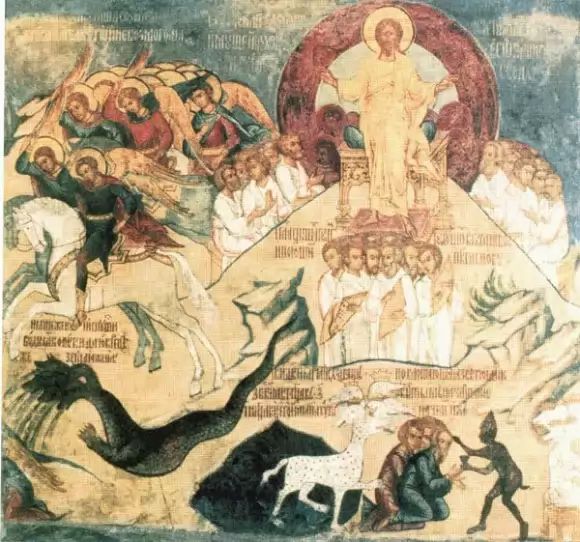
Icon of the Last Judgment. Seventeenth century. 

The fact is that even good deeds, as with all other Christian actions, have their dangers. From the example of the Pharisee and the elder son in the parable of the Prodigal Son we have already seen how religious effort can take on an ungodly character that alienates man from God’s love. The same thing can happen with good deeds. If a Christian immerses himself in them to the point of completely forgetting the primary goal of human existence, then it is unlikely he will do himself any good. Good deeds themselves, if one forgets the memory of death, can acquire the character of an activity that is excited, chaotic, and scattered. 

When the Jewish woman poured precious myrrh onto the head of Jesus, certain of the disciples said among themselves: Why was this waste of ointment made? For it might have been sold… and have been given to the poor (Mark 14:4-5). The indignant disciples probably expected the Savior to endorse their feelings. Christ, however, comes to the defense of this “squanderer”: why trouble ye her? she hath wrought a good work on Me. For ye have the poor with you always, and whensoever ye will ye may do them good: but Me ye have not always (Mark 14:6-7). 

With these words the Savior warns His followers that the work of keeping oneself in the truth of the Gospel is of utmost importance and, moreover, that this does not yield in importance to Christian good deeds; in some cases it even surpasses them. Indeed, Christ tells us that our eternal fate depends entirely and wholly on deeds of mercy. By including this call to mercy in the general discourse on the Second Coming, however, the Gospel establishes the proportionality and consistency of every part of the Christian activity that makes up our salvation. As such, if we will always have in mind the Second Coming and the Dread Judgment, but all the while become so absorbed in the expectation of the end that we lose sight of concrete deeds of mercy, we will most likely not acquire that love without which no one can see God. Yet if we give ourselves over enthusiastically to deeds of love while forgetting about the fleeting and vain nature of all that takes place on earth and the memory of death, then our good deeds will take on an emotional rather than spiritual character and not bring us any closer to God.

In Ecclesiastes we read: To every thing there is a season, and a time to every purpose under the heaven… a time to keep silence… A time to love (3:1-8). A time of silence – a time of solitude and standing noetically before God’s Judgment – is no less essential to Christianity than the active and continuous performance of good deeds. This silence not only returns us from the superficial life around us back to our own depths, but also reminds us of the finite nature of everything that takes place on earth, thereby purifying our love from emotional exaltation.

Therefore, from the publican’s repentance to deeds of love and mercy; from good deeds to the memory of death; and from the memory of death back to repentance and prayer, we must make our journey toward the joyful and bright days of Christ’s Resurrection. The Gospel readings during these preparatory weeks show us the direction we are to follow in our Lenten journey: they are like road signs showing us the way to the Heavenly Jerusalem, to the Lord’s eternal and unceasing Pascha.

Orthodox Saints on Repentance

“Repentance is the beginning, middle and end of the Christian way of life.”

Saint Gregory Palamas

“Always do a metanoia (repentance) when you are wrong. Don’t delay, otherwise the evil one can spread his roots within you.”

Saint Joseph the Hesychast

“To repent is not to look downwards at my own shortcomings, but upwards at God’s Love. It is not to look backwards with self-reproach but forward with trustfulness. It is to see not what I have failed to be, but what by the Grace of Christ I might yet become.”

Saint John Climacus

“Do not be ashamed to turn back and say boldly: I will arise and go to my Father. Arise and go!”

Saint Ephrem the Syrian

“The Lord greatly loves the repenting sinner and mercifully presses him to His bosom: “Where were you, My child? I was waiting a long time for you.” The Lord calls all to Himself with the Voice of the Gospel, and His Voice is heard in all the world: “Come to Me, My sheep. I created you, and I love you. My Love for you brought Me to Earth, and I suffered all things for the sake of your Salvation, and I want you all to know My Love, and to say, like the Apostles on Tabor: Lord, it is good for us to be with You.””

Saint Silouan the Athonite

“There is more mercy in God than there are sins in us. Confess your sins at once, whatever they may be.”

Saint Tikhon of Zadonsk

“Are you wounded? Despair not. Have you fallen? Get up and say bravely: now I have begun. Fall down before your Merciful Master and confess your sins. But before you say anything He will already know what you intend to say. Before you open your lips, He will see what is in your heart. You will not be able to say, “I have sinned” before you see Him stretch forth His hands to receive and embrace you. Approach with faith and He will cleanse you straightaway as He cleansed the leper, lift you from your bed as He lifted the paralytic, and raise you from the dead as He raised Lazarus.”

Saint Ephrem the Syrian

“As every sickness has its treatment, so every sin has repentance.”

Saint Seraphim of Sarov

“We must always remember that we are not condemned for the multitude of our evils, but because we do not want to repent.”

Saint Mark the Ascetic

“Repent, for the Kingdom of Heaven is at hand.”

Saint John the Baptist

“Be ashamed when you sin, don’t be ashamed when you repent. Sin is the wound, repentance is the medicine. Sin is followed by shame; repentance is followed by boldness. Satan has overturned this order and given boldness to sin and shame to repentance.”

Saint John Chrysostom

“Repentance will bring you humility. Humility will bring you the Grace of God. And God will uphold you in His Grace, and will give you whatever you need for your Salvation.”

Saint Paisios the Athonite

“The heart clears with tears and sighs. A sigh with pain of the Soul is equivalent to two buckets of tears…”

Saint Paisios the Athonite

“The Lord calls to Him all sinners; He opens His arms wide, even to the worst among them. Gladly He takes them in His arms, if only they will come to Him.”

Saint Macarius of Optina

“Repentance is a medicine which destroys sin. It is a Heavenly gift.”

Saint John Chrysostom

“The path leading to perfection is long. Pray to God so that He will strengthen you. Patiently accept your falls and, having stood up, immediately run to God, not remaining in that place where you have fallen. Do not despair if you keep falling into your old sins. Many of them are strong because they have received the force of habit. Only with the passage of time and with fervour will they be conquered. Don’t let anything deprive you of hope.”

Saint Nektarios of Aegina

“Confession is a way for man to come to God. It is the offering of the Love of God to man. Nothing and no one is able to deprive us of this Love.”

Saint Porphyrios of Kavsokalyvia

“You must then wash away, by a life of virtue, the dirt which has clung to your heart like plaster, and then your Divine beauty will once again shine forth.”

Saint Gregory of Nyssa

“Every genuine confession humbles the Soul. When it takes the form of thanksgiving, it teaches the Soul that it has been delivered by the Grace of God.”

Saint Maximos the Confessor

“However many and however great and burdensome your sins may be, with God there is greater mercy. Just as His Majesty is, so likewise is His Mercy.”

Saint Tikhon Patriarch of Moscow

“Repentance is the gate of mercy which is opened to all who seek it.”

Saint Isaac the Syrian

“As every sickness has its treatment, so every sin has repentance.”

Saint Seraphim of Sarov

“Repentance is the abandoning of all false paths that have been trodden by men’s feet, and men’s thoughts and desires, and a return to the new path: Christ’s path. But how can a sinful man repent unless he, in his heart, meets with the Lord and knows his own shame? Before little Zacchaeus saw the Lord with his eyes, he met Him in his heart and was ashamed of all his ways.”

Saint Nikolai Velimirovich

“When the air is cleared of clouds, the sun shines brightly; and a Soul freed from its former habits and granted forgiveness has certainly seen the Divine Light.”

Saint John Climacus

Orthodox Saints On Repentance

How does facing our shame in confession enhance our repentance

As we discussed in our first class regarding the Publican and Pharisee, our shame, like that of Adam and Eve , separates us from God as we attempt to coverup and hide with our own form of fig leaves. As we’ve seen in the last two weeks with Zaccheus and now the Publican, our repentance and reconciliation with God is not founded upon some false pretense of ourselves but the truth of who we are and the truth of who God is. He is big enough to accept us in the fullness of whatever is true. The article below from a parish priest in Texas does a very good job of laying out the high level of this process in becoming real to ourselves and God in confession. I find this article quite prescriptive and practical for what I can do differently in confession as I prepare myself for the Lenten journey ahead. It is a very real example of a movement away from the pride of my self reliance to deepening my humility and dependance upon God and others. Using my Google Map analogy , the practice outlined below can be very useful in placing me where I am not where I might like to pretend I am.

Do You Want Grace? Embrace Shame – Father Peter Kavanaugh

Becoming Aware of Personal Sin

“In order for a person to repent and to be healed from sin, he must first become aware of his sinfulness…The gift of the grace of awareness of one’s sinfulness, which is of essential and fundamental value to the spiritual restoration of man, is bestowed according to the measure of that man’s faith in the word of Christ” (Archimandrite Zacharias).

There is nothing secret about how you can share a deeper relationship with God. It requires you becoming more and more aware of your sin. The more aware you are of your sin the more fervently you can repent, the more radically you can turn towards God. However, this cannot be done on your own. This is impossible in any private setting. Awareness of sins comes from communion — from living within community — parish life, monasticism, marriage, day-to-day relationships, and most of all, from the Sacrament of Confession. Imagine living in a time without mirrors. You could never see your own face, and you could only know the blemishes on your face by someone else telling you. That is how sin works. We cannot know our own inner life without the aid of others, in particular, without the guidance of a spiritual father. In the Orthodox Church, we are urged to partake in the Sacrament of Confession as frequently as possible, ideally, on a monthly basis. To quote Metropolitan Joseph, “this is not an option.” Why? Because by not doing so, we end up living in a state of delusion about our inner life. When confession is a way of life, we become aware of our inner “stuff” and our need for repentance.

The Greater the Shame, the Greater the Grace

“The believer endures shame before a father-confessor…As soon as he becomes aware of his iniquity, he does not hide it. ‘He confesses his transgressions unto the Lord.’ For the shame that he endures through this act of repentance the Lord forgives him ‘the iniquity of his heart’ and renews him through the grace of eternal salvation. The greater the shame one experiences when one reveals one’s sins during confession, the more will be the power and the grace received for the renewal of one’s life” (Archimandrite Zacharias).

Imagine you have gangrene. You are afraid to reveal it to your doctor because of shame. How could you possibly dare to show something so foul and putrid to another person? Nonetheless, the longer you go before revealing it, the deeper the gangrene sets until it is too late. In reality, anyone with sense would rush to the doctor to have the infection purified as quickly as possible. In the same way, all truly-spiritually minded people rush to their confessor with haste. To be Christian is to be a “health addict” in the truest sense. But the shame! We are embarrassed by our sins. We want to be liked. We do not want others, let alone a priest, to see who we really are (or who we believe we are). We dread the feeling of shame. Yet, as Christians, we have to come to love the shame. We should hunger for it, knowing that the more honestly we confess, the more shame we feel when we face ourselves in the mirror of another person, the more thorough will be our healing and transformation. If it means getting God, bring on the shame.

Shame Uproots Evil and Prepares the Soul for Holiness

“Pain and shame because of one’s sins plough the fallow heart and uproot the dishonorable passions that are in it. They heal and unify the powers of the soul so that it may accomplish the divine commandment to love and be able to stand before the Lord ‘in spirit and in truth.’ If we remain attached to our own self-esteem and are afraid to be ashamed because of our sins, then we will not come to know the price of the blows the Lord endured for our salvation” (Archimandrite Zacharias).

“Therefore also now, saith the Lord, turn ye even to me with all your heart, and with fasting, and with weeping, and with mourning: And rend your heart, and not your garments, and turn unto the Lord your God: for he is gracious and merciful, slow to anger, and of great kindness, and repenteth him of the evil” (Joel 2:12-13).

How often do we remain attached, cling to, crave to protect our self-esteem? We are desperate to hide, as Adam and Eve were desperate to cower in the bushes. We are clinging to death. How silly. God simply wanted Adam and Eve to come out and fix the relationship. Paradise was a step away, but they preferred the hiding. It is time to be honest with ourselves. We pretend to be decent Christian people, good enough, comfortable as we are. Yet, if we truly believed we were good enough, why would we avoid confession as we do? In the gut, we know what lies within, and it burdens us day and night. All the while, Christ stands with open arms, ready to heal and to love. One last word: Most of the time, we cringe at the words: “shame,” “sin”, and “repentance.” Why is this? I believe it is because we have not yet experienced enough of God’s grace. The more we experience confession, the more we open our wounds to heaven and receive God’s profound washing, the more we come to long for shame and repentance. It becomes a joy to discover and admit one’s sins. It becomes the greatest happiness to tap into the shame, because we discover the grace. How beautiful it is to let go and be clean — to really know that we are clean! How wonderful to discover and dive into God’s infinite love!

Full Article Link

How does the parable of the Prodigal Son illustrate God’s goal for us and our purpose?

I find this passage from Archimandrite Zacharias of Essex (disciple of Saint Sophrony of Essex) full of great wisdom and guidance for us as we prepare ourselves this week for the Sunday of the Prodigal Son.

This passage is an extract from his book ’Hidden Man Of The Heart’. Perhaps, this provides some solid ground to a question raised in yesterday’s class…. what is my purpose; why am I here … in the context of this parable. This article may also remind us all of the essential humility that even with a parable which we believe we are quite familiar ; we can humbly accept that ’we realize we know but a little’ and find much to learn.

Within this passage , you will also see how the themes of our hearts, exile, and shame are woven powerfully together into this explanation and exploration of the Prodigal Son.

The Mystery Of Man’s Heart (Extract from Hidden Man of the Heart)

All the ordinances of the undefiled Church are offered to the world for the sole purpose of dis­covering the ‘deep heart’,[1] the centre of man’s hypo­s­tasis. According to the Holy Scriptures, God has fashioned every heart in a special way, and each heart is His goal, a place wherein He desires to abide that He may mani­fest Himself.

Since the kingdom of God is within us,[2] the heart is the battlefield of our salvation, and all ascetic effort is aimed at cleansing it of all filthiness, and preserving it pure before the Lord. ‘Keep thy heart with all diligence; for out of it are the issues of life’, exhorts Solomon, the wise king of Israel.[3] These paths of life pass through man’s heart, and therefore the unquenchable desire of all who ceaselessly seek the Face of the living God is that their heart, once deadened by sin, may be rekindled by His grace.

The heart is the true ‘temple’ of man’s meeting with the Lord. Man’s heart ‘seeketh knowledge’[4] both intellectual and divine, and knows no rest until the Lord of glory comes and abides therein. On His part God, Who is ‘a jealous God’,[5] will not settle for a mere portion of the heart. In the Old Testament we hear His voice crying out, ‘My son, give Me thy heart’;[6] and in the New Testament He commands: ‘Thou shalt love the Lord thy God with all thy heart, and with all thy soul, and with all thy mind, and with all thy strength.’[7] He is the one Who has fashioned the heart of every man in a unique and unrepeatable way, though no heart can contain Him fully because ‘God is greater than our heart’.[8] Nevertheless, when man succeeds in turning his whole heart to God, then God Himself begets it by the incorruptible seed of His word, seals it with His wondrous Name and makes it shine with His perpetual and charis­matic presence. He makes it a temple of His Divinity, a temple not made by hands, able to reflect His ‘shape’ and to hearken unto His ‘voice’ and ‘bear’ His Name.[9] In a word, man then fulfils the purpose of his life, the reason for his coming into the transient existence of this world.

The great tragedy of our time lies in the fact that we live, speak, think, and even pray to God, outside our heart, outside our Father’s house. And truly our Father’s house is our heart, the place where ‘the spirit of glory and of God’[10] would find repose, that Christ may ‘be formed in us’.[11]Indeed, only then can we be made whole, and become hypostases in the image of the true and perfect Hypostasis, the Son and Word of God, Who created us and redeemed us by the precious Blood of His ineffable sacrifice.

Yet, as long as we are held captive by our passions, which distract our mind from our heart and lure it into the ever-changing and vain world of natural and created things, thus depriving us of all spiritual strength, we will not know the new birth from on High that makes us children of God and gods by grace. In fact, in one way or another, we are all ‘prodigal sons’ of our Father in heaven, because, as the Scriptures testify, ‘All have sinned, and come short of the glory of God.’[12] Sin has separated our mind from the life-giving contemplation of God and led it into a ‘far country’.[13] In this ‘far country’ we have been deprived of the honour of our Father’s embrace and, in feeding swine, we have been made subject to demons. We gave ourselves over to dis­honourable passions and the dreadful famine of sin, which then established itself by force, becoming the law of our mem­bers. But now we must come out of this godless hell and return to our Father’s house, so as to uproot the law of sin that is within us and allow the law of Christ’s command­ments to dwell in our heart. For the only path leading out of the torments of hell to the everlasting joy of the Kingdom is that of the divine commandments: with our whole being we are to love God and our neighbour with a heart that is free of all sin.

The return journey from this remote and inhospitable land is not an easy one, and there is no hunger more fearful than that of a heart laid waste by sin. Those in whom the heart is full of the consolation of incorruptible grace can endure all external deprivations and afflictions, trans­form­ing them into a feast of spiritual joy; but the famine in a hardened heart lacking divine consolation is a comfort­less torment. There is no greater misfortune than that of an in­sensible and petrified heart that is unable to distinguish be­tween the luminous Way of God’s Providence and the gloomy confusion of the ways of this world. On the other hand, throughout history there have been men whose hearts were filled with grace. These chosen vessels were enlight­ened by the spirit of prophecy, and were therefore able to dis­tinguish between Divine Light and the darkness of this world.

No matter how daunting and difficult the struggle of purifying the heart may be, nothing should deter us from this undertaking. We have on our side the ineffable good­ness of a God Who has made man’s heart His personal con­cern and goal. In the Book of Job, we read the following aston­ishing words: ‘What is man, that thou shouldest mag­nify him? And that thou shouldest set thine heart upon him? And that thou shouldest visit him every morning, and try him every moment…Why hast thou set me as a mark against thee, so that I am a burden to myself?’[14] We sense God, Who is incomprehensible, pursuing man’s heart: ‘Be­hold, I stand at the door, and knock: if any man hear my voice, and open the door, I will come in to him, and will sup with him, and he with me.’[15] He knocks at the door of our heart, but He also encourages us to knock at the door of His mercy: ‘Knock, and it shall be opened unto you.’[16] When the two doors that are God’s goodness and man’s heart open, then the greatest miracle of our existence occurs: man’s heart is united with the Spirit of the Lord, God feasting with the sons of men.

From the few thoughts we have mentioned, we now begin to see how precious it is to stand before God with our whole heart as we pour it out before Him. We also begin to understand how vital is the task of discovering the heart, because this allows us to talk to God and our Father from the heart and to be heard by Him, and to give Him the right to perfect the work of our renewal and restoration to the original honour we enjoyed as His sons.

We deprive ourselves of the feast of God’s consolation not only when we hand ourselves over to the corruption of sin, feeding swine in a far country, but also when we contend in a negligent way. ‘Cursed be he that doeth the work of the Lord deceitfully,’ warns the Prophet Jeremiah.[17] In the feed­ing of swine, it is the devil, our enemy, who gives us work which is accursed. But if we do the Lord’s work half-heartedly, we put ourselves under a curse, though we may be dwelling in the house of the Lord. For God will not toler­ate division in man’s heart; He is pleased only when man speaks to Him with all his heart and does His work joyfully: ‘God loveth a cheerful giver,’ says the Apostle.[18] He wants our whole heart to be turned and de­voted to Him, and He then fills it with the bounties of His goodness and the gifts of His com­passion. He ‘sows bounti­fully’[19] but He expects the same from us.

As long as man is under the dominion of sin and death, being given over to the power of evil, he becomes in­creas­ingly selfish. In his pride and despair, and being separated from God Who is good, he struggles to survive, but the only thing he gains is a heavier curse upon his head and even greater desolation. But however much he may be cor­rupted by the famine of sin, the primal gift of his having been created in God’s ‘image and likeness’ remains irrevoc­able and indelible. Thus, he always carries within him the possibility of a rising out of the kingdom of darkness and into to the kingdom of light and life. This occurs when he ‘comes to himself’ and in pain of soul confesses, ‘I perish with hunger.’[20]

When fallen man ‘comes to himself’ and turns to God, ‘it is time for the Lord to work’, as we say at the beginning of the Divine Liturgy; in pain, man then enters his own heart, which is the greatest honour reserved by God for man. God knows that He can now seriously con­verse with him, and is attentive to him, for when man enters his heart he speaks to God with knowledge of his true state, for which he now feels responsible. Indeed, man’s whole struggle is waged in order to convince God that he is His child, His very own, and when he has con­vinced Him, then he will hear in his heart those great words of the Gospel, ‘All that I have is thine.’[21] And the moment he convinces God that he is His, God makes the waterfalls of His com­passion to flow, and God’s life be­comes his life. This is the good pleasure of God’s original design in that it is for this that He created man. God then says to the one who has succeeded in persuading Him that he is His, ‘All My life, O man, is thy life.’ Then the Lord, Who is God by nature, grants man His own life, and man becomes a god by grace.

In the Gospel of St Luke we are told that the prodigal son ‘came to himself’ and said, ‘I will arise and go to my father, and will say unto him, Father, I have sinned against heaven and before thee, and am no more worthy to be called thy son.’[22] This is a wondrous moment, a momentous event in the spiritual world. Suffering, affliction, and the menacing famine of the ‘far country’ compel man to look within himself. But a single movement of divine grace is enough to convert the energy of his misfortune into great boldness, and he is enabled to see his heart and all the dead­ness from which he is suffering. Now, with prophetic know­ledge, he boldly confesses that ‘his days are consumed in vanity’.[23] In pain of soul, he discovers that his whole life until then consists of a series of failures and betrayals of God’s commandments, and that he has done no good deed upon earth which can withstand the unbearable gaze of the Eternal Judge. He sees his plight and, like the much-afflicted Job, cries out, ‘Hades is my house.’[24]

With such a lamentation of despair and, thirsting only for God’s blessed eternity, man can then turn his whole being towards the living Lord. He can cry from the depth of his heart to Him Who ‘has power of life and death: who leads to the gates of hell, and brings up again’.[25] This is the turning point in our life, for God the Saviour then begins His work of refashioning man.

When man falls into sin his mind moves in an outward direction and loses itself in created things, but when, con­scious of his perdition, he comes to himself seeking sal­vation, he then moves inward as he searches for the way back to the heart. Finally, when all his being is gathered in the unity of his mind and heart, there is a third kind of movement in which he turns his whole being over to God the Father. Man’s spirit must pass through this threefold circular motion in order to reach perfection.

During the first stage, man lives and acts outside his heart and entertains proud thoughts and considers vain things. In fact, he is in a state of delusion. His heart is dark­ened and void of understanding. In his fallen condition, he prefers to worship and serve ‘the creature more than the Creator’.[26] Because he lives without his heart, he has no dis­cern­ment and is ‘ignorant of [Satan’s] devices’.[27] As the Old Testament wisely observes: ‘The fool hath no heart to get wis­dom’,[28] and because his heart is not the basis of his exist­ence, man remains inexperienced and unfruitful, ‘beat­ing the air’.[29] He is unable to walk steadily in the way of the Lord and is characterised by instability and double-minded­ness.

In the second stage, man ‘comes to himself’, and he begins to have humble thoughts that attract grace and make his heart sensitive. Humble thoughts also enlighten his mind; they are born within himself, and they help him in dis­cerning and accepting only those things that strengthen the heart, so that it stays unshakeable in its resolution to be pleasing to God both in life and in death. During the first stage, man surrenders to a vicious circle of destructive thoughts, whilst in the second, inspired by Christ’s word, he is led along a chain of thoughts, each deeper than the last: from faith he is led to more perfect faith, from hope to firmer hope, from grace to greater grace and from love of God to an ever greater measure of love. ‘We know’, as the Apostle Paul says, ‘that all things work to­gether for good to them that love God.’[30] Indeed, this entry ‘into oneself’ and the discovery of the heart are the work of divine grace. And when man heeds God’s call and co-oper­ates with the grace that is bestowed on him, this grace summons and strengthens all his being.

When the grace of mindfulness of death becomes active, man not only sees that all his days have been consumed in vanity, that everything until now has been a failure, and that he has betrayed God all his life, but he realises that death threatens to blot out all that his con­science has hitherto em­braced, even God. He is now con­vinced that his spirit has need of eternity and that no created thing, neither angel nor man, can help him. This provokes him to seek freedom from every created thing and every passionate attachment. And if he then believes in Christ’s word and turns to Him, then it is easy for him to find his heart because he is be­coming a free being. His faith is salutary, for he now acknow­ledges that Christ is the ‘rewarder of them that diligently seek him’,[31] that is, he believes that Christ is the eternal and almighty Lord Who has come to save the world and will come again to judge the whole world with justice. He has entrusted himself to ‘the law of faith’,[32] and begins to be­lieve in hope against hope,[33] pinning everything on the mercy of God the Saviour. Such true faith can be seen in the Canaanite woman, who received the Lord’s instruction as a dog receives food from its master, and she followed Him freely and steadfastly. As far as she was concerned, God re­mained righteous and forever blessed whether He were to rebuke her or praise her. Faith like this receives the ap­proval of adoption because it grows out of love and humi­l­ity, ever attracting divine grace which opens and quickens the heart.

When man believes and his spirit finds true contact with the Spirit of ‘Jesus Christ who was raised from the dead’[34] and Who lives and reigns forever, he is enlightened so that he can see his spiritual poverty and desolation. He also perceives that he is still far from eternal life, and this gives birth to great fear in him because he is now aware that God is absent from his life. Godly fear such as this strengthens man’s heart to resist sin and begets a firm resolve to prefer heavenly things to earthly things. His life begins to prove the truth of the words of Scripture: ‘The fear of the Lord is the beginning of wisdom.’[35] As man’s heart draws to itself the grace of God, this gift of fear humbles him, and pre­vents him from becoming overbold; that he ‘not think of himself more highly than he ought to think’,[36] and that he keep himself prudently within the limits of created being.

Another infallible means by which the believer finds his heart is in accepting shame for his sins in the sacrament of confession. Christ saved us by enduring the Cross of shame for our sakes. Similarly, when the believer comes out of the camp of this world,[37] he disregards its good opin­ion and judgment, taking upon himself the shame of his sins, and thereby acquiring a humble heart. The Lord re­ceives his sense of shame for his sins as a sacrifice of thanks­giving, and imparts to him the grace of His great Sacrifice on the Cross. This grace so purifies and renews his heart that he can then stand before God in a manner that is pleas­ing to Him.

I have not said much, but I hope it is clear that man’s principal work, which alone gives worth to his life, is the effort of discovering and purifying his ‘deep heart’, that it may be blessed with the indescribable contemplation of our God, Who is Holy.

Source: Archimandrite Zacharias (Zacharou), The hidden man of the heart, edition Stavropegic Monastery of St John the Baptist, Essex 2007, pp. 11-26.

NOTES 

1. Cf. Ps. 64:6., 2.Cf. Luke 17:21., 3. Prov. 4:23., 4. Prov. 15:14., 5. Exod. 34:15,6. Prov. 23:26., 7. Matt. 12:30., 8. 1 John 3:20., 9. Cf. John 5:37; Acts 9:15., 10. 1 Pet. 4:14., 11. Gal. 4:19., 12. Rom. 3:23. , 13. Luke 9:15. , 14. Job 7:17, 15. Rev. 3:20. , 16. Luke 11:9-10. , 17. Jer. 48:10. ,  18. 2 Cor. 9:7. , 19. Cf. 2 Cor. 9:6., 20. Luke 15:17.,21. Luke 15:31. , 22. Luke 15:18-19. , 23. Cf. Ps. 78:33. , 24. Cf. Job 17:13. , 25. Wisdom of Solomon 16:13. , 26. Rom. 1:25. , 27. 2 Cor. 2:11. , 28. Cf. Prov. 17:16. , 29. Cf. 1 Cor. 9:26., 30. Rom. 8:28. , 31. Heb. 11:6. , 32. Rom. 3:27. , 33. Cf. Rom. 4:18. , 34. 2 Tim. 2:8 , 35. Prov. 1:7 LXX. , 36. Rom. 12:3. , 37. Cf. Heb. 13:11-12.