In our class this week, I’d like us to begin with some observations and reflections on this important first week of Lent. Our efforts individually as well as our experiences more collectively together as the Body of Christ during our many weekly gatherings.
I’d then like us to read and reflect on the short homily from Father Phillip LeMaster entitled ’Become a Living Icon’. It’s a very encouraging call for us ’to think of Lent as a time to make ourselves better icons of the Lord’. He reminds that Christ is the new Adam who has ’become one of us, with a visible human body … who has restored and healed every dimension of our fallen humanity’. Our efforts in Lent can be ’small, humble, imperfect steps to open ourselves to this new life in Christ, to become better living icons – living images – of what it means for human beings to share in God’s salvation’. And in this process as we ’grow in His image and likeness, the more we will become our true selves’. We proclaim on the Sunday of Orthodoxy that ’we not only carry icons, we are icons’.
Our discussion then will get into the crucial issue of how our humility is the ’mother of virtues’ we need for this journey. We’ll review a new posting that relates the Great Canon’s use of the wise thief and harlot as ’icons’ for us to learn and practice humility. We’ll also review Father Thomas Hopko’s excellent insights about humility and hopefully find time to dig deeper into how the Prayer of St. Ephraim can help restore us to the ’life of the spirit’ and how our bodies are ’the temple of the priceless human soul’.
I will print out the following articles for our class tomorrow:
The articles below were created this past week and may be useful for your reflections on the week and preparation for our class. If you find these postings helpful, remember you can subscribe to receive them via email as they are posted during the week. You can do this by simply entering your email address and pressing the update button from the menu of the adult education website.
This week the teens will have a small group breakout that will begin at about 9:30am midway through the class. I’m certainly open to other small group breakouts that could explore this material and perhaps come back together with key observations for the entire group.
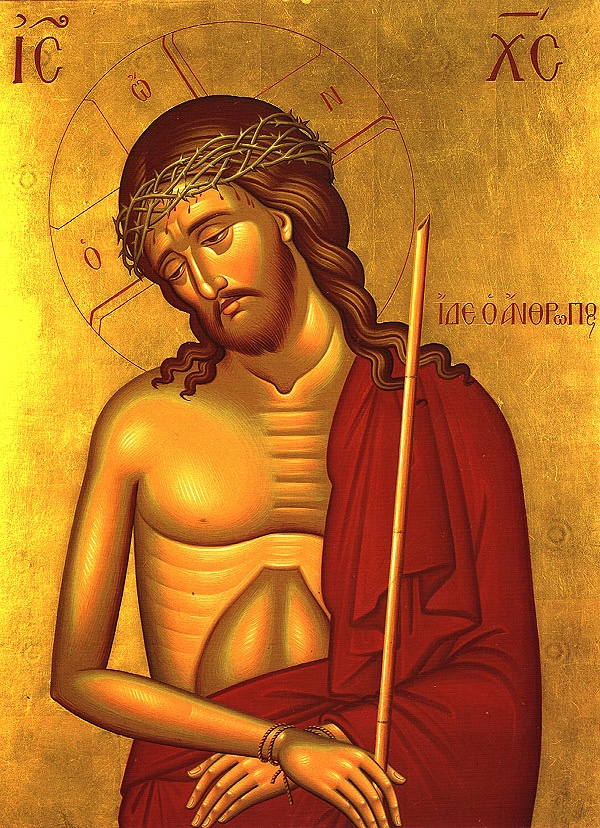
At the end of Liturgy today, we will parade around the church carrying our icons in celebration of the Sunday of Orthodoxy, which commemorates the restoration of icons to the church after the period of iconoclasm many centuries ago. We do so because Icons are not mere works of decorative art to us; they are windows to heaven which remind us that the Son of God really has become one of us, with a visible human body, and that we are called to become like the saints whose images are portrayed in them. For we are all icons of God, created in His image and likeness. Jesus Christ is the new Adam Who has restored and healed every dimension of our fallen humanity, and brought us into the very life of the Holy Trinity. It may help us to think of Lent as a time to make ourselves better icons of the Lord.
When we recall the great saints of the Old Testament mentioned in today’s reading from the Epistle to the Hebrews, we are humbled by their faithfulness, obedience, and humility. But even they “did not receive the promise, God provided something better for us that they should not be made perfect apart from us.” As hard as it is to believe, we have been blessed beyond them, for God’s promises in Jesus Christ were not fulfilled in their lifetimes; they hoped for what they did not receive, but their lives were still icons of faithful anticipation of the Messiah.
We live many generations after the New Testament saints Peter, Andrew, and Nathanael encountered Jesus Christ. And the Lord’s promise to Nathanael, “you shall see the heaven open, and the angels of God ascending and descending upon the Son of Man,” is the fulfillment of all the hopes and dreams of the Old Testament. In Jesus Christ, humanity and God are united; no longer shut out of paradise, we are raised to the life of the Heavenly Kingdom by our Lord. Our destiny is not for the dust and decay of the tomb, but for life everlasting because of His glorious third-day resurrection.
In Lent, we take small, humble, imperfect steps to open ourselves to this new life in Christ, to become better living icons—living images—of what it means for human beings to share in God’s salvation. The point of Lent is not to punish ourselves or simply to make us feel guilty, miserable, or deprived. Instead, the purpose of our spiritual exercises is to help us share more fully in the promise fulfilled in Jesus Christ. We want His holiness, love, mercy, and blessing to reshape every dimension of our lives, to be evident in how we go through the day, in how we treat others, in what we say, think, and feel.
And the more we grow in His image and likeness, the more we will become our true selves. Icons portray particular human beings whose lives have shown brightly with the holiness of God. The unbelievable truth is that, in Christ Jesus, we may do the same. No matter our age, health, occupation, family circumstances, personality quirks, or anything else, we too may become living, breathing manifestations of our Lord’s salvation when we open ourselves to His healing mercy through prayer, fasting, forgiveness, generosity to the needy, and all the various forms of spiritual nourishment given through the life of the Church.
There could be no greater optimism about us than what we proclaim on the Sunday of Orthodoxy. We not only carry icons, we are icons. We not only venerate icons, we are called to become living proof of what happens to a human being who enters into the eternal blessedness of God, even as we walk around our parish. Let this sink in: What the Old Testament saints hoped for, we possess. This Lent, let’s take Jesus Christ as His word, and prepare—with humility, persistence, and mindfulness- to “see the heaven open and angels of God ascending and descending upon the Son of Man.” For that is the good news of our salvation.
Archpastoral Message of His Beatitude Metropolitan Tikhon
March 7, 2022
To the Clergy, Monastics, and Faithful of the Orthodox Church in America,
Dear Beloved Children in the Lord,
As we stand at this moment, the threshold of Great Lent, with all turmoil and violence unfolding in the world, the Lenten fast comes like a spring breeze to refresh our souls. It is a time during which we take stock of our hearts, discard the unnecessary things of this world, refocus our spiritual vision, and bring our pains and griefs before God’s healing presence.
Even in the midst of everything we endure; a pandemic, social unrest, economic uncertainty, and now war in Ukraine, we must remember to always attend to doing good and becoming ever-brighter beacons of Christ’s light in this darkening world.
We hear this through the Prophet Isaiah, where the Lord tells us what distinguishes our true fast:
“Is not this the fast that I choose: to loose the bonds of wickedness, to undo the cords of the yoke, to let the oppressed go free, and to break every yoke?” (Is 58:6)
In this turbulent moment, the Fast is a call to freedom as children of God through our spiritual discipline. In our time, there are many “bonds of wickedness” and “cords of the yoke” which Lent urges us to loose—but above all, the sins which bind our souls.
We also remember that Lent calls us to control not just our stomachs but our eyes, hands, feet, and mind. We avoid gluttony of food, but likewise we ought to avoid gluttony of all sorts: in recreation, media, or conversation with others. As the Scriptures tell us, “Every athlete exercises self-control in all things” (1 Cor 9:25).
This Lent, be especially on guard with social media, which too easily inflames our passions, devours our time, and devolves into the “foolish controversies” which Saint Paul warns us to avoid, “for they are unprofitable and futile” and only disturb our brothers and sisters in Christ (cf. Titus 3:9).
We are assured in the Letter to the Galatians that “For freedom Christ has set us free; stand fast therefore, and do not submit again to a yoke of slavery” (Gal 5:1). With these words we fast with cheerful hearts, because it is in our self-denial that we find freedom in the Resurrection.
So as we take up the spiritual disciplines given to us by our Lord, I pray that it is with a spirit of renewed commitment and not with a spirit of gloominess. Nor should we, as Christ warns, “look dismal, like the hypocrites, for they disfigure their faces that their fasting may be seen by men” (Mt 6:16). Great Lent is our much needed time of refreshment of the heart and cleansing of the soul, so that we may more clearly perceive the light of Christ on Great and Holy Pascha.
When we each ask God to “open to me the gates of repentance” this Lent, remember that we do not fast to earn God’s love or to impress others around us. Over the next forty days we break the chains of sin and evil by controlling the things which control us—and so become free people. Let us run towards this freedom in the coming weeks.
Beloved children in the Lord, I conclude by directing you to keep in prayer those suffering in the calamity of war: the wounded, the grieving, and the displaced. Please also be of service to them in your charity and almsgiving this Lent. Remember also those who have been killed in this war. May God keep their memory eternal.
I humbly ask your forgiveness. May you have all the blessings of our Lord, God, and Savior Jesus Christ in your Lenten journey.
I remain sincerely yours in Christ,
+TIKHON Archbishop of Washington Metropolitan of All America and Canada
What is wrong with humanity, and creation, such that we are in need of anything from God? What is sin?
At its most fundamental level – sin is death. For the wages of sin is death(Romans 6:23). The fact that we die is not a punishment sent to us from God but the result of our having broken fellowship (communion) with God. God is Life and the only source of life. Created things (humanity included) do not have life in themselves, it is not something we have as our possession and power. Rather, life is the gift of God. It is not just our life that is the gift of God – but our very existence and the existence of all that is. God is our Creator. The Scriptures say, “In Him we live and move and have our being” (Acts 17:28).
Genesis offers us the story of Adam and Eve in which we hear described their disobedience from God. He had warned them: “Do not eat of the fruit of the tree of the knowledge of good and evil, for in the day that you eat of it you shall surely die.”
Many early commentators on Scripture were careful to note that God did not say, “In the day you eat of it I will kill you,” but “in the day you eat of it you shall die.” Rather we are told: “God did not create death, nor does he delight in the death of the living” (Wisdom 1:13).
St. Athanasius explains that when humanity chose to break its relationship with God (through disobedience) we cut ourselves off from the source of life. However God did not take life from us (He does not take back the gifts He gives) but we removed ourselves from it. And so we die. We not only die physically, but we have a process of death at work in us. St. Paul speaks of this process as “corruption.” This movement away from life and towards death and destruction reveals itself in the many broken things in our lives. We hurt and kill each other. We hurt and destroy creation. We are weak and easily enslaved to powerful things such as drugs and alcohol. We are dominated by greed, envy, lust, anger, etc. We cannot help ourselves in this matter because we do not have life within ourselves. Only God can give us the true life that alone can make us well.
The Answer
Above all else we should remember that “God is a good God and He loves mankind” (from the Orthodox dismissal). This we hear clearly in Scripture: “God is love” (1 John 4:8) and “For God so loved the world that He gave His only begotten son, that whosoever believes in Him should not perish but have eternal life” (John 3:16).
We hear this echoed in the words of the Liturgy of St. John Chrysostom:
You [God] brought us into being out of nothing, and when we fell, You raised us up again. You did not cease doing everything until You led us to heaven and granted us Your kingdom to come.
This good God who loves mankind is not an angry God. He is not a vengeful God. He does not will us harm or punish us for our destruction. Though the Scriptures use these images, the Fathers of the Church have been consistent in understanding that this language is figurative and should not be understood literally. For instance, St. Anthony says:
God is good and is not controlled by passions. He does not change. Now someone who thinks it reasonable and true to affirm that God does not change, may well ask how, in that case, it is possible to speak of God as rejoicing over those who are good and showing mercy to those who honor Him, and as turning away from the wicked and being angry with sinners. To this it must be answered that God neither rejoices nor grows angry, for to rejoice and to be offended are passions; nor is He won over by the gifts of those who honor Him, for that would mean He is swayed by pleasure. It is not right that the Divinity feel pleasure or displeasure from human conditions. He is good, and He only bestows blessings and never does harm, remaining always the same. We men, on the other hand, if we remain good through resembling God, are united to Him, but if we become evil through not resembling God, we are separated from Him. By living in holiness we cleave to God; but by becoming wicked we make Him our enemy. It is not that He grows angry with us in an arbitrary way, but it is our own sins that prevent God from shining within us and expose us to demons who torture us. And if through prayer and acts of compassion we gain release from our sins, this does not mean that we have won God over and made Him to change, but that through our actions and our turning to the Divinity, we have cured our wickedness and so once more have enjoyment of God’s goodness. Thus to say that God turns away from the wicked is like saying that the sun hides itself from the blind.
There are many Christians who would handle Scriptures in a different manner – but I think they do not listen to the fathers of the Church and interpret Scripture according to their own opinions. In this, I think they are in error and should not be listened to.
This good God, the only Lord and giver of Life, had compassion on us when we fell away and became subject to death and corruption. In His compassion He sent His only Son who became one of us – taking our human nature upon Himself. Uniting us to Himself, He lived a life without sin (for He is Life), and taught us by word and deed the goodness and kindness of God and to become like God by loving even our enemies.
His love was so great, that He extended that love beyond the grave. He accepted death on the Cross, suffering the hatred and evil doings of those around Him.
And here, as we approach Christ’s death on the Cross, it is appropriate to ask, “Why death?”
There are many meditations on the death of Christ. Meditations that see Him as the Paschal Lamb sacrificed for us, as the “Serpent lifted in the wilderness,” and others. Here, temptation sets in and Christians seek to explain Christ’s death by comparing it to their own faulty understandings of lesser things. For it is not the shadow of things to come (Old Testament) that interprets the things to come – but rather the reality (New Testament) that interprets the shadow. It is Christ’s death that gives meaning to every type and foreshadowing and image of that death to be found in the Old Testament.
Thus it is more accurate to say that the Paschal Lamb in the time of Moses is like Christ’s sacrifice, rather than to say His sacrifice is like that which came before. As Christ said of Moses and the Prophets, “These are they which testify of me” (John 5:30).
One of the most common and helpful images in Scripture and the fathers of the Church is the image of Christ’s union with humanity. Christ became incarnate, taking to Himself our human nature. He became what we were, yet without sin. This union should be understood in more than a metaphorical manner. For Christ literally and truly became man. His humanity was not a new creation, but he took flesh “of the Virgin Mary.” He became a partaker of our humanity.
In becoming a partaker of our humanity, Christ opened the way for us to become partakers in His divinity. “For as He is, so are we in this world” (1 John 4:17). St. Paul uses this language as well in his explanation of Baptism:
Do you not know that as many of us as were baptized into Jesus Christ were baptized into His death? Therefore we are buried with him by baptism into death: that like as Christ was raised up from the dead by the glory of the Father, even so we also should walk in newness of life. For if we have been planted together in the likeness of His death, we shall also be raised together in the likeness of His resurrection. Knowing this, that our old man is crucified with Him, that the body of sin might be destroyed, that we should no longer be the slaves of sin (Romans 6:3-6).
This imagery is common in St. Paul:
I am crucified with Christ, nevertheless I live; yet not I, but Christ liveth in me. And the life that I now live in the flesh, I live by the faith of the Son of God, who loved me and gave Himself for me (Galatians 2:20).
If you are risen with Christ, seek those things that are above, where Christ sits on the right hand of God. Set your affection on things above, not on things on the earth. For you are dead, and your life is hid with Christ in God. When Christ, who is our life, shall appear, then you shall also appear with Him in glory (Colossians 3:1-4).
These things only make sense because Christ has united Himself to us, and us to Him. We are united to His death and resurrection in our faith and in our Baptism. We become one flesh with Christ. We truly become a part of the Body of Christ.
And this goes to the heart of the answer to the question posed: why did Christ die? Christ died because we were dead. We were trapped in the lifeless death that is sin (which yields corruption and physical death as well). Christ is God who has come to rescue us from our prison of sin and death. He became what we are that we might have a share in what He is. We were created in the image and likeness of God – but our sin had marred us.
We did not inherit guilt and a legal penalty from Adam and Eve. We inherited a world dominated by death. In such a world we behaved as the slaves of sin and sought to live our lives apart from God Who alone is Life. God alone could rescue us from the place where we had confined ourselves. Christ enters death. Christ enters Hades and makes a way for us to follow Him into true life.
In our present life, this true lifeis made present within us in many ways. First, it is made present in our knowledge of God. “This is eternal life, that they might know Thee, the only true God, and Jesus Christ Whom Thou hast sent” (John 17:3). We know God and have a true relationship and communion with Him. We also have within us the power to overcome sin. This is sometimes manifest as obedience to Christ’s commandments, and, as God pleases, it is sometimes manifest as physical healing in our bodies (and miracles in creation – Romans 8:21).
If the same Spirit which raised Christ from the dead dwell in you, He will make alive your mortal bodies (Romans 8:11).
The true life of humanity is a common life. It is common in the modern world to think of ourselves only in terms of discreet individuals. But the Scriptures and teaching of the Church bear witness to a common life in which we all partake. Thus, what happens to one of us effects all of us. This commonality is also an important part of our spiritual life and our salvation. The Church in particular is the place where Christians live their common life.
This common life is also the place where we come to understand the references to “Christ’s blood” (since this was part of the question posed). His blood carries a number of meanings. It is His death, His “life poured out for us.” It is also His life given to us in the sacrament of His Body and Blood. His blood cleanses us – just as Baptism cleanses us – for His death destroys death and makes the whole creation new. There are many links between the image of blood in the Old Testament and Christ’s blood in the New. However, it is easy to become overly detailed about his connection and miss the larger point of Christ’s death – by which He destroyed death and gave us eternal life.
There are many voices across the Christian world. Taken together – they are a madhouse of confusion. Confusion and contradiction is the only result of those who listen first to one teacher and then to another. No one will arrive at the truth by such a route.
Instead, I counsel anyone to take up the life of the Church. Be Baptized (or otherwise received into the Church) and stay put. Listen to a godly pastor who lives the Scriptures and respects the fathers of the Church. Those who have built private empires and practice ministries that are in submission to “no one except God” are frauds and live in delusion. They are scandals waiting to happen.
No Church, including the Orthodox Church, ever exists without scandal. But that scandal can be disciplined. True teaching can be found and life in union with the resurrected Lord can be lived.

 St John’s Adult Education